
Compassion Against Sacrifice
AniaraThis flow traces the passengers’ changing use of sacrifice, from inherited religious ritual to coercive spectacle and finally a moral demand for care.
increasing Bearing strength in each event
 decreasing
Bearing strength in each eventdecreasingRituals Recovered
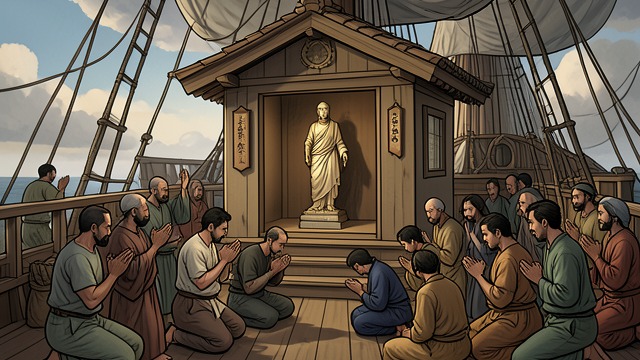
Rituals Recovered
Old practices return
The strain of life in space revives religious forms that many passengers had seldom practiced on Earth. Priests, temples, symbols, and communal rites return in altered shipboard versions.
Meaning sought in pressure
These practices provide structure where familiar institutions have failed. Their revival reveals a persistent need for shared meaning, but it does not ensure that the rituals remain humane.
Sacrifice Under Chefone
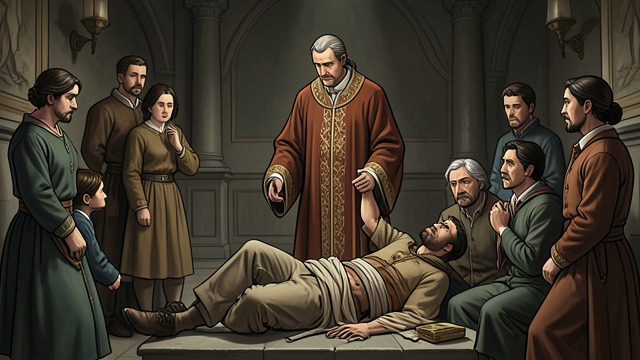
Sacrifice Under Chefone
Authority sanctified
Chefone uses ritual and political performance to justify his power and the suffering he imposes. Sacred language becomes a means of disciplining passengers rather than protecting them.
The violence exposed
The ship’s culture gradually recognizes that sacrifice can be empty or coerced. Repetition has worn down the holiness that once might have made a rite meaningful.
Libidel’s Death
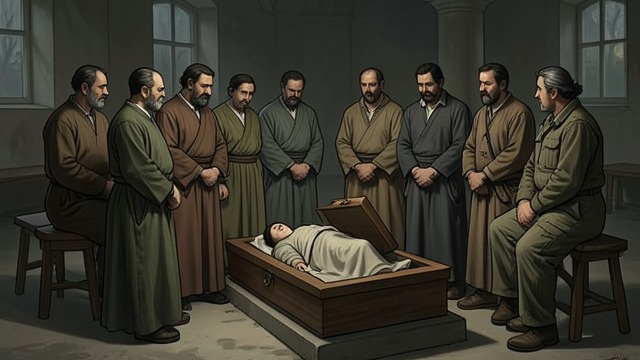
Libidel’s Death
A life exhausted
Libidel’s death after taking a drug leaves the passengers to sing at her grave. Her earlier public role in the Cult cannot protect her from age, sorrow, or self-destruction.
Conscience interrupted
The ship’s conscience has become cynical and frozen, making genuine love difficult to sustain. Her death exposes the human cost hidden beneath the rituals of pleasure and attention.
Refusal of Blood
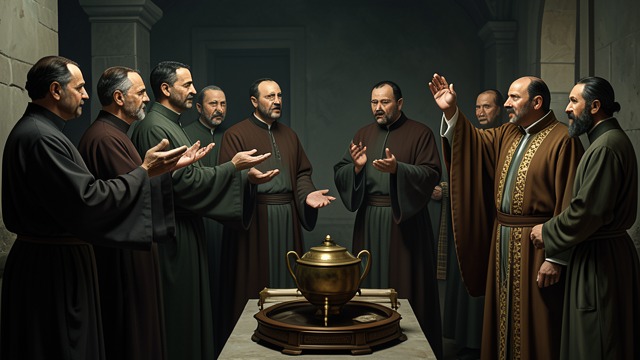
Refusal of Blood
A rite rejected
Cultic priests refuse to provide the services Chefone expects for a ritual involving blood. Their resistance is limited, but it interrupts the ruler’s attempt to turn sacrifice into an instrument of control.
A moral boundary
The refusal shows that a ritual loses legitimacy when it serves cruelty rather than care. The priests’ action costs them safety, yet it preserves a distinction between faith and coercion.
Compassion as the Last Truth
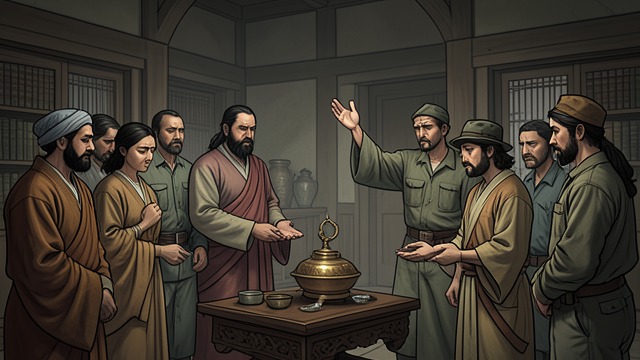
Compassion as the Last Truth
Sacrifice questioned
The poem contrasts human bloodshed with the compassion that should sustain life. Neither cosmic law nor ceremonial language can excuse a civilization’s willingness to destroy its own people.
Care outlasts doctrine
The final moral emphasis falls on compassion rather than punishment, spectacle, or rigid belief. The survivors cannot escape death, but their story can still judge the values that brought them there.
After the passengers settle aboard
During Chefone’s rule
During the middle years aboard
Late in the voyage
In the closing reflections
