Beasts of England
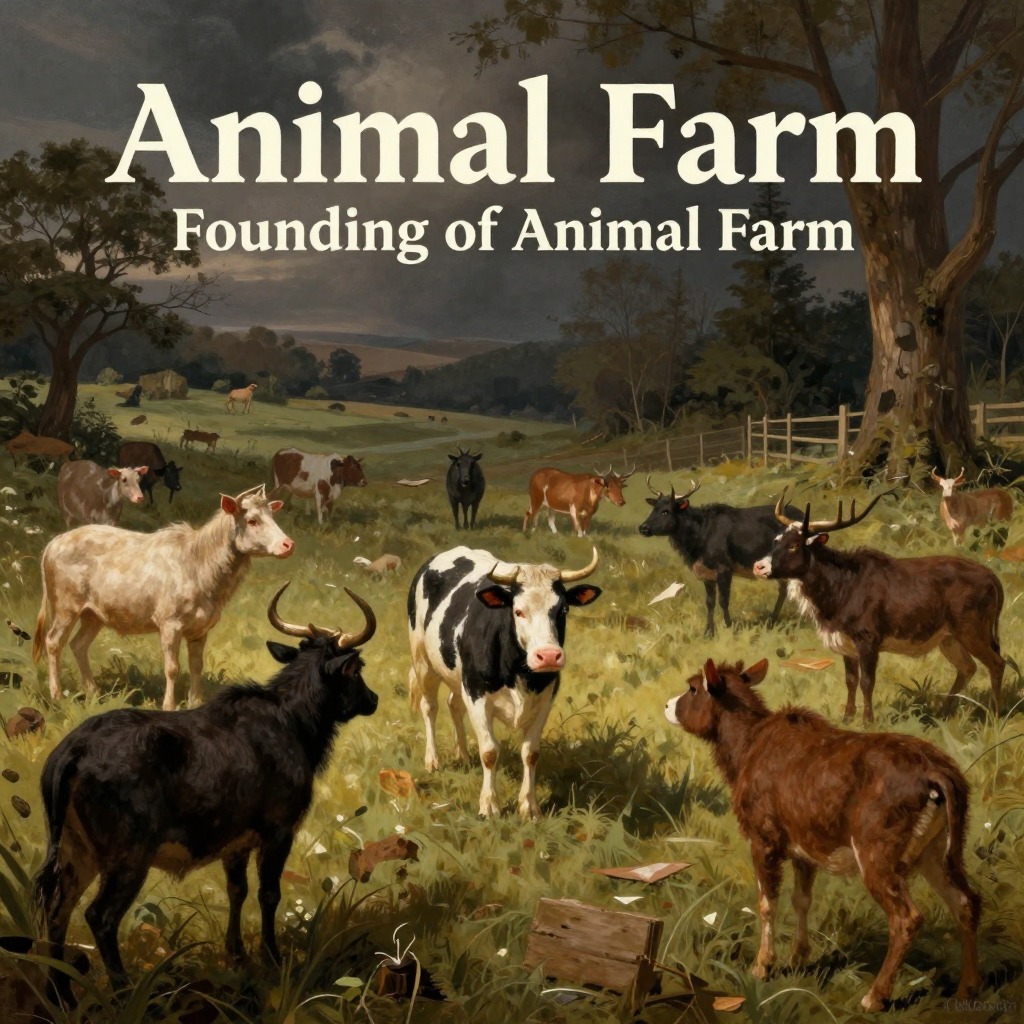
Animal FarmBeasts of England is the revolutionary anthem of Animal Farm, a song that Old Major, the prize Middle White boar, recovered from a childhood memory during his dream and taught to the assembled animals on the night he first preached rebellion. More than a mere tune, it became the emotional and ideological core of the Animalist movement, sung at every meeting, carried across the countryside by pigeons, and finally suppressed by Napoleon when the revolution was declared complete. Its trajectory from collective hope to forbidden memory marks the moral arc of the entire fable.
Origin and First Performance
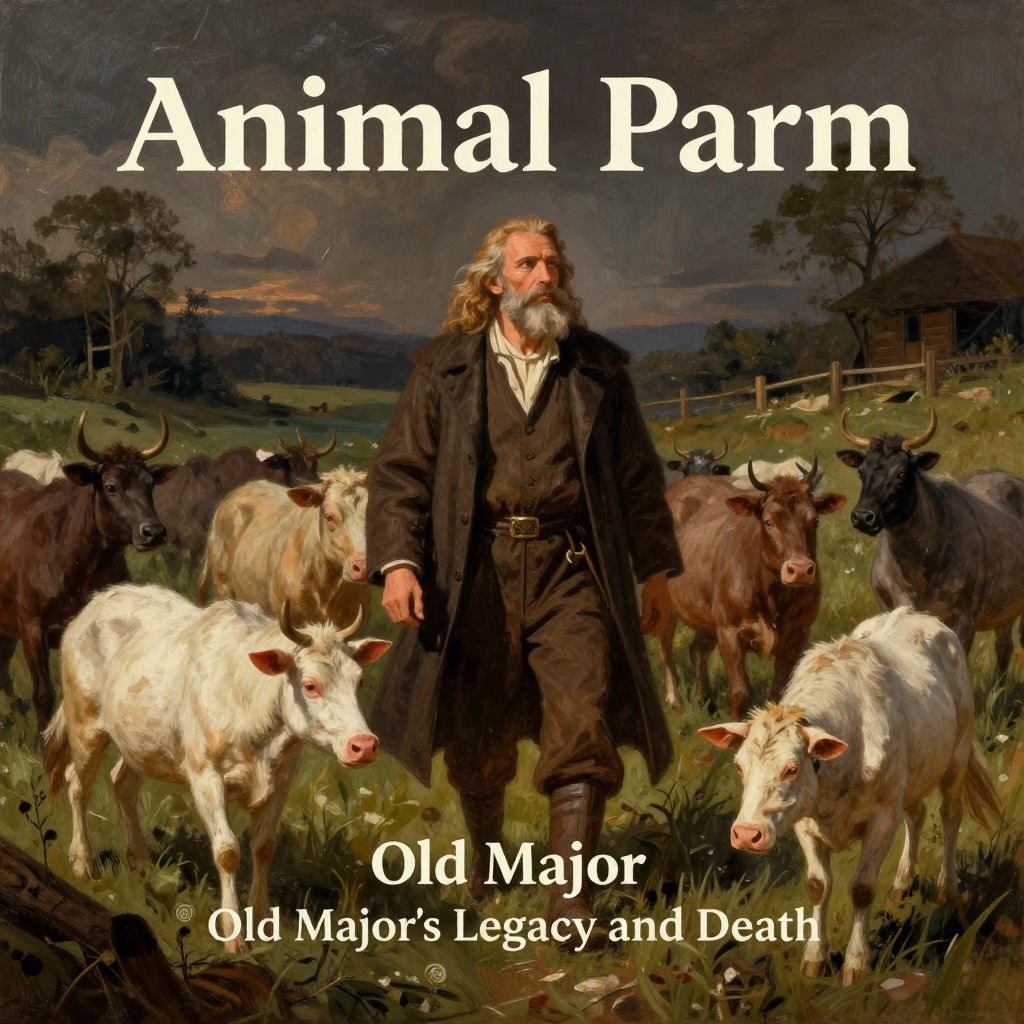
Old Major introduced Beasts of England at the end of his speech in the big barn, explaining that the tune had come back to him in his dream along with words that had been lost to animal memory for generations. He described it as a stirring tune, something between 'Clementine' and 'La Cucaracha,' and sang it in a hoarse but effective voice. The lyrics promised a golden future time when Tyrant Man would be overthrown, the fruitful fields of England would be trod by beasts alone, and rings, harnesses, bits, spurs, and cruel whips would vanish forever. The song threw the animals into wild excitement; even the stupidest picked up the tune and a few words, while the clever ones—the pigs and dogs—had the entire song by heart within minutes. The whole farm burst into Beasts of England in tremendous unison, the cows lowing it, the dogs whining it, the sheep bleating it, the horses whinnying it, the ducks quacking it. They sang it five times in succession and might have continued all night had Mr. Jones not been awakened and fired a gun into the barn, scattering them.
Role in the Rebellion and Early Days
After Old Major's death, the secret meetings in the barn always ended with the singing of Beasts of England, led unfailingly by the two cart-horses Boxer and Clover, who were the pigs' most faithful disciples. On the night of the Rebellion itself, after the animals had expelled Jones and destroyed the symbols of his reign, Napoleon served out double rations and then they sang Beasts of England from end to end seven times running before settling down to sleep as they had never slept before. The song was also the primary tool for spreading the revolution beyond the farm: every day Snowball and Napoleon sent out flights of pigeons whose instructions were to mingle with animals on neighbouring farms, tell them the story of the Rebellion, and teach them the tune of Beasts of England. The song spread with astonishing speed across the countryside; the blackbirds whistled it in the hedges, the pigeons cooed it in the elms, it got into the din of the smithies and the tune of the church bells. Human beings could not contain their rage when they heard it, and any animal caught singing it was given a flogging on the spot, yet the song was irrepressible and made them secretly tremble, hearing in it a prophecy of their future doom. After the Battle of the Cowshed, an impromptu celebration was held in which the flag was run up and Beasts of England was sung a number of times.
Institutionalisation and Suppression
After Snowball's expulsion, the Sunday-morning Meetings were abolished, but the animals still assembled to salute the flag, sing Beasts of England, and receive their orders for the week. The song remained part of the weekly routine even as Napoleon's power consolidated. However, after the bloody executions of the animals accused of conspiring with Snowball, the surviving animals—shaken and miserable—huddled together on the knoll where the half-finished windmill stood. Clover, unable to find words for her grief, began to sing Beasts of England, and the others took it up, singing it three times over very tunefully but slowly and mournfully, in a way they had never sung it before. They had just finished when Squealer, attended by two dogs, announced that by a special decree of Comrade Napoleon, Beasts of England had been abolished. It was no longer needed, he explained, because the Rebellion was now completed; the execution of the traitors that afternoon had been the final act, the enemy both external and internal had been defeated, and the better society for which the song expressed longing had now been established. In its place, Minimus the poet composed a new song beginning "Animal Farm, Animal Farm, Never through me shalt thou come to harm!" which was sung every Sunday morning after the hoisting of the flag, but somehow neither the words nor the tune ever seemed to the animals to come up to Beasts of England.
Secret Survival and Final Irony
Despite the official prohibition, Beasts of England never entirely died. Years later, when the farm had grown richer but the animals themselves no richer, when the Seven Commandments had been reduced to a single maxim that "All animals are equal but some animals are more equal than others," the animals still secretly knew the tune. It was a fact that every animal on the farm knew it, though no one would have dared to sing it aloud. Even the pigs themselves could not entirely forget it: on the night when the pigs discovered a case of whisky in the cellars of the farmhouse, there came from the farmhouse the sound of loud singing in which, to everyone's surprise, the strains of Beasts of England were mixed up. The song that had once united all animals in a common hope for freedom became, by the end, a forbidden memory that survived only in whispers and in the drunken nostalgia of the very pigs who had suppressed it—a final, bitter irony that underscored how completely the dream of animal equality had been betrayed.