Farmhouse
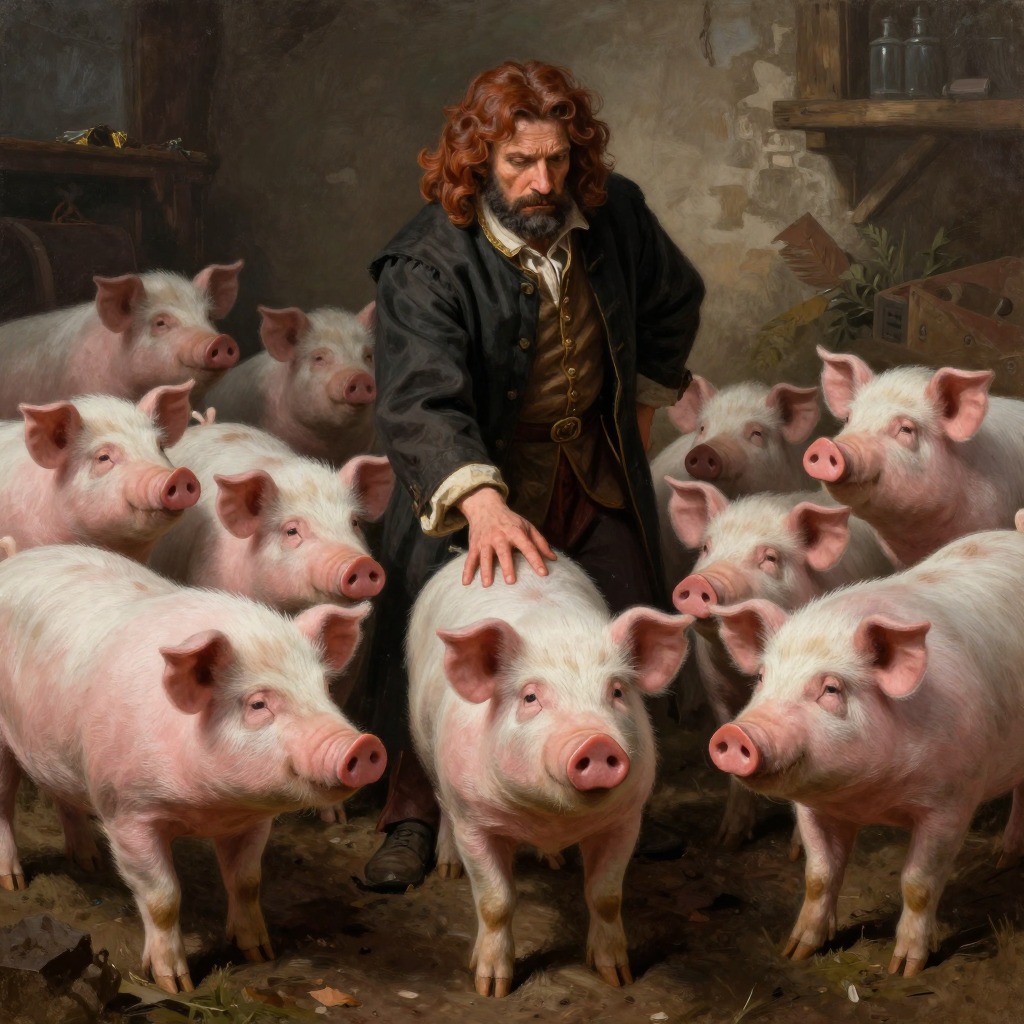
Animal FarmThe Farmhouse on Animal Farm is the central domestic building of the farm, originally the home of the human owner Mr. Jones. After the Rebellion, it is preserved as a museum and no animal is permitted to live there, but this resolution is soon broken when the pigs, led by Napoleon, move in and take over the house for their own exclusive use. The Farmhouse becomes the physical symbol of the pigs' growing privilege, their adoption of human habits, and the final erasure of the line between animal and human rule.
Identity and Early Significance
The Farmhouse is the two-story dwelling at the heart of the Manor Farm, where Mr. Jones and his wife live before the Rebellion. On the night of the Rebellion, after the animals have driven Jones and his men off the property, they file back to the farm buildings and halt in silence outside the door of the Farmhouse. That, too, is theirs, but they are frightened to go inside. Snowball and Napoleon butt the door open with their shoulders, and the animals enter in single file, walking with the utmost care for fear of disturbing anything. They tiptoe from room to room, afraid to speak above a whisper and gazing with a kind of awe at the unbelievable luxury: the beds with their feather mattresses, the looking-glasses, the horsehair sofa, the Brussels carpet, and the lithograph of Queen Victoria over the drawing-room mantelpiece. Mollie is discovered to have remained behind in the best bedroom, admiring herself in the glass with a piece of blue ribbon from Mrs. Jones's dressing-table. A unanimous resolution is passed on the spot that the Farmhouse should be preserved as a museum, and all agree that no animal must ever live there. Some hams hanging in the kitchen are taken out for burial, and the barrel of beer in the scullery is stove in with a kick from Boxer's hoof; otherwise nothing in the house is touched.
The Pigs Move In
Despite the original resolution, the pigs eventually move into the Farmhouse and take up their residence there. The animals seem to remember that a resolution against this had been passed in the early days, but Squealer convinces them that this is not the case. He argues that it is absolutely necessary for the pigs, who are the brains of the farm, to have a quiet place to work in, and that it is more suited to the dignity of the Leader—for of late Napoleon has taken to being called "Leader"—to live in a house than in a mere sty. The pigs not only take their meals in the kitchen and use the drawing-room as a recreation room, but also sleep in the beds. When Clover questions this, Muriel reads the Fourth Commandment on the wall and finds that it now says, "No animal shall sleep in a bed with sheets." Squealer explains that the rule was against sheets, which are a human invention, and that the pigs have removed the sheets and sleep between blankets. The animals accept this explanation, and no more is said about the pigs sleeping in the Farmhouse beds. Soon after, it is announced that the pigs will get up an hour later in the mornings than the other animals, and no complaint is made about that either.
The Farmhouse as a Seat of Power and Privilege
As Napoleon's rule consolidates, the Farmhouse becomes the exclusive domain of the pigs and the center of their increasingly human-like lifestyle. Napoleon rarely appears in public, spending all his time in the Farmhouse, which is guarded at each door by fierce-looking dogs. When he does emerge, it is in a ceremonial manner with an escort of six dogs who closely surround him and growl if anyone comes too near. Even within the Farmhouse, Napoleon inhabits separate apartments from the other pigs. He takes his meals alone, with two dogs to wait upon him, and always eats from the Crown Derby dinner service that had been in the glass cupboard in the drawing-room. The pigs acquire a case of whisky from the cellars of the Farmhouse, and one night Napoleon, wearing an old bowler hat of Mr. Jones's, is distinctly seen to emerge from the back door, gallop rapidly round the yard, and disappear indoors again. The next day it is announced that the drinking of alcohol is to be punished by death, but a week later Napoleon gives orders that the small paddock beyond the orchard is to be ploughed up and sown with barley, and it soon becomes known that every pig is now receiving a ration of a pint of beer daily, with half a gallon for Napoleon himself, always served to him in the Crown Derby soup tureen.
The Final Transformation: Pigs Walking on Hind Legs
The ultimate symbol of the pigs' complete adoption of human ways takes place in the yard of the Farmhouse. One evening, after the sheep have returned from a week of being taught a new song by Squealer, the animals hear the terrified neighing of a horse from the yard. They rush in to find Squealer walking on his hind legs, strolling across the yard. Then, out from the door of the Farmhouse comes a long file of pigs, all walking on their hind legs. Finally, Napoleon himself emerges, majestically upright, casting haughty glances from side to side, with his dogs gambolling round him. He carries a whip in his trotter. The sheep burst out into a tremendous bleating of "Four legs good, two legs BETTER!" and by the time they quiet down, the pigs have marched back into the Farmhouse. The next day, the pigs who supervise the work of the farm all carry whips in their trotters. It does not seem strange when Napoleon is seen strolling in the Farmhouse garden with a pipe in his mouth, nor when the pigs take Mr. Jones's clothes out of the wardrobes and put them on—Napoleon himself appearing in a black coat, ratcatcher breeches, and leather leggings, while his favourite sow appears in the watered silk dress Mrs. Jones had been used to wearing on Sundays.
The Farmhouse as the Site of the Final Erasure
The Farmhouse is also the setting for the final scene that completes the pigs' transformation into the very humans they once overthrew. A deputation of neighbouring farmers is invited to make a tour of inspection, and that evening loud laughter and bursts of singing come from the Farmhouse. The animals creep into the Farmhouse garden and peer in at the dining-room window. There, round the long table, sit half a dozen farmers and half a dozen of the more eminent pigs, Napoleon himself occupying the seat of honour at the head of the table. The pigs appear completely at ease in their chairs. Mr. Pilkington of Foxwood proposes a toast to the prosperity of Animal Farm, and Napoleon responds by announcing that the name "Animal Farm" has been abolished and that henceforward the farm is to be known as "The Manor Farm." As the animals outside gaze at the scene, they see that the faces of the pigs have begun to look indistinguishable from the faces of the men. The creatures outside look from pig to man, and from man to pig, and from pig to man again; but already it is impossible to say which is which. The Farmhouse, which began as a forbidden museum of human luxury, ends as the stage on which the pigs complete their return to the very human tyranny the Rebellion was meant to destroy.