Napoleon
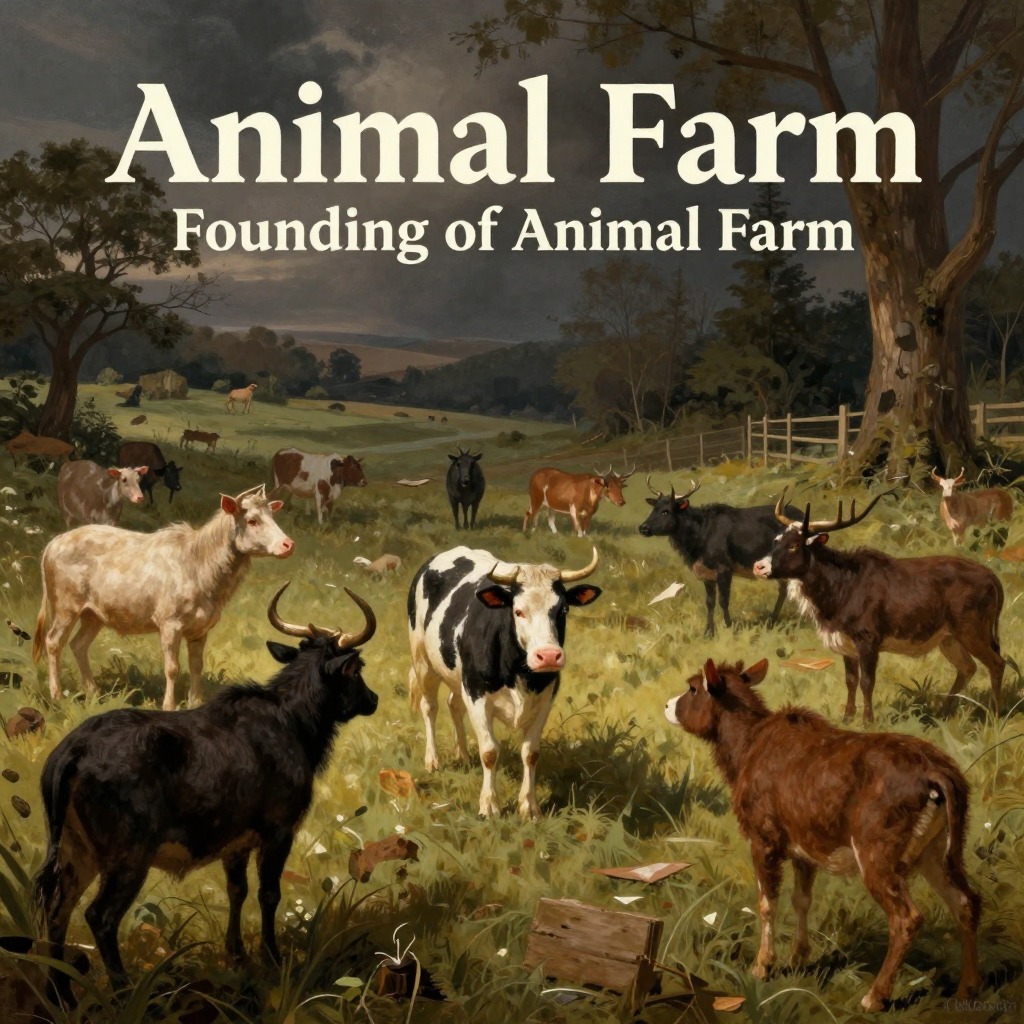
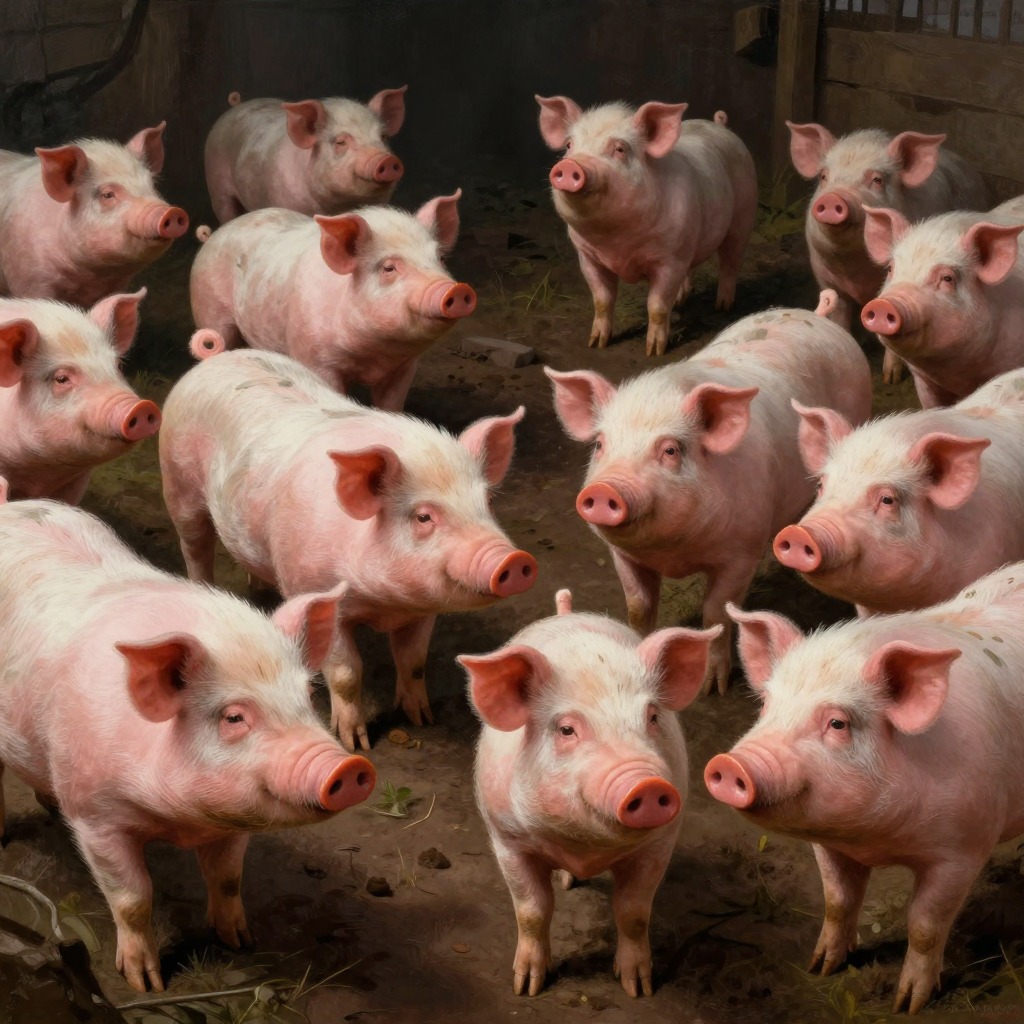
Animal FarmNapoleon is the central antagonist of George Orwell's Animal Farm, a large, fierce-looking Berkshire boar who, through cunning, manipulation, and violence, transforms the egalitarian dream of the Rebellion into a totalitarian tyranny. From his first appearance as a quiet but determined rival to Snowball, Napoleon systematically consolidates power, rewriting history and the Seven Commandments until he and his fellow pigs become indistinguishable from the human beings they once overthrew. His reign marks the complete corruption of the revolution's promise of freedom and equality.
Identity and Rise to Power
Napoleon is introduced as one of two young boars whom Mr. Jones is breeding up for sale, described as "not much of a talker, but with a reputation for getting his own way." Alongside Snowball and Squealer, he elaborates old Major's teachings into a complete system of thought called Animalism, holding secret meetings in the barn after Mr. Jones is asleep. After the Rebellion succeeds and Mr. Jones is expelled, Napoleon takes a leading role: he leads the animals back to the store-shed to serve out double rations, and together with Snowball, he butts open the door of the farmhouse. It is Napoleon who sends for paint and leads the way to the five-barred gate where the farm is renamed Animal Farm. From the earliest days of the new order, a rivalry with Snowball is evident: at the Sunday Meetings, the two are never in agreement, and whatever suggestion one makes, the other can be counted on to oppose it. While Snowball busies himself with organizing Animal Committees and drawing up plans for a windmill, Napoleon takes no interest in these projects, declaring instead that the education of the young is more important. He takes Jessie and Bluebell's nine puppies soon after they are weaned, sequestering them in a loft accessible only by a ladder from the harness-room, and keeps them in such seclusion that the rest of the farm soon forgets their existence.
The Coup and the Establishment of Dictatorship
Napoleon's decisive break comes at the Sunday Meeting when the windmill is to be put to a vote. As Snowball's eloquence carries the animals away, Napoleon stands up, casts a peculiar sidelong look at Snowball, and utters a high-pitched whimper. At this signal, nine enormous dogs wearing brass-studded collars—the puppies he had reared privately—bound into the barn and chase Snowball off the farm. With the dogs following him, Napoleon mounts the raised platform where old Major had once stood and announces the end of the Sunday-morning Meetings. All questions relating to the working of the farm will henceforth be settled by a special committee of pigs, presided over by himself, meeting in private. When four young porkers squeal in disapproval, the dogs growl and the sheep break into a tremendous bleating of "Four legs good, two legs bad!" that puts an end to any discussion. Squealer is sent to explain the new arrangement, arguing that leadership is a deep and heavy responsibility and that without iron discipline, Jones would come back. Boxer, having had time to think, voices the general feeling: "If Comrade Napoleon says it, it must be right," and from then on adopts the maxim "Napoleon is always right."
Consolidation of Power and the Cult of Personality
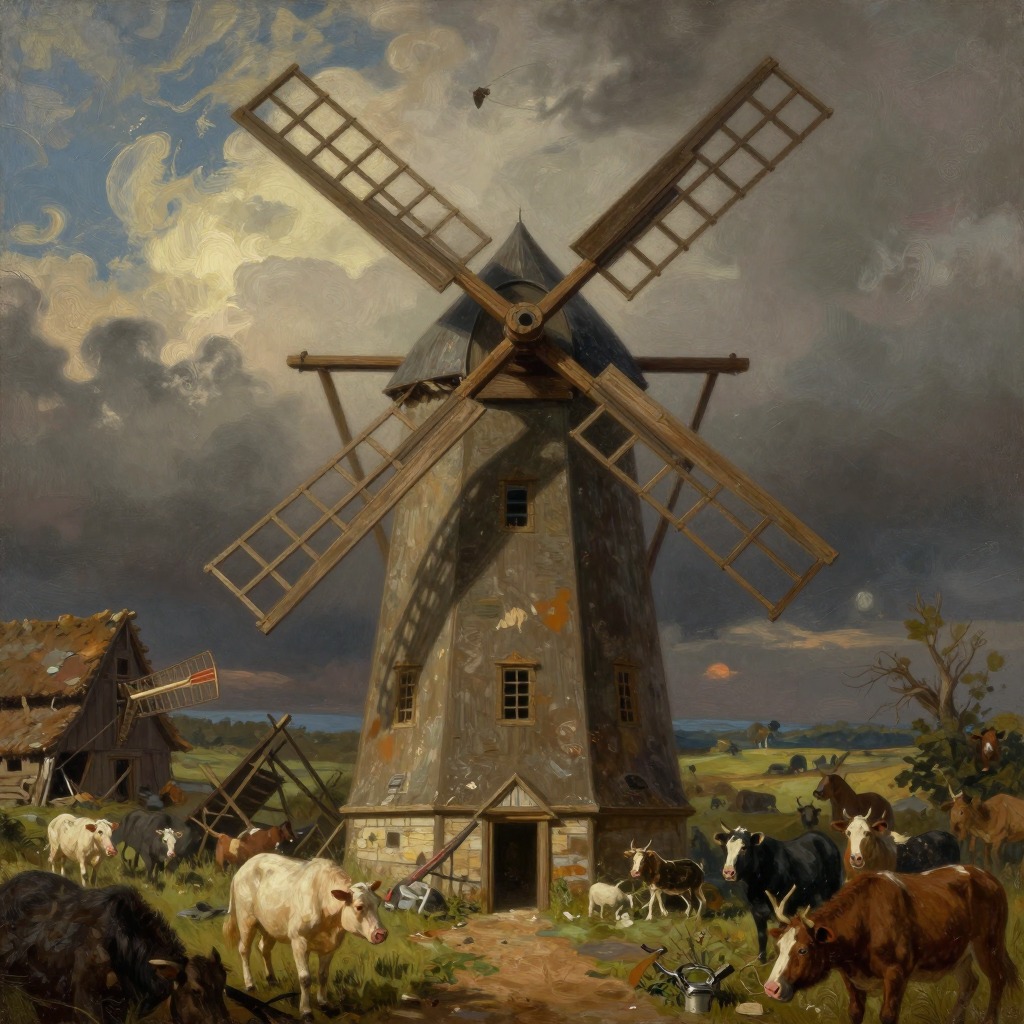
Napoleon's rule quickly becomes absolute. On the third Sunday after Snowball's expulsion, he announces that the windmill is to be built after all, and Squealer later explains that Napoleon had never really been opposed to it—he had only seemed to oppose it as a tactic to get rid of Snowball. The pigs move into the farmhouse, and when Clover questions the Fourth Commandment about sleeping in beds, Muriel reads it as "No animal shall sleep in a bed with sheets," a modification that Squealer justifies by saying the rule was against sheets, a human invention. Napoleon rarely appears in public, spending his time in the farmhouse guarded by fierce-looking dogs; when he does emerge, it is in a ceremonial manner with an escort of six dogs who closely surround him and growl if anyone comes too near. A black cockerel marches in front of him, acting as a trumpeter. He takes his meals alone, with two dogs to wait upon him, and always eats from the Crown Derby dinner service. The gun is fired on his birthday as well as on the other two anniversaries. He is never spoken of simply as "Napoleon" but as "our Leader, Comrade Napoleon," and the pigs invent titles for him such as Father of All Animals, Terror of Mankind, Protector of the Sheep-fold, and Ducklings' Friend. Squealer gives speeches with tears rolling down his cheeks about Napoleon's wisdom and goodness, and it becomes usual to give Napoleon the credit for every successful achievement. Minimus composes a poem, "Comrade Napoleon," which is inscribed on the wall of the big barn, surmounted by a portrait of Napoleon in profile executed by Squealer in white paint.
The Purge and the Rewriting of History
When the windmill is destroyed in a storm, Napoleon immediately blames Snowball, pronouncing the death sentence upon him and offering a bushel of apples for his capture. He sniffs at footprints in the grass and pronounces them to be Snowball's. As food shortages worsen, Napoleon decrees that the hens must surrender their eggs for sale; when they rebel, he orders their rations stopped and decrees that any animal giving a hen so much as a grain of corn shall be punished by death. Nine hens die before they capitulate. Napoleon then orders a full investigation into Snowball's activities, making a careful tour of the farm with his dogs, snuffing the ground and exclaiming "Snowball! He has been here! I can smell him distinctly!" Squealer then announces that Snowball was in league with Jones from the very start, that he was Jones's secret agent all along, and that documents have been found to prove it. When Boxer protests that Snowball fought bravely at the Battle of the Cowshed, Squealer insists that the plot was for Snowball to give the signal for flight at the critical moment, and that it was Napoleon who saved the day by sinking his teeth in Jones's leg. Boxer finally accepts this: "If Comrade Napoleon says it, it must be right." Four days later, Napoleon orders all the animals to assemble in the yard. Wearing both his medals, with his nine huge dogs frisking round him, he utters a high-pitched whimper. The dogs seize four pigs—the same ones who had protested the abolition of the Sunday Meetings—and they confess to being in touch with Snowball, to collaborating in destroying the windmill, and to agreeing to hand over the farm to Mr. Frederick. The dogs tear their throats out. Then three hens, a goose, a sheep, and two more sheep confess to various crimes inspired by Snowball, and they are all slain on the spot. The air grows heavy with the smell of blood, unknown since the expulsion of Jones. After the executions, Squealer announces that 'Beasts of England' has been abolished, as the Rebellion is now completed. The Sixth Commandment, which the animals remember as "No animal shall kill any other animal," is later read by Muriel as "No animal shall kill any other animal WITHOUT CAUSE." Similarly, the Fifth Commandment is discovered to read "No animal shall drink alcohol TO EXCESS."
Economic Exploitation and the Final Transformation
Under Napoleon, the animals work harder than ever while receiving less food. Rations are repeatedly reduced, but Squealer proves with figures that everything is better than in Jones's day. The pigs and dogs, however, are always well-fed: the milk and apples are reserved for the pigs, and later all barley is reserved for them as well, with every pig receiving a pint of beer daily and half a gallon for Napoleon himself, served in the Crown Derby soup tureen. Napoleon proclaims Animal Farm a Republic and is elected President unanimously. He announces that fresh documents have been discovered proving that Snowball was not merely trying to lose the Battle of the Cowshed but was actually fighting on Jones's side, and that the wounds on Snowball's back were inflicted by Napoleon's teeth. When Boxer collapses from overwork, Napoleon sends him to the knacker's yard under the pretense of hospital treatment, and Squealer later announces that Boxer died in the hospital at Willingdon, having received every attention. Napoleon himself pronounces a short oration in Boxer's honor, reminding the animals of Boxer's two favorite maxims: "I will work harder" and "Comrade Napoleon is always right." In the final chapter, Napoleon is seen strolling in the farmhouse garden with a pipe in his mouth, and the pigs take Mr. Jones's clothes out of the wardrobes and put them on. The Seven Commandments are reduced to a single principle: "ALL ANIMALS ARE EQUAL BUT SOME ANIMALS ARE MORE EQUAL THAN OTHERS." At a dinner party with neighboring farmers, Napoleon announces that the name "Animal Farm" has been abolished and the farm is to be known once more as "The Manor Farm." The green flag is now plain, the custom of addressing one another as "Comrade" is suppressed, and the skull of old Major is buried. As the animals outside look through the window at the pigs and the farmers playing cards, they find it impossible to say which is which.