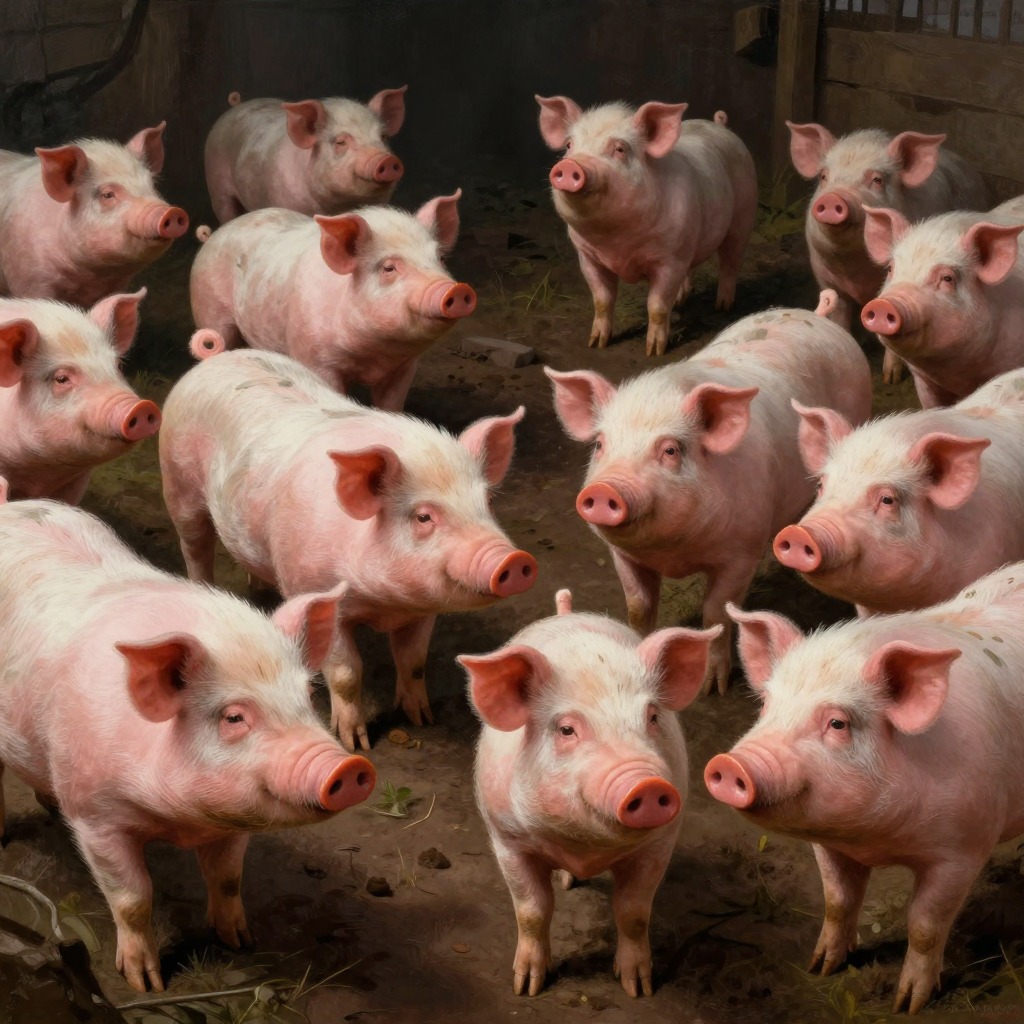
No animal shall drink alcohol
Animal FarmThe Fifth Commandment, "No animal shall drink alcohol," was one of the seven foundational laws inscribed on the end wall of the big barn by Snowball shortly after the Rebellion. It was written in great white letters that could be read thirty yards away, alongside the other commandments that together formed an unalterable law by which all animals on Animal Farm must live forever after. The commandment reflected Old Major's explicit warning that no animal must ever adopt the vices of Man, including drinking alcohol, which he had listed among the evil habits that must be avoided after the human beings were overthrown.
Original Form and Early Enforcement
In the early days of Animal Farm, the prohibition against alcohol was taken seriously. When the pigs discovered a case of whisky in the cellars of the farmhouse, the resulting events led to a solemn decree. Napoleon, after a night of loud singing during which the strains of "Beasts of England" were heard, was seen wearing an old bowler hat of Mr. Jones's, galloping around the yard. The next morning, Squealer appeared seriously ill and announced that Comrade Napoleon was dying. As his last act upon earth, Napoleon pronounced that the drinking of alcohol was to be punished by death. This dramatic declaration reinforced the original commandment and seemed to affirm the pigs' commitment to the principle.
Quiet Amendment and Selective Application
Despite the death penalty decree, the commandment was soon altered. A few days after the whisky incident, Muriel, reading over the Seven Commandments to herself, noticed that the Fifth Commandment had been changed. The animals had thought it read "No animal shall drink alcohol," but there were two words they had forgotten. Actually, the commandment now read: "No animal shall drink alcohol TO EXCESS." This modification, like the earlier alterations to the Fourth and Sixth Commandments, was accomplished through the same method: the pigs used a ladder, a paint-brush, and white paint to revise the text on the wall, as evidenced by the broken ladder and overturned paint pot found at the foot of the barn wall one night. The amendment allowed the pigs to consume alcohol in moderation while maintaining the fiction that the law had not been violated.
Consequences and Normalization of Privilege
Following the amendment, the pigs' consumption of alcohol became an accepted part of farm life. It was announced that from now onwards all barley would be reserved for the pigs, and the news soon leaked out that every pig was now receiving a ration of a pint of beer daily, with half a gallon for Napoleon himself, which was always served to him in the Crown Derby soup tureen. The pigs also acquired the money to buy themselves another case of whisky, and the brew-house, which had been disused in Jones's time, was put back into operation, producing a warm, rich, appetising scent that the animals had never smelt before. The Spontaneous Demonstrations, the songs, and the processions helped the animals forget their empty bellies, at least part of the time, while the pigs grew comfortable and put on weight.
Thematic Significance
The alteration of the Fifth Commandment is a key example of how the pigs systematically eroded the original principles of Animalism to serve their own interests. The commandment's transformation from an absolute prohibition to a conditional one—allowing alcohol "to excess"—mirrors the broader pattern of rewriting the Seven Commandments, each modification removing a restriction that had once defined the animals' liberation from human tyranny. By the end of the story, the commandments had been reduced to a single principle: "ALL ANIMALS ARE EQUAL BUT SOME ANIMALS ARE MORE EQUAL THAN OTHERS." The Fifth Commandment's fate demonstrates that the pigs' rule had become indistinguishable from the human oppression they had overthrown, as they adopted the very vices Old Major had warned against, including the consumption of alcohol, while using their control over language and law to legitimize their privilege.