Pigs Wearing Clothes
Animal FarmThe pigs' adoption of human clothing represents the ultimate symbolic surrender of Animal Farm's founding ideals, completing a long arc of corruption that began with the first secret indulgences of milk and apples. What started as a practical measure to preserve the pigs' health—the exclusive consumption of milk and windfall apples, justified by Squealer's argument that these were necessary for brainworkers—gradually escalated into the wholesale appropriation of human habits, privileges, and finally, human appearance itself. By the time Napoleon was seen strolling in the farmhouse garden with a pipe in his mouth, and the pigs took Mr. Jones's clothes out of the wardrobes and put them on, the revolution had fully consumed itself.
The Path to Human Attire
The pigs' journey toward wearing clothes was not a sudden event but the culmination of a series of incremental betrayals of Animalism's core principles. The Third Commandment, inscribed on the barn wall in the early days of the Rebellion, had explicitly stated: "No animal shall wear clothes." Yet long before any pig donned a human garment, the spirit of that commandment had been eroded. The pigs had already moved into the farmhouse, slept in the beds (with the commandment quietly amended to forbid only sheets), and taken to drinking alcohol—first secretly, then openly, with Napoleon himself emerging from the farmhouse wearing Mr. Jones's old bowler hat after a night of drunken revelry. The consumption of barley, reserved exclusively for the pigs, and the daily ration of a pint of beer for every pig, with half a gallon for Napoleon served in the Crown Derby soup tureen, had normalized the very human vices the Rebellion had sworn to abolish. The pigs' bodies themselves changed: Squealer grew so fat he could with difficulty see out of his eyes, and Napoleon became a mature boar of twenty-four stone. These physical transformations mirrored their moral ones, preparing the ground for the final step of dressing in human clothes.
The Final Transformation
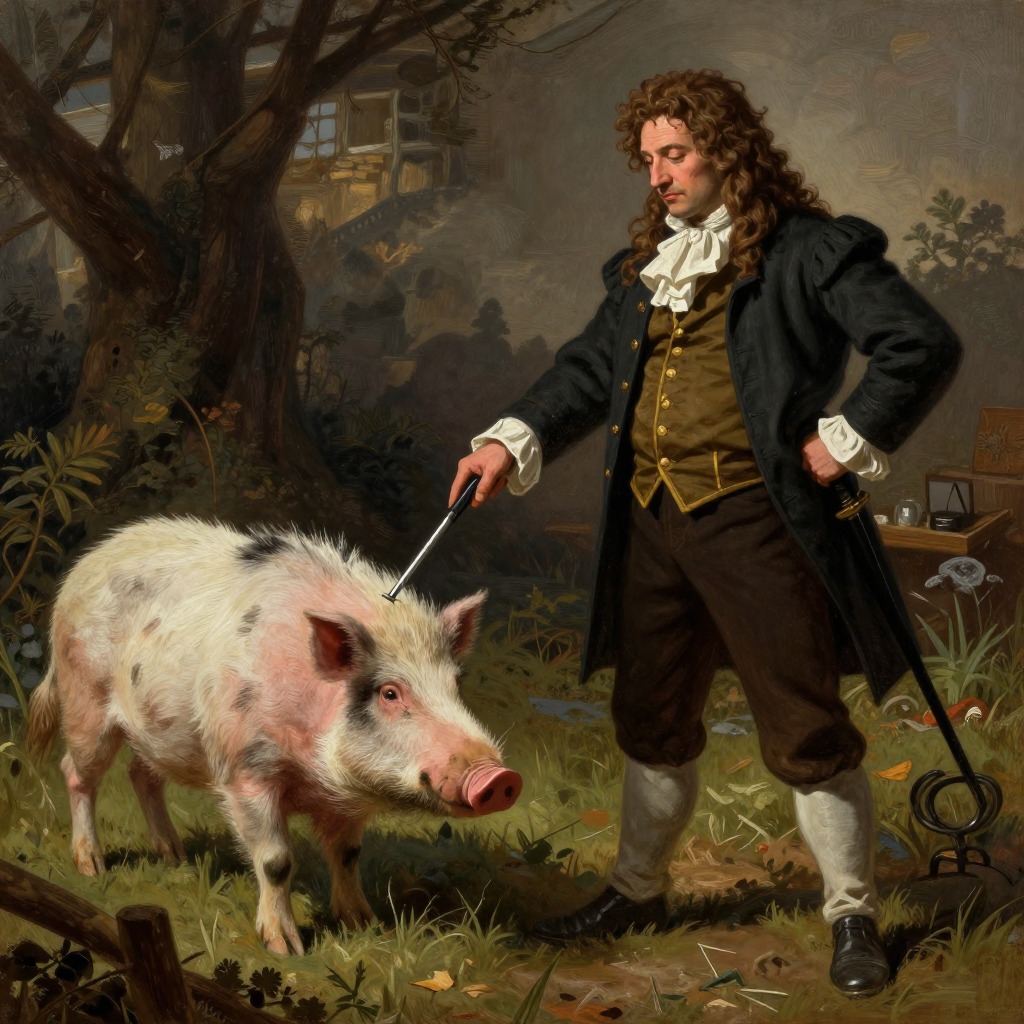
The moment of transformation came without fanfare but with devastating finality. Napoleon was seen strolling in the farmhouse garden with a pipe in his mouth—a direct violation of Old Major's injunction against smoking tobacco. Then the pigs took Mr. Jones's clothes out of the wardrobes and put them on. Napoleon himself appeared in a black coat, ratcatcher breeches, and leather leggings, while his favorite sow appeared in the watered silk dress that Mrs. Jones had been used to wearing on Sundays. This was not merely a matter of costume; it was a complete assumption of the human identity. The pigs had already begun to carry whips in their trotters while supervising work, and now they dressed as the very masters they had expelled. The animals who had once destroyed the harness-room contents—the bits, nose-rings, dog-chains, and cruel knives—and had thrown the ribbons onto the rubbish fire because "ribbons should be considered as clothes, which are the mark of a human being," now watched their leaders adopt the full regalia of human tyranny.
The Meaning of the Transformation
The pigs' adoption of human clothing was the visible sign of a deeper corruption that had been underway since the earliest days of the regime. The pigs had long since ceased to work alongside the other animals; they directed and supervised, claiming that their brainwork justified special privileges. They had rewritten the Seven Commandments to permit sleeping in beds, killing other animals, and drinking alcohol. They had created a cult of personality around Napoleon, with titles such as "Father of All Animals," "Terror of Mankind," and "Protector of the Sheep-fold," and had instituted Spontaneous Demonstrations to celebrate the regime's triumphs. The poem "Comrade Napoleon," inscribed on the barn wall, depicted Napoleon as a benevolent deity watching over all. But the clothing revealed the truth: the pigs had become indistinguishable from the humans they had overthrown. The final scene of the novel, in which the animals outside the farmhouse window look from pig to man and from man to pig and find it impossible to tell which is which, confirms that the transformation is complete. The pigs have not only adopted human clothes but human faces, human manners, and human vices. The revolution has produced new masters, not a society of equals.
The Thematic Significance
The pigs wearing clothes is the ultimate refutation of the principle that "All animals are equal." The amended commandment, "All animals are equal but some animals are more equal than others," finds its most concrete expression in the pigs' human attire. The clothes are not merely garments; they are the badge of a new ruling class that has fully internalized the habits and values of the old oppressors. The pigs now engage in trade with human beings, play cards with neighboring farmers, and drink toasts to the prosperity of the farm—now renamed "The Manor Farm." The green flag, once bearing the hoof and horn symbol of the Animal Republic, has been reduced to a plain green banner. The very name "Animal Farm" has been abolished. The pigs' clothing is the final seal on this betrayal: they have become, in every visible and invisible way, the human beings they once vowed to destroy.