Snowball
Animal FarmSnowball is one of the two principal young boars who emerge as leaders of the Animal Farm rebellion, alongside Napoleon. He is introduced as a more vivacious pig than Napoleon, quicker in speech and more inventive, though not considered to have the same depth of character. He is a key figure in the early days of the farm, teaching the principles of Animalism, leading the defense against human attacks, and conceiving ambitious plans for the farm's future, most notably the windmill. His expulsion and subsequent demonization mark a turning point in the farm's descent into tyranny, as he becomes the perpetual scapegoat for all failures and the justification for the pigs' consolidation of power.
Identity and Role in the Rebellion
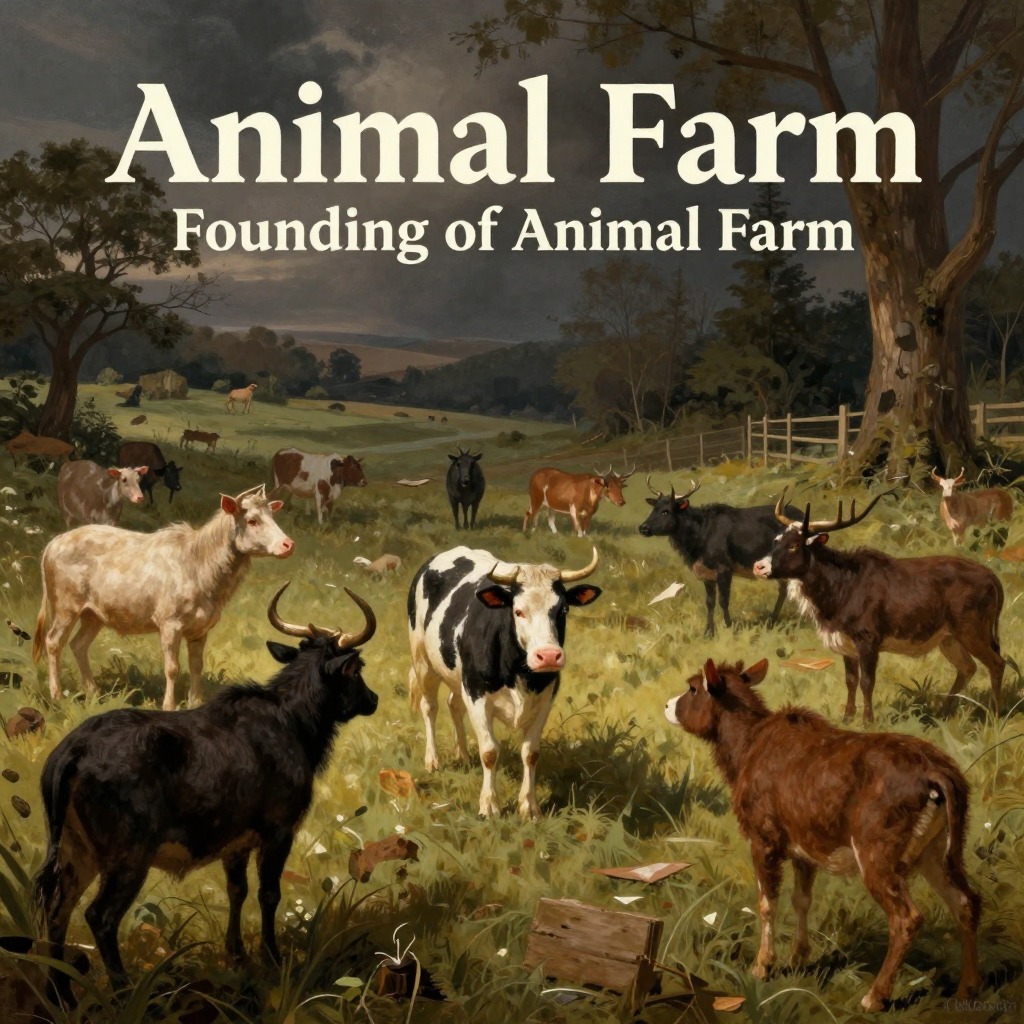
Snowball is first described as a young boar whom Mr. Jones was breeding up for sale, alongside Napoleon. He is distinguished by his vivacity, quick speech, and inventiveness, though he is not considered to have the same depth of character as Napoleon. Along with Napoleon and Squealer, Snowball elaborates old Major's teachings into a complete system of thought called Animalism, holding secret meetings in the barn several nights a week to expound its principles to the other animals. He is the driving force behind the early organization of the farm, forming various Animal Committees such as the Egg Production Committee for the hens, the Clean Tails League for the cows, the Wild Comrades' Re-education Committee, and the Whiter Wool Movement for the sheep, as well as instituting classes in reading and writing. He is also the one who paints over the name "Manor Farm" on the five-barred gate and replaces it with "Animal Farm," and who climbs a ladder to inscribe the Seven Commandments on the end wall of the big barn.
Key Actions and Objectives
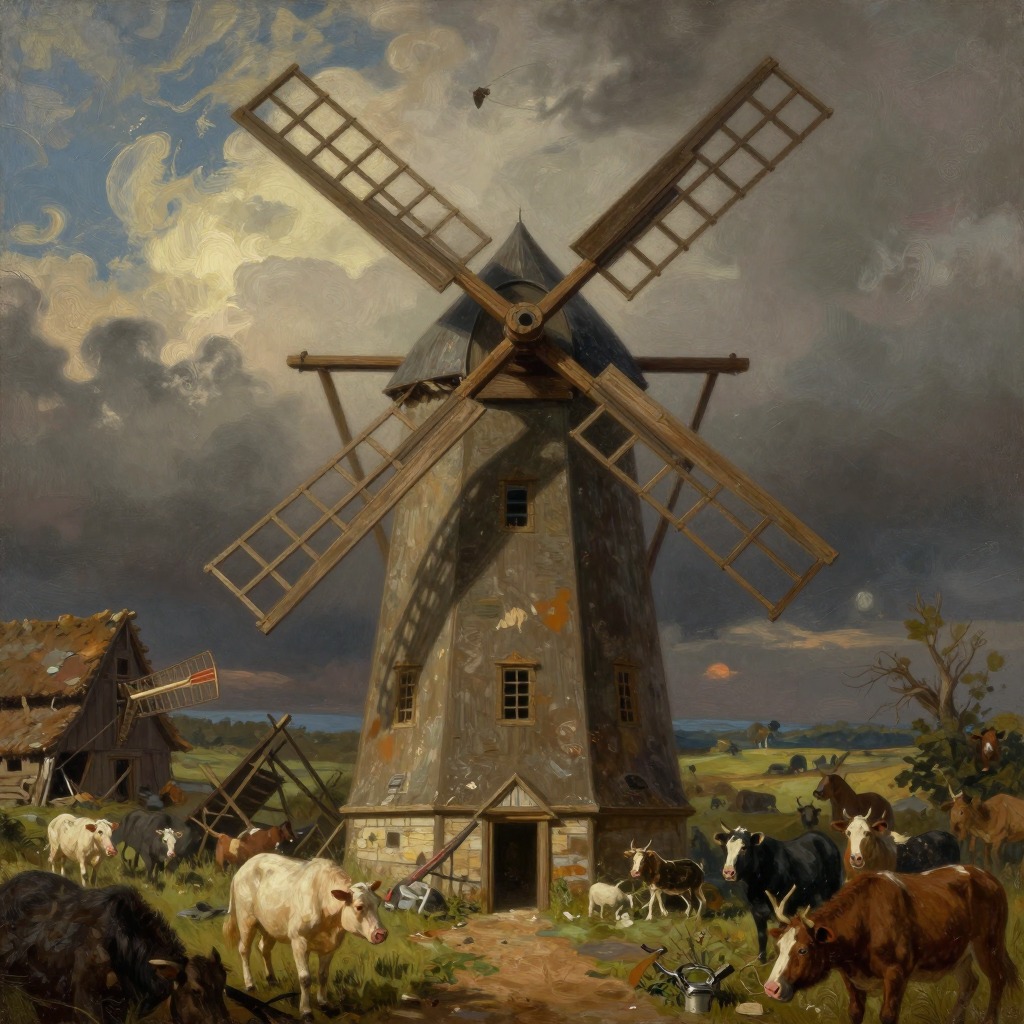
Snowball's most significant contribution is his plan for a windmill, which he declares could be made to operate a dynamo and supply the farm with electrical power, lighting and warming the stalls, and running various machinery. He works out the mechanical details from books found in the farmhouse, spending hours in the incubator shed drawing plans with chalk on the floor. He argues that the windmill would allow the animals to work only three days a week. He also takes charge of the farm's defense, studying an old book of Julius Caesar's campaigns and leading the animals to victory in the Battle of the Cowshed, where he personally charges at Mr. Jones, receiving a wound from Jones's gun. For this, he is awarded the newly created decoration "Animal Hero, First Class." He is also the one who reduces the Seven Commandments to the single maxim "Four legs good, two legs bad" for the simpler animals.
Expulsion and Transformation into Scapegoat
Snowball's rivalry with Napoleon comes to a head over the windmill project. At the crucial Sunday meeting where the vote is to be taken, Napoleon, after a brief speech, utters a high-pitched whimper, and nine enormous dogs, the puppies he had secretly reared, burst into the barn and chase Snowball off the farm. Snowball escapes through a hole in the hedge and is seen no more. From this point, Napoleon and Squealer systematically rewrite history, transforming Snowball from a hero into a traitor. He is blamed for the destruction of the windmill, accused of being in league with Mr. Jones from the very start, and said to have been a secret agent for the humans. His role in the Battle of the Cowshed is recast as cowardice and treachery, and he is declared to have been fighting on Jones's side. The animals are made to believe that Snowball is secretly frequenting the farm by night, stealing corn, breaking eggs, and committing all kinds of mischief. He becomes the explanation for every problem, from a broken window to a blocked drain, and his name is used to justify the executions of animals who confess to having been in league with him.
Narrative Role and Thematic Significance
Snowball functions as the novel's primary symbol of the betrayed revolutionary ideal. His expulsion and demonization mirror the historical fate of Leon Trotsky, who was exiled and vilified by Stalin. Snowball's vision of a technologically advanced, three-day-week farm represents the utopian promise of the rebellion, while his erasure from history and transformation into a traitor illustrate how revolutionary movements can be corrupted by power. His plans for the windmill, though initially opposed by Napoleon, are later adopted by Napoleon as his own, and the completed mill is named "Napoleon Mill." By the end of the novel, Snowball is forgotten by all but a few, and his name is no longer spoken. His fate underscores the novel's central theme: that the ideals of equality and freedom can be perverted by those who seek power, and that history is written by the victors.