poem 'Comrade Napoleon'
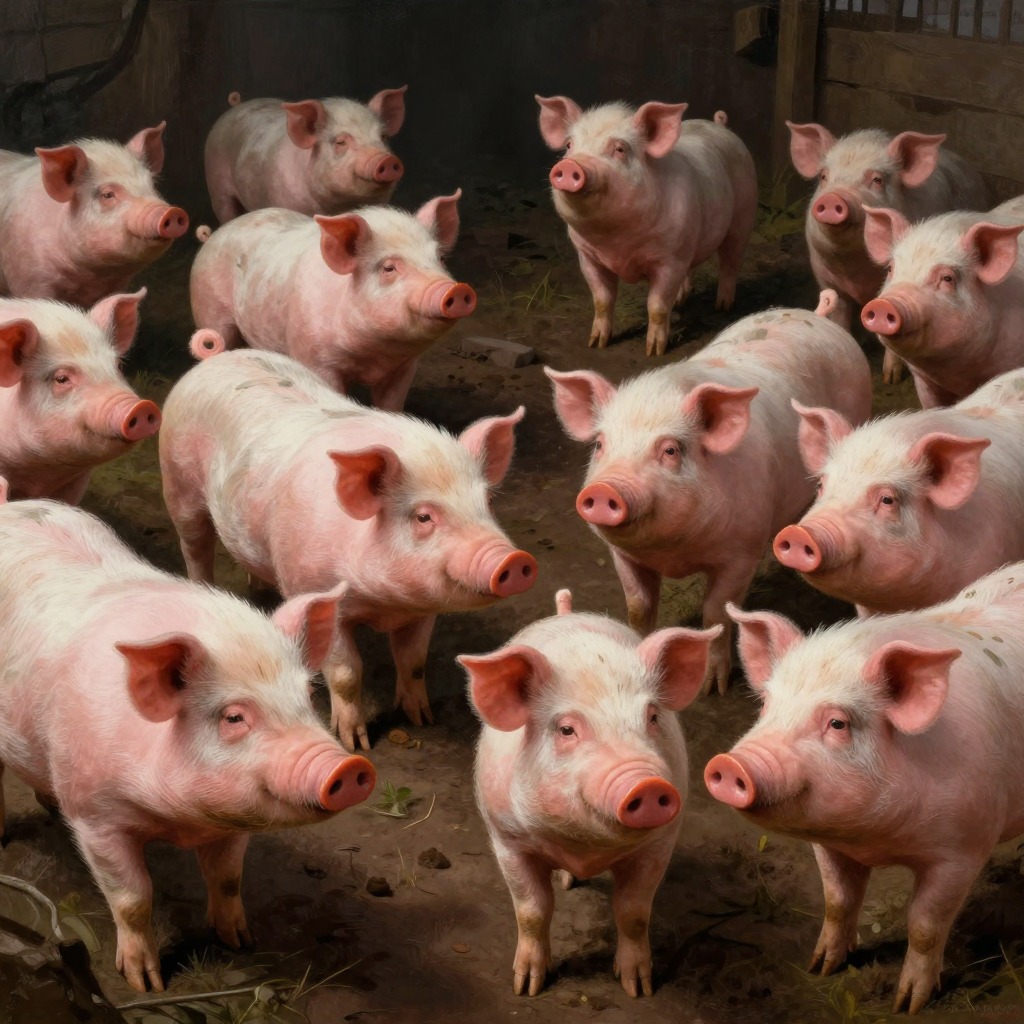
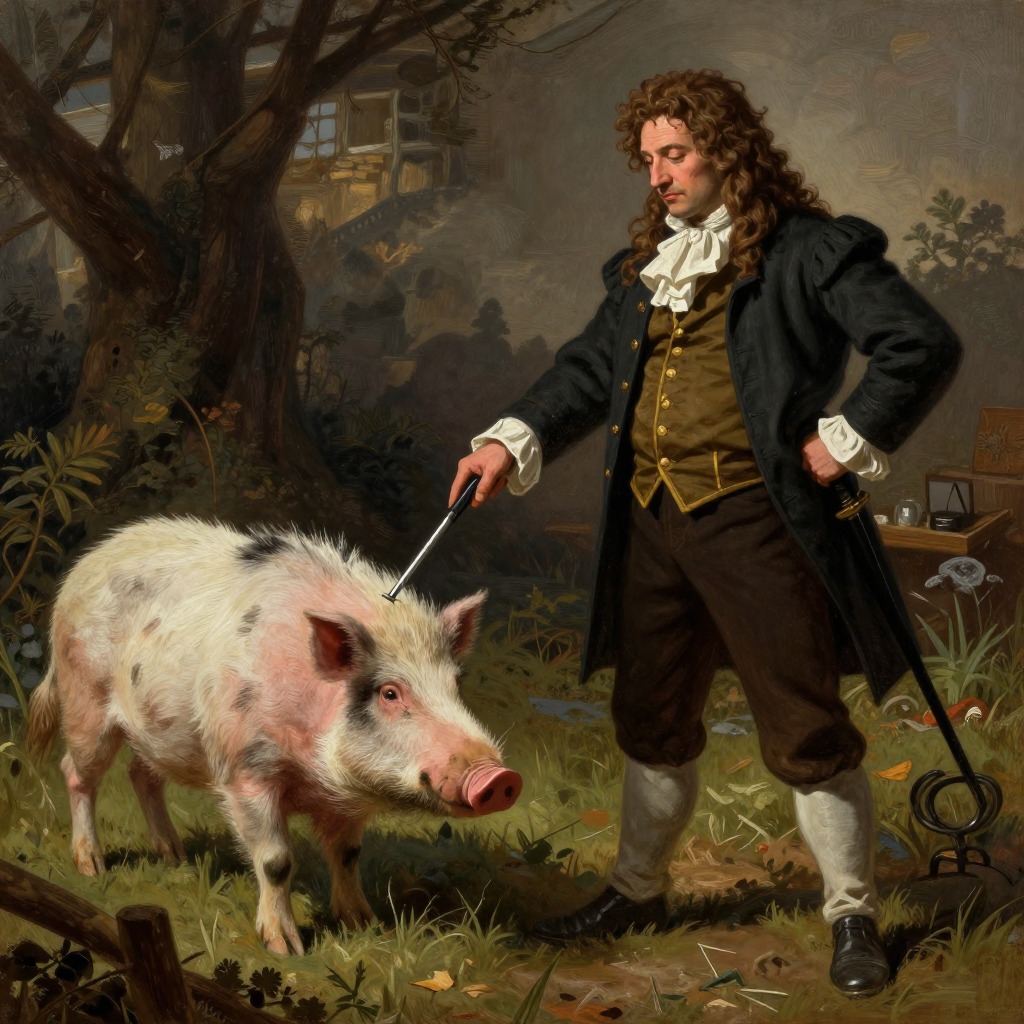
Animal FarmThe poem 'Comrade Napoleon' is a piece of propaganda composed by the pig Minimus on Animal Farm, designed to glorify Napoleon and reinforce his cult of personality through worshipful, quasi-religious language. It represents the systematic replacement of the revolutionary anthem 'Beasts of England' with a tool of ideological control, marking the final stage in the transformation of Animalism from a liberating creed into a justification for tyranny.
Composition and Content
The poem was written by Minimus, a pig with a remarkable gift for composing songs and poems, and was approved by Napoleon himself. Its verses address Napoleon with titles such as "Friend of fatherless!" and "Fountain of happiness!" and describe him as "Lord of the swill-bucket." The poem declares that the speaker's soul is "on Fire" when gazing at Napoleon's "Calm and commanding eye, / Like the sun in the sky." It credits Napoleon as "the giver of / All that thy creatures love," including "Full belly twice a day, clean straw to roll upon." The final stanza imagines a future in which even a suckling pig, before it grows as big as a pint bottle or a rolling pin, would learn to be "Faithful and true to thee" and utter "Comrade Napoleon!" as its first squeak.
Inscription and Display
Napoleon caused the poem to be inscribed on the wall of the big barn, at the opposite end from the Seven Commandments. It was surmounted by a portrait of Napoleon, in profile, executed by Squealer in white paint. This placement gave the poem a permanent, monumental presence, pairing it visually with the farm's foundational laws.
Function as Propaganda
The poem served to replace the revolutionary song 'Beasts of England,' which had been abolished by Napoleon's decree after the executions. Squealer explained that 'Beasts of England' was no longer needed because the Rebellion was completed and the better society had already been established. In its place, the poem 'Comrade Napoleon' was sung every Sunday morning after the hoisting of the flag. The poem's language—addressing Napoleon as "Friend of fatherless" and "Fountain of happiness"—casts him as a benevolent, almost divine figure who provides for all creatures. This imagery was reinforced by Squealer's speeches, in which he would talk with tears rolling down his cheeks of Napoleon's wisdom, the goodness of his heart, and the deep love he bore to all animals everywhere. The poem thus functioned as a tool of ideological control, redirecting the animals' emotional and spiritual energies from the collective dream of liberation toward the worship of a single leader.
Reception and Significance
Despite its official status, the poem never seemed to the animals to come up to 'Beasts of England.' The new song lacked the stirring, hopeful quality of the old anthem. Nevertheless, the poem was part of a broader system of rituals—including the Spontaneous Demonstrations, the weekly flag-hoisting, and the recitation of Squealer's figures—that kept the animals occupied and reminded them of their supposed freedom. The poem's content directly contradicted the reality of life on the farm: the animals were often hungry and cold, their rations were repeatedly reduced, and the pigs and dogs alone enjoyed abundance. The poem's promise of "Full belly twice a day, clean straw to roll upon" was a lie, but it served to pacify the animals and maintain the illusion that Napoleon was their benevolent protector. The poem 'Comrade Napoleon' thus stands as a key artifact of the farm's descent into totalitarianism, where language and art are weaponized to sanctify the ruler and suppress dissent.