sheep
Animal FarmThe sheep are the most numerous and obedient animals on Animal Farm, and their role evolves from passive followers into the primary instrument for silencing dissent and enforcing the pigs' tyranny. They appear in the very first gathering in the big barn, lying down behind the pigs and beginning to chew the cud, already positioned as the silent, compliant mass. Their collective bleating of slogans—first "Four legs good, two legs bad" and later "Four legs good, two legs BETTER!"—becomes the pigs' most reliable weapon against debate and protest, drowning out any voice of opposition with sheer volume and repetition.
Identity and Introduction
The sheep are introduced as part of the general animal population that assembles to hear Old Major's speech. They lie down behind the pigs and begin to chew the cud, a posture of passive acceptance that foreshadows their later function. They are among the "humbler animals" who, after Snowball reduces the Seven Commandments to the single maxim "Four legs good, two legs bad," set to work learning it by heart. Once they have mastered it, they develop a great liking for the maxim and often, as they lie in the field, start bleating it for hours on end, never growing tired of it. This mindless repetition becomes their defining characteristic.
Role in Silencing Dissent
The sheep's bleating is systematically deployed by Napoleon to shut down debate at critical moments. When the four young porkers protest the abolition of the Sunday-morning Meetings, the sheep break out into a tremendous bleating of "Four legs good, two legs bad!" that goes on for nearly a quarter of an hour and puts an end to any chance of discussion. Similarly, when the animals feel uneasy about the pigs moving into the farmhouse and sleeping in the beds, the sheep again drown out any potential protest. They are especially liable to interrupt Snowball's speeches at crucial moments, a tactic that Napoleon cultivates. Squealer also uses the sheep to spread a false impression of plenty to Mr. Whymper, instructing a few selected animals, mostly sheep, to remark casually in his hearing that rations have been increased.
The Slogan's Transformation
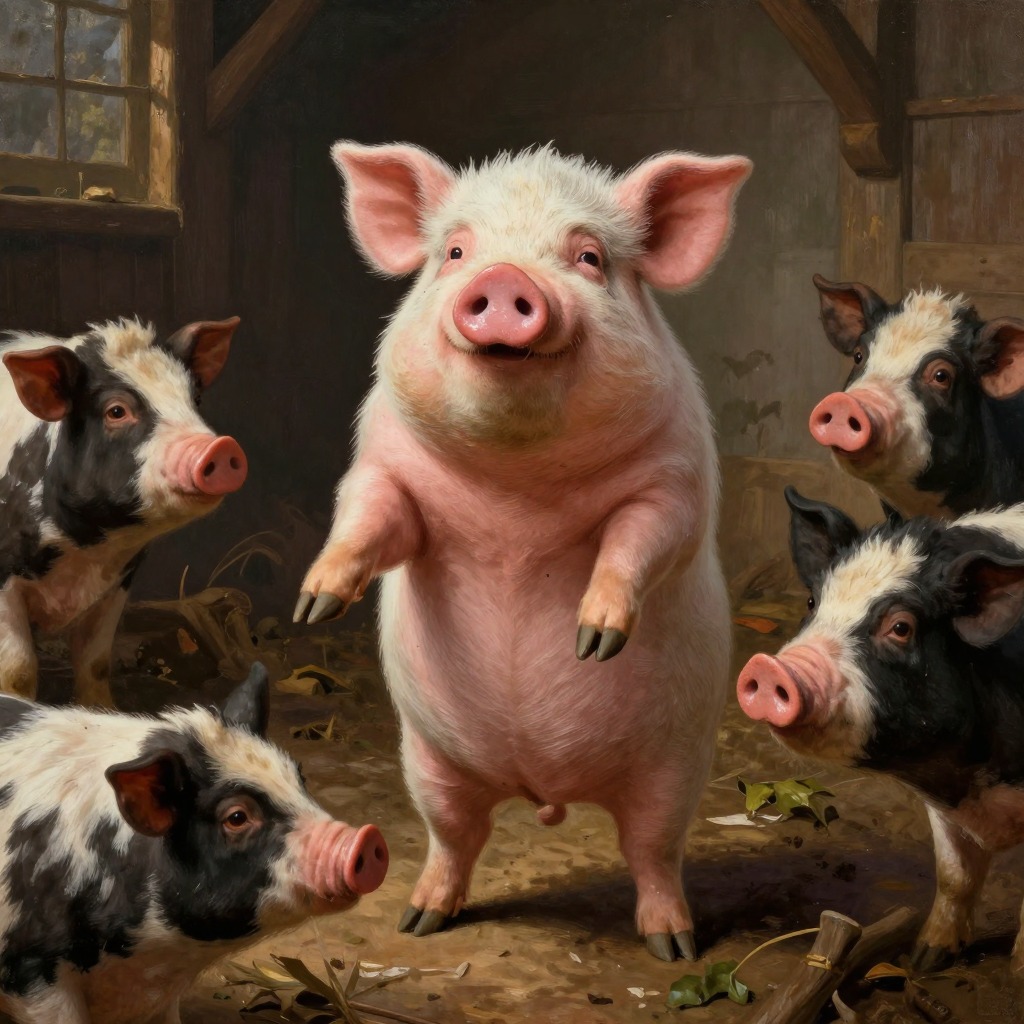
The sheep's most decisive intervention comes at the very end of the story, when the pigs emerge from the farmhouse walking on their hind legs, Napoleon carrying a whip. The animals are stunned and on the verge of protest, but at that moment, as though at a signal, all the sheep burst out into a tremendous bleating of "Four legs good, two legs BETTER! Four legs good, two legs BETTER!" This goes on for five minutes without stopping, and by the time they quiet down, the chance to utter any protest has passed. The slogan has been altered to endorse the pigs' new posture, and the sheep's mechanical repetition ratifies the final betrayal of Animalism's principles.
Thematic Significance
The sheep embody the uncritical, easily manipulated majority that forms the foundation of any authoritarian regime. They never think for themselves, never question the slogans they repeat, and their sheer numbers make their bleating an overwhelming force. They are the living proof that the pigs' power rests not on persuasion but on the ability to drown out all other voices. The sheep's transformation from passive listeners to active enforcers of the new orthodoxy mirrors the degeneration of the revolution itself: what began as a hopeful cry for freedom ends as a mindless chant that silences every challenge to tyranny.