Avonlea
Anne of AvonleaAvonlea is a rural community on Prince Edward Island, presented as both a landscape of fields, woods, and working farms and a network of neighbors whose opinions can influence everyday life. Its roads and gardens invite imaginative attention, while its school, meeting places, and shared improvement projects give residents practical ways to shape their surroundings. The village’s attachment to custom is real, but it is not fixed: newcomers become neighbors, ridicule can give way to support, and local improvement survives setbacks.
Setting and Rural Life
Avonlea’s setting is conveyed through a varied countryside rather than a single landmark. On a September journey, Anne Shirley and Diana Barry travel along a winding red road through fields and woods, past spruce stands, young maples, ferns, streams, and open stretches of goldenrod and asters. Their pleasure in the day gives the landscape a lyrical dimension, while Diana’s practical plan to make a cushion from fir needles brings the scene back to ordinary rural use. The village is surrounded by beauty, but it is also a place of work: farms depend on weather, trees are planted and tended, and roads connect dispersed homes and settlements.
The countryside’s appeal does not protect it from hardship. During a long spell of dry weather, Anne worries about parched fields and gardens, and J. A. Harrison describes the scarcity of pasture for his cattle. On May 23, the weather changes abruptly: an unusually warm day gives way to an afternoon storm, and Anne dismisses the Avonlea school early so that pupils can go home. Hail covers the ground and damages fields, gardens, apple trees, and the community’s recently planted trees. Of the two hundred trees planted by the improvers, most are broken or badly damaged. News arriving the next day indicates that the storm has also caused deaths, injuries, damage to homes, and disruption of telephone and telegraph service across the province. The contrast between the countryside’s cultivated promise and its exposure to weather is part of Avonlea’s material reality.
Neighbors, Newcomers, and Village Opinion
Avonlea’s social life is close enough for a newcomer’s habits to become public conversation. After a neighboring farm changes hands, J. A. Harrison arrives from outside the community and is soon regarded as an unusual resident. His independent household and unconventional routines attract local stories before many residents know him personally. Rachel Lynde interprets the arrival of unfamiliar people as a threat to the village’s established ways, extending her worries to other families and individuals moving into the area. Her alarm illustrates how quickly rumor and judgment can stand in for acquaintance.
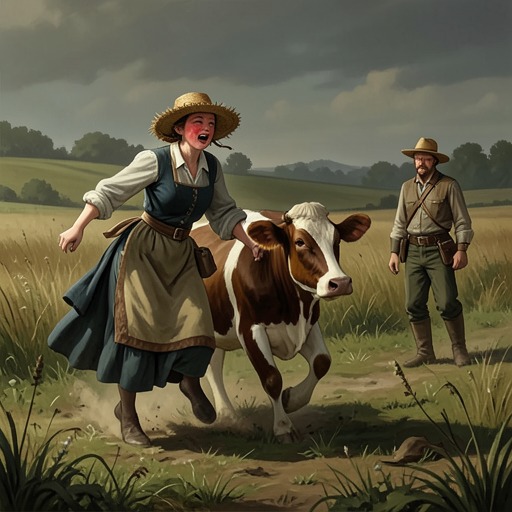
That first impression does not determine every relationship. When the Avonlea Village Improvement Society’s hall-painting effort goes wrong, the improvers initially face the prospect of renewed ridicule. Instead, residents express sympathy and offer concrete help: Major Spencer promises to clear and seed the roadside in front of his farm, and another resident offers to keep her cow from damaging a planned geranium bed at the crossroads. Even J. A. Harrison shows sympathy. The episode reveals a village capable of mockery, but also of revising its response when it sees people trying earnestly to serve the community.
Public Work and Shared Spaces
The Avonlea Village Improvement Society gives local enthusiasm an organized form. Gilbert Blythe is its president, Fred Wright its vice-president, Anne Shirley its secretary, and Diana Barry its treasurer. The group plans to meet every two weeks at members’ homes. Because its work begins late in the season, its first aim is preparation: collecting ideas, discussing them, writing and reading papers, and encouraging public support for improvement. The society’s title makes an ambitious promise, but its method is local and gradual, relying on meetings, persuasion, and visible examples rather than authority over other residents.
The group’s early reception is skeptical. Some villagers caricature its plans, imagining extravagant changes that the members have not proposed. The society’s mishap with the hall’s paint intensifies the risk that it will be treated as incompetent. Yet support grows after the mistake, and, by the following spring, the work has produced visible results. Major Spencer clears, levels, and seeds the roadside front of his farm; a dozen other men follow, whether from competitive feeling or encouragement at home. Smooth grass replaces stretches of rough growth, and the difference makes untreated farm fronts appear neglected by comparison. The crossroads triangle is also cleared and seeded, with Anne’s geranium bed planted at its center. One owner refuses to have the society intervene in an old house on his upper farm, marking a limit to what collective improvement can accomplish. Avonlea’s shared spaces change through persuasion and example, not universal agreement.
Memory, School, and Belonging
The village’s landscape also holds personal histories that are not part of public plans. At Hester Gray’s garden, Diana tells Anne the story of Hester and Jordan Gray, a couple who lived on the farm decades earlier. Jordan had made the garden for Hester, who loved its flowers; during her illness he carried her outside to spend time there. The garden, overgrown with narcissi when Anne discovers it, preserves a local memory of devotion and loss. Its flowers make an old private story newly visible to two younger residents, linking Avonlea’s physical places to histories that its present inhabitants may have nearly forgotten.
The Avonlea school is another central part of village life. Anne finishes a school year there, is rehired for the next, and looks forward to her vacation after locking the schoolhouse door. Her work and her future education are bound up with household responsibilities at Green Gables: Marilla Cuthbert’s sight has improved, but Anne still worries about leaving her and the Keith twins. Marilla proposes that Rachel Lynde move in, partly so Anne can attend Redmond College. Rachel accepts the offer of a home, while the two women agree on the boundaries of their new arrangement and on her help with the children. Their decision shows how Avonlea’s households and neighborly ties can make an individual’s wider ambitions possible.
Change and Community
Avonlea is not simply an idealized pastoral refuge. Its residents can be suspicious of outsiders, its public initiatives meet resistance, farms are vulnerable to dry weather, and the hailstorm destroys much of what residents have planted. At the same time, the society’s roadside work demonstrates how one household’s effort can prompt others to act, while practical support after a public failure can strengthen rather than end a shared undertaking. The same community that preserves old stories in a garden also negotiates new domestic arrangements and educational possibilities. Avonlea’s significance lies in that tension: it is a place shaped by land and weather, but also continually remade through memory, argument, cooperation, and care.