Avonlea Graveyard
Anne of AvonleaAvonlea Graveyard is a grass-grown, secluded burial place on the outskirts of Avonlea, important both as a setting for Anne Shirley’s regular acts of remembrance and as a site the Avonlea Village Improvement Society hopes to renovate. Its weathered appearance holds a quiet contrast: while the Society imagines a neater public space, Anne tends individual graves through gestures of affection and memory.
Setting and Proposed Improvements
The graveyard remains a solitude much as it has always been. Its old board fence is lichened and irregular, the grass is unmown, and the monuments lean. These details give the place a long-standing, neglected character rather than the appearance of a maintained civic ground.
The Avonlea Village Improvement Society has begun considering changes. Priscilla Grant has read a paper on cemeteries at a Society meeting, and the members hope eventually to replace the old fence with a neat wire railing, mow the grass, and straighten the monuments. These are plans for a future improvement, not changes already made; the graveyard is still in its grass-grown state when Anne visits.
Anne’s Visits and Acts of Remembrance
At the end of the school year, Anne walks to the graveyard with a basket of flowers. Since the earliest mayflowers, she has made a weekly pilgrimage to Matthew Cuthbert’s grave. Although nearly everyone else in Avonlea, except Marilla Cuthbert, has forgotten the quiet, shy Matthew, Anne continues to remember him as the first person who gave her the love and sympathy her deprived childhood had longed for.
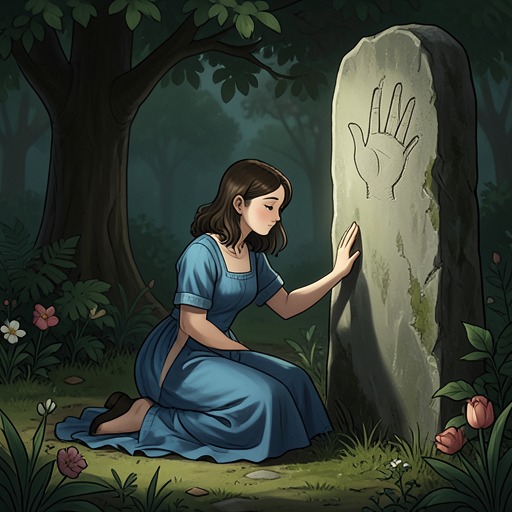
Anne’s remembrance extends beyond Matthew. Whenever she visits his grave, she also brings flowers to Hester Gray’s grave, in a little corner shaded by poplars. This practice began after the spring picnic. The evening before the visit, Anne returned to Hester Gray's garden in the woods and gathered some of Hester’s own white roses. At the grave, she says softly that she thought Hester would like those flowers better than any others. The choice makes the offering a connection not only to the dead woman but to a place and flowers associated with her life.
Other Graves and the Living
The cemetery also contains the tiny grave of Mrs. Allan’s child. When Mrs. Allan joins Anne there, the narrative connects the graveyard’s quiet losses with the changes written on the living: Mrs. Allan’s face has lost some of its youthful bloom, and the tiny grave accounts for some of the patient lines around her eyes and mouth. A recent illness of her young son has brought further lines, though that illness is now over.
Anne is still sitting by Hester’s grave when Mrs. Allan appears. The two walk home together, leaving the cemetery as a place where private grief and enduring affection meet. Its planned tidying may alter the fence, grass, and monuments, but Anne’s repeated visits show that its human significance lies in the living person’s continued attention to those who might otherwise be forgotten.