Avonlea Village Improvement Society
Anne of AvonleaThe Avonlea Village Improvement Society turns Anne Shirley’s wish to make Avonlea more beautiful into organized community work. Led by young residents, it develops plans, gathers contributions, and undertakes practical improvements; its tree-planting effort also faces a stark reversal when a hailstorm destroys most of the trees it has set out.
Origins and Aims
The idea took shape in discussion among boys and girls at the Debating Club, with support from Mr. Allan and Mrs. Allan. Anne distinguished the Society’s purpose from trying to reform individual people: its object was Avonlea itself and the possibility of making the village prettier. Her examples included improving neglected properties, making the Society’s ambitions concrete while inviting resistance from residents protective of their own choices.
By September, the Society had become an organized body. Its members recognized that the season was too advanced for many improvements, so they planned a campaign for the following summer. They intended to collect and discuss ideas, prepare and read papers, and, in Anne’s formulation, educate public sentiment. The aim was therefore not only to carry out projects but also to build local support for them.
Organization and Public Reception
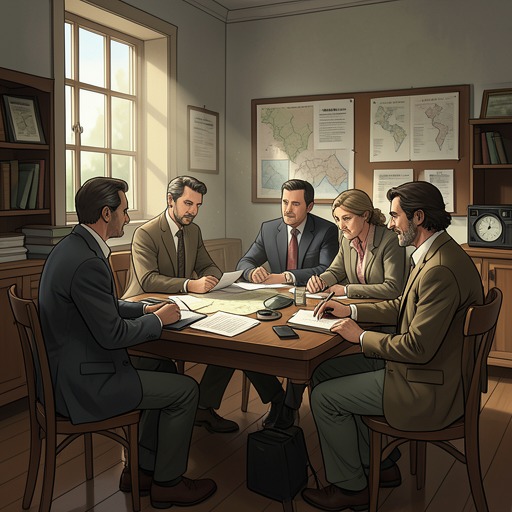
Gilbert Blythe served as president, Fred Wright as vice-president, Anne as secretary, and Diana Barry as treasurer. The members, quickly nicknamed the Improvers, met every fortnight at members’ homes. These offices and regular meetings gave the informal proposal a working structure, while the secretary’s minutes preserved decisions as the group moved from discussion to action.
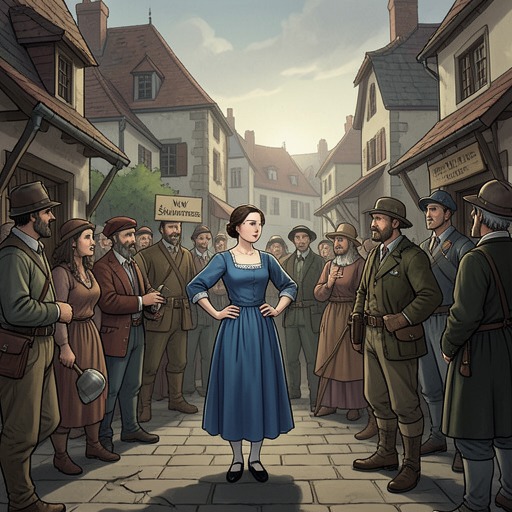
The organization met disapproval and ridicule almost from the outset. Residents circulated exaggerated accounts of its plans, including claims that the Improvers would plant geraniums along the roadsides or require people to rebuild their houses to designs approved by the Society. Other jokes imagined the group dictating improvements to farms and household routines. The gossip turned civic work into a caricature of meddling, revealing the tension between a collective vision of a better village and private resistance to being told how to live.
Projects and Methods
The Society chose a practical first project: raising money to repair the hall. At its second meeting, held in the Barry parlor, a motion to start a subscription for re-shingling and painting the hall passed unanimously. The members then appointed a committee chaired by Jane Andrews, with Gilbert, Anne, Diana, and Fred Wright among its members. They divided the roads among canvassing teams, assigning Anne and Diana to the Newbridge road, Gilbert and Fred to the White Sands road, and Jane’s team to the Carmody road.
The fundraising succeeded. Anne later reported that the Society had enough money subscribed to paint the hall and shingle its roof. She emphasized that most people had contributed liberally, presenting the project as evidence that the Improvers could win practical backing despite the mockery. Its approach combined formal motions and committee assignments with direct appeals to neighbors.
Setbacks and Significance
Tree planting became another substantial undertaking: the Improvers set out two hundred trees. A severe hailstorm on May 23 then snapped or shredded the greater number. The damage was not just to an abstract beautification plan; it erased much of the group’s planting through a sudden force beyond its control. The episode places the Society’s confidence in gradual civic improvement beside the vulnerability of living things and the village landscape to extreme weather.
The Society’s work shows Anne’s public-mindedness taking organizational form. Rather than treating improvement as a private taste, the Improvers make it a shared project requiring discussion, fundraising, persuasion, and labor. Their mixed reception and the destruction of their trees mark both the limits and the persistence of that ambition: local approval cannot be assumed, and nature does not follow a committee’s timetable, but the group still demonstrates how collective effort can turn an ideal of a prettier Avonlea into concrete plans.