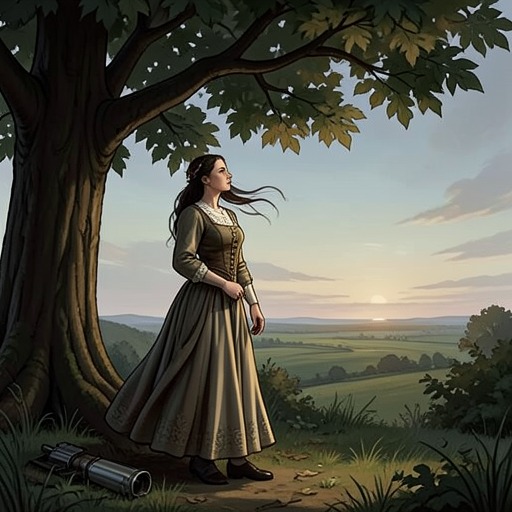
Broken heart like a bad tooth
Anne of AvonleaMiss Lavendar Lewis’s comparison of a broken heart to a bad tooth makes heartbreak both serious and manageable: it aches, sometimes keeps its sufferer awake, and yet does not prevent life from being enjoyed between painful spells. The image distills her account of losing Stephen Irving and challenges the expectation that romantic sorrow must remain constantly tragic.
The Image and Its Meaning
Miss Lavendar tells Anne Shirley, “But, Anne, a broken heart in real life isn't half as dreadful as it is in books.” She likens the injury to a bad tooth: it causes spells of aching and an occasional sleepless night, but its pain is intermittent rather than all-consuming. The comparison does not deny that her heart broke; it gives the hurt a bodily, familiar scale, making room for suffering without turning suffering into a permanent identity.
The image’s force lies in its contrast between romantic convention and lived experience. Miss Lavendar recognizes that Anne had imagined her as a figure sustained by a tragic memory beneath her outward smiles. Against that expectation, she insists that real life keeps trying to make people comfortable, even when they are determined to be unhappy and romantic. Her turn from heartbreak to enjoying peanut candy makes the point concrete: sorrow and pleasure can occupy the same life, and one does not erase the other.
The Separation Behind the Comparison
The wound began in a commonplace quarrel, whose precise origins Miss Lavendar can no longer recall. She acknowledges that Stephen began it but also that her own foolishness may have provoked him. She had been vain and coquettish, teased him, and knew that he had rivals. Both parted in anger; she expected matters to mend, but Stephen returned before she had finished sulking.
When he came back, Miss Lavendar would neither listen nor forgive him. Stephen was too proud to return again, and she, too proud to humble herself by sending for him, sulked over his absence. She describes pride and sulkiness as a destructive combination: a quarrel that might have passed instead became a lasting separation. Her confession gives the bad-tooth image a specific history. The pain was not imaginary or trivial; it followed a real loss shaped by choices neither could undo.
Grief Alongside Ordinary Life
Miss Lavendar says her heart broke when she realized Stephen was not coming back, and she could never care for anyone else or wish to marry anyone else. She would rather remain unmarried for a thousand years than marry someone who was not Stephen. Yet she also describes herself as happy and contented. Those claims do not cancel each other: the broken heart persists as an ache, while dreams, the recurring Echoes as a motif, and peanut candy remain available in the intervals.
The comparison therefore holds sorrow and resilience together without forcing a triumphant cure. Miss Lavendar’s old heartbreak can still hurt, but it does not claim every hour or make pleasure false. By treating grief as something that returns in spells and recedes between them, she replaces the bookish image of uninterrupted misery with a more uneven, humane account of how loss lives alongside ordinary enjoyment.