Davy Keith
Anne of AvonleaDavy Keith is the irrepressibly active and often troublesome twin whom Marilla brings to Green Gables, where his comic mischief tests the household’s rules and his sudden remorse reveals a more tender nature. His character is built on contrasts: he resists restraint but seeks affection, breaks rules but wants to be good, and can turn an ordinary appetite or possession into the occasion for a small domestic catastrophe. The news that his father’s will provides for him and Dora secures the home he has begun to make at Green Gables.
Identity and Arrival
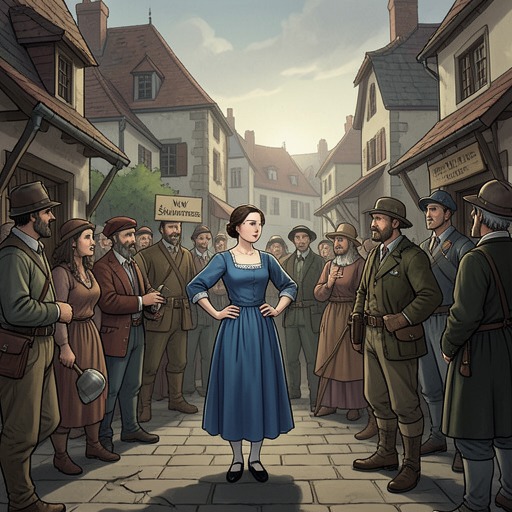
Davy arrives at Green Gables with Marilla and his twin sister, Dora, after their mother’s funeral. The journey from East Grafton is ten miles, and his perpetual motion makes it an ordeal for Marilla, who fears he will tumble from the wagon or fall beneath the pony’s hooves. When she threatens to whip him, he climbs into her lap, hugs her, and doubts that she could really hurt him. His affectionate confidence punctures her attempted sternness: even while she insists that she always obeyed as a child, his embrace is already softening her heart.
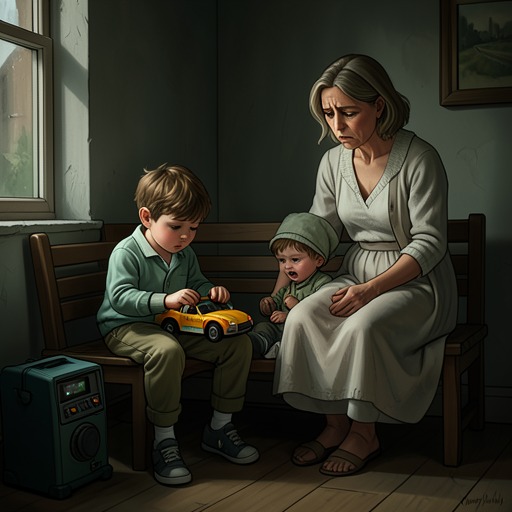
At the gate, Anne helps lift the twins from the wagon. Dora accepts a kiss calmly; Davy answers Anne’s welcome with a hearty hug and introduces himself with cheerful formality. That contrast announces their different temperaments without making Davy simply an antagonist to his sister: Dora is composed, while he arrives already in motion, ready to turn a greeting into a performance. At supper, his hunger outweighs table manners. He explains that the long ride has given him an appetite and remembers that cake was scarce at home while his mother was ill. His eagerness is comic, but it also carries a concrete memory of deprivation and of adults struggling to provide for the children.
Mischief and Its Consequences
Davy’s restlessness repeatedly becomes action before anyone can stop him. In church, after the hymns and Scripture reading, he produces a furry caterpillar from his pocket and drops it down Lauretta White’s dress. The prank interrupts Mr. Allan’s prayer with Lauretta’s shrieks and frantic attempts to remove it. Marilla sees what Davy is doing, but cannot intervene in time. His mischief is not merely a private breach of household discipline: it spills into a public religious service and makes an unsuspecting child bear its consequences.
At Green Gables, his curiosity and appetite lead to a different kind of trespass. While Marilla is away at an Aid meeting and Dora is asleep on the kitchen sofa, Davy hides in the sitting-room closet to eat the household’s reserved yellow plum preserves. He knows he has been forbidden to touch anything in the closet. What begins as a small taste becomes a full indulgence: after trying the jam with his finger, he fetches a spoon and eats more. The episode shows that he can distinguish a rule from a temptation even as he chooses to disregard it; his defense is the pleasure of the preserves, not ignorance of the prohibition.
His attraction to objects is not limited to food. After finishing a herring net, he winds the twine into a ball and adds it to the many similar balls he keeps on a pantry shelf for the pleasure of possessing them. When he climbs onto a table to reach the shelf, despite Marilla having forbidden him to do so after an earlier mishap, he slips and lands on two lemon pies. His clean blouse is covered in filling, the pies are ruined, and the pig eventually benefits from the accident. The scene joins Davy’s desire to collect, his disregard of a known limit, and the physical consequences of his impulsiveness in a single domestic farce.
Conscience, Faith, and the Wish to Be Good
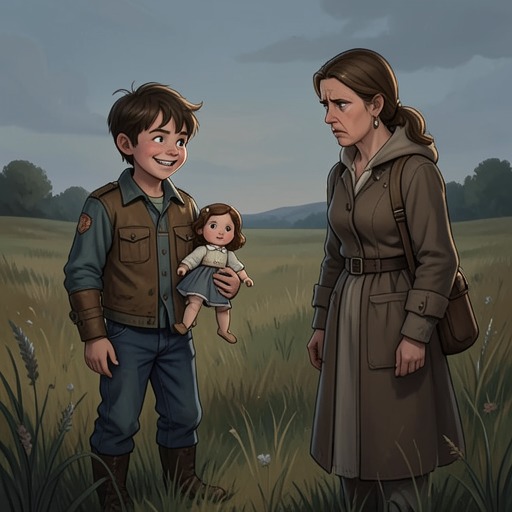
Davy’s disobedience does not mean that he is incapable of remorse. After Anne’s fright and exertion, his impenitent manner brings tears to her eyes. Seeing that he has made her cry overwhelms him: he rushes into her lap, wraps his arms around her, and weeps. He explains that he did not know lying was wrong because children in his former household told falsehoods regularly. He had been trying to be as good as Paul Irving, and fears that Anne will no longer love him. Anne’s response to his tears is a sudden understanding; his apology is not a polished lesson in manners, but an emotional recognition that his conduct has hurt someone whose affection matters to him.
His religious instruction produces another revealing mixture of literalness and mischief. Marilla has taught him a catechism question about why people should love God. Davy connects its wording to the preserves he has just stolen, taking the word as a reference to jam and imagining that the catechism says God makes it. Anne has to explain that a comma changes the meaning. Davy accepts the correction with disappointed conviction, then wonders whether heaven would contain Saturdays. The joke depends on his appetite, but also on the way he tries to make abstract religious teaching intelligible through familiar experiences.
Later, Anne finds him sulking at bedtime. He refuses to say his prayers and says he will stop trying to be good because Anne would rather have Paul Irving, so being bad might at least be fun. His complaint exposes a vulnerability beneath his swagger: he measures his standing by Anne’s affection and interprets her admiration for Paul as evidence that his own efforts cannot succeed. The contrast with his earlier remorse matters. Davy wants to improve, but his desire is precarious, especially when he feels that goodness earns him no place in the affection he seeks.
Relationships and a Home at Green Gables
Davy’s connection with Anne combines affection, testing, and a need for reassurance. He greets her with an embrace, confesses his fear of losing her love after making her cry, and later frames his attempt to be good around whether she values him as much as Paul. Anne is not simply the person who catches him breaking rules; she is also the person whose tears can call forth his remorse and whose regard shapes his understanding of himself. Their bond gives his misbehavior emotional stakes that punishment alone would not convey.
His relationship with Marilla is likewise made of opposing pressures. She fears for his safety on the journey, corrects his manners, forbids him to touch the preserves, and warns him away from climbing on the pantry table. Davy repeatedly strains those limits, yet his affection is direct: on the wagon he responds to her threat with a hug and a teasing appeal to her own childhood. Marilla’s discipline has to contend with a child who is both difficult to control and difficult to resist loving.
The twins’ future becomes uncertain when Marilla and Anne wonder whether their father, Richard Keith, will send for them. Anne dreads receiving such a letter because she wants the children to stay. Instead, a month later, the news comes that Richard has died of consumption. His will leaves two thousand dollars to Marilla in trust for Davy and Dora until they come of age or marry, with the interest designated for their maintenance. Marilla had wanted to keep the twins but could not see how she would afford to support them as they grew older; she had also insisted that Anne’s money not be spent on them. The bequest resolves that practical obstacle and makes their continued home at Green Gables possible.
Character and Narrative Role
Davy’s episodes move between farce and feeling. A caterpillar in church, contraband plum preserves, and lemon pies crushed beneath a falling boy all turn his impulsiveness into visible consequences. Yet the same child who causes embarrassment and damage can be shaken by Anne’s tears, anxious about whether she loves him, and sincerely eager to measure himself against an ideal of goodness. The change is not that he ceases to be mischievous; the available episodes show that his manners improve and that school gives his restless energy an outlet, while his appetite and rule-breaking remain part of his character.
That mixture makes him more than a device for household comedy. His literal reading of the catechism and his question about Saturdays bring a child’s material imagination into contact with adult religious instruction; his jealousy of Paul reveals how a wish to be good can collapse when it seems incompatible with being loved. Finally, the inheritance plot turns the question of belonging into a practical one. Davy’s place at Green Gables depends not only on Marilla and Anne’s attachment to the twins, but also on the provision that enables them to keep the children. His exuberant arrival thus develops into a lasting family arrangement, supported by both affection and material security.