Emily Harrison
Anne of AvonleaEmily Harrison’s return transforms James A. Harrison’s comic reputation as a troublesome bachelor into the story of a marriage strained by incompatible habits, mutual stubbornness, and a parrot named Ginger. She is neither simply the tidy wife James resented nor merely the injured spouse he had blamed: when the couple reunite in Avonlea, she acknowledges her own haste and excessive expectations, making reconciliation a shared change of understanding rather than a one-sided victory.
Identity and Marriage
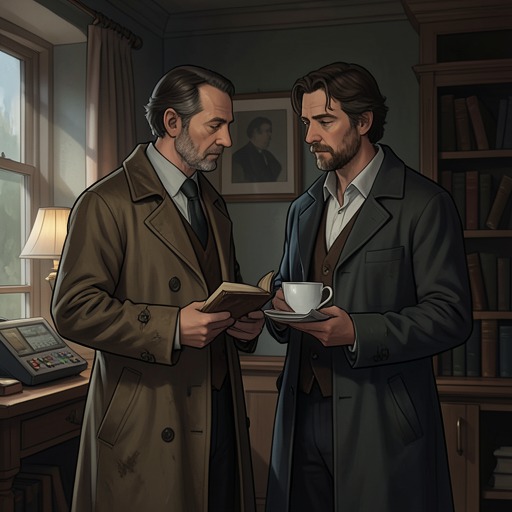
Before marrying James A. Harrison, Emily was Emily Scott, a woman with money of her own and a reputation as a model housekeeper. James lived in Scottsford, New Brunswick, where his sister kept house for him. Concerned about his future before her death, his sister urged him to marry Emily and suggested that Emily’s means and domestic competence made her a suitable match. James doubted that Emily would accept him, but she did; he later recalled being astonished that a smart, pretty woman like her had agreed to marry an older man.
The couple spent a fortnight on their wedding trip in St. John and returned home at ten o’clock at night. Within half an hour, Emily had begun cleaning. James insisted that the house was not in such a state as to warrant this immediate work: he admitted it had become disordered while he lived as a bachelor, but said he had already hired someone to clean and had arranged painting and repairs. To him, Emily’s impulse to scrub even a newly refurbished house announced a powerful difference in how they understood domestic life. He recounted that she worked until one in the morning and was up again at four, keeping at cleaning and longing for Monday even when Sunday interrupted the routine.
Domestic Conflict and Ginger
The disagreement was not only about cleanliness. Emily expected James to change his habits: he was to leave his boots at the door and wear slippers indoors, smoke his pipe in the barn, use better grammar, and stop eating with his knife. James felt corrected and nagged; he admitted that he became cantankerous rather than trying to improve. Their conflict was therefore reciprocal, even though his account initially emphasizes the restrictions he resented. He also recalled answering one of Emily’s complaints by saying that she had not objected to his grammar when he proposed. He recognized later that this was tactless and unfair.
Ginger became the decisive point of rupture. James was deeply attached to the parrot because his sailor brother, a childhood favorite, had sent it to him while dying. Emily disliked parrots and could not tolerate Ginger’s profane speech. James distinguished the bird’s repetition from a person’s deliberate profanity and thought its lack of understanding made allowances reasonable; Emily did not share that view. Her efforts to stop Ginger swearing failed, just as her attempts to correct James’s grammar did, and both seemed to become more resistant under correction.
The final crisis came when Emily invited two ministers and their wives to tea. James had promised to put Ginger somewhere safe, but the plan slipped his mind amid their arguments over clean collars and grammar. While one minister was saying grace, the parrot, outside the dining-room window on the veranda, saw a turkey in the yard and burst into its notorious speech. James was mortified as well as embarrassed for Emily. After the guests left, he reflected that he had not been considerate enough and worried that the ministers might think Ginger had learned his vocabulary from him. He decided the bird would have to be disposed of mercifully. But when he went to tell Emily, she was gone; she had left a letter saying she would remain at her own house until he chose between her and Ginger.
Separation and Return to Avonlea
Angry, James told himself Emily could wait indefinitely for him to get rid of the parrot. He sent her belongings after her and stood by that decision, although he later admitted that he had been cross and cantankerous. Their separation became public talk in Scottsford, where people sympathized with Emily. Feeling that he would never have peace there, James moved to Avonlea, a place he remembered from boyhood and chose partly because Emily had said she would never live on the Island. He had heard nothing from her after she left until he returned from the back field one Saturday and found her scrubbing his floor, with a good dinner ready on the table. She told him to eat first and talk afterward. James took this as a sign that Emily had learned something about getting along with a man; he also recognized that, with Ginger dead and the Island larger than she had imagined, she intended to stay.
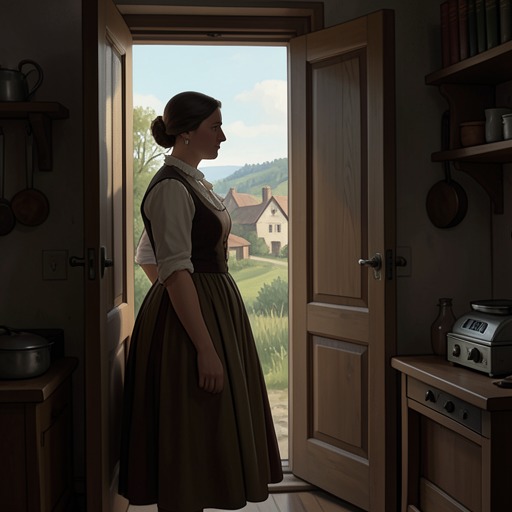
Emily’s return is made visible in the restored household. When Anne Shirley came to see James, Emily had gone to Carmody with Rachel Lynde to buy new parlor paper. James’s kitchen had been scrubbed, its furniture cleaned, the stove polished, the walls whitewashed, and the windows made to sparkle. His working clothes, formerly ragged, were patched and brushed; he was shaved and neatly groomed. He complained that his easy days were over and that neatness would rule the rest of his life, but the twinkle in his eye betrayed his pleasure. Anne read that pleasure correctly: James was glad Emily had come back, whatever his mock-doleful performance suggested.
Reconciliation and Self-Understanding
Emily’s own account prevents James’s story from becoming the final word on their separation. She welcomes Anne and says she wants to know her new neighbors; she also speaks warmly of Rachel Lynde, whose friendship she has already begun. Walking with Anne across the fields in the June dusk, Emily confirms that James has told the story truthfully. She does not deny his complaints, but insists that the blame was not all his. She says that she regretted leaving within an hour of returning to her own house, yet was too proud to give in. Looking back, she sees that she expected too much of him and was foolish to make an issue of his bad grammar. She values more highly that he provides well and does not scrutinize how much sugar she uses.
Her admission gives the reunion its emotional balance. James had already conceded that his own behavior was cantankerous and that he had failed to be thoughtful; Emily now identifies her part in the quarrel. Neither account erases their differences, but both make room for a changed judgment of the other. Emily believes they will be happy together, and her return to the household, welcoming manner toward Anne, and new friendship with Rachel show her re-entering community as well as marriage.
Narrative Role and Significance
Emily’s arrival first overturns Anne’s assumptions. A rosy woman in a wagon explains that James is already married, contradicting the idea that he might marry someone, and jokes that she can manage him now that the parrot is dead. The revelation makes the supposed bachelor’s household a marital home before Anne understands the history behind it. Later, James’s account and Emily’s independent confirmation turn the surprise into a fuller portrait of a separation caused by accumulated irritations, rather than a single villain’s wrongdoing.
The reconciliation also reveals the far-reaching consequences of Anne’s foolish notes. Emily says she wishes she knew who Observer was so she could thank him; Anne keeps her role to herself. In the closing irony, the notes that helped make James’s reputation as a prophet also contributed to bringing husband and wife together. Emily’s willingness to acknowledge her own mistake is essential to that outcome: the reunion rests not on the disappearance of every domestic disagreement, but on each spouse revising the story of who was to blame.