Paul Irving
Anne of AvonleaPaul Irving is a ten-year-old boy who comes from the United States to live with his grandmother in Avonlea after his mother’s death. A sensitive observer with a powerful imaginative life, he finds an immediate kindred spirit in his teacher, Anne Shirley. His stories about rock people and dream-people are not simply flights of fancy: they give him a way to share his inward world, remember his mother, and speak of the family reunion he hopes for. His arrival also brings Anne into contact with the lonely history of Lavendar Lewis and, eventually, with Paul’s father, Stephen Irving.
Identity and Arrival
Paul is the son of Stephen Irving, who has lived in the United States since leaving home, and of Stephen’s late wife. After his mother dies, Paul is sent to live for a time with his paternal grandmother, Mrs. Irving. His father, away on business and reluctant to rely on a housekeeper to raise a young boy, believes that a grandmother is the next best guardian after a mother. Paul understands that arrangement as temporary: he expects to return to his father when he has grown up, and imagines that they will then remain together.
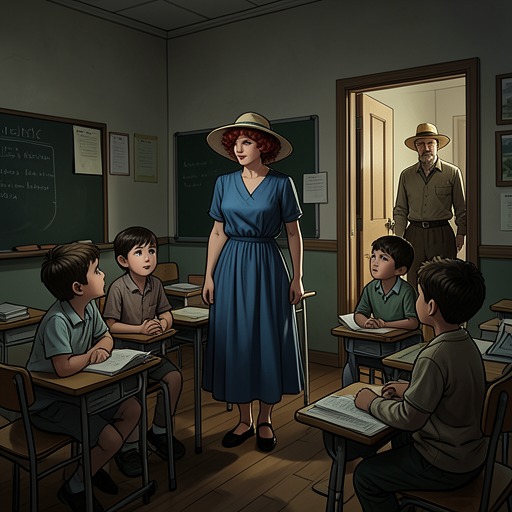
At school, Paul is ten years old but looks younger. Anne notices his delicate features, chestnut curls, and very dark blue eyes, along with a grave, meditative expression that seems older than his small frame. His face changes when Anne smiles at him: he answers with an unforced, radiant smile, and the two recognize an affinity before they have exchanged a word. Anne senses that Paul is unlike the other Avonlea children and that his inward nature resembles her own. Their friendship begins not with explanation but with mutual recognition.
Imagination and Friendship with Anne
Paul’s trust in Anne grows through small acts of attention. After a difficult school day, he waits for her by Birch Path with wild orchids he has gathered in Mr. Wright’s field. He gives them because he thinks she would appreciate them and because he likes her. For Anne, the gift lifts her discouragement and restores her hope; for Paul, it is a quiet expression of the bond forming between them.
He later writes to Anne about the people he imagines at the shore, whom he calls his rock people. He has visited them on almost every evening before winter, and believes they will still be there when spring comes because such people do not change. Nora, who lives in Andrews’ Cove and knows stories of mermaids and water kelpies, is the first of them he befriends and the one he says he loves best. The Twin Sailors, by contrast, are always travelling and come ashore to talk with him. Paul has told these stories only to his grandmother and father before writing to Anne; he chooses to confide in her because he believes she understands things that many people do not. In the letter, he also explains a moonglade as the track made on the water by the full moon, making a natural phenomenon part of his imagined world.
Paul distinguishes imagining from literal belief. When he describes thoughts he once shared with Mary Joe, he explains that he did not believe in fairies but still wanted to think about them. He imagines the evening star as a lighthouse in a fairyland, and an angel walking over the world after sunset to sing flowers and birds to sleep. A birch tree in his grandmother’s garden dies; while Mrs. Irving attributes its death to salt spray, Paul imagines that its dryad wandered away and that the lonely tree died of heartbreak. Anne does not dismiss these ideas as foolish. She calls them strange and beautiful and encourages him to keep thinking in this way, predicting that he may become a poet.
Paul also tells Anne that they belong to the kind of people who can imagine their own rock people. He does not expect Anne to see his, but thinks she can create figures of her own. Their shared capacity to imagine becomes a basis for intimacy: each can enter the other’s imaginative conversation without mistaking it for a claim about literal fact.
Family, Grief, and Duty
Paul’s imaginative openness coexists with a tender and persistent grief for his mother. At the end of the school year, Anne meets him as he waits to accompany her to the graveyard. He carries geraniums for his grandfather’s grave on behalf of Mrs. Irving and white roses in memory of his mother, whose grave he cannot visit. He hopes that his mother will know what the flowers mean. When Anne suggests that he would not want the pain to stop if stopping meant forgetting her, Paul agrees: he wants to keep remembering.
He finds it difficult to talk about his mother with his father because Stephen becomes so distressed that Paul knows when he must stop. Paul feels compassion for his father’s loneliness, as well as longing for the day they will no longer be separated. He describes Stephen as difficult to know at first but splendid once understood, and says that he loves him most of all. Mrs. Irving comes next in his order of affection, followed by Anne. Yet he also thinks it his duty to love his grandmother most because she is raising him. His feelings therefore join attachment and obligation: he loves his father most, while recognizing the care his grandmother gives him.
The everyday rules of his grandmother’s home sometimes leave him uncertain. He enjoys talking inwardly to his rock people, but does not do so on Sundays because Mrs. Irving disapproves. She teaches that Sunday thoughts should be religious; Anne has told him that every truly beautiful thought may be religious, whatever its subject or the day. Paul is inclined to agree with Anne, but wonders whether his grandmother’s experience in raising Stephen makes her judgment safer. Anne responds by acknowledging that their different ways of expressing themselves may rest on similar underlying beliefs, and that the twins she is helping to raise have not yet grown up enough to test her own approach. Paul’s hesitation shows that he takes both affection and responsibility seriously rather than simply choosing the more congenial opinion.
Echo Lodge and Shared Dream-People
Anne eventually brings Paul to Echo Lodge to meet Lavendar Lewis, whose broken engagement to Stephen left her living alone. When Anne and Paul arrive a month after Lavendar first agrees to see him, Lavendar turns pale and says that Paul looks very like his father. Paul meets her easily, unaware at first of the emotional history his resemblance touches. His presence gives Lavendar a living connection to Stephen, though the meeting initially carries the possibility of renewed pain as well as pleasure.
On a later visit, Paul notices that Lavendar seems to be looking through him at someone he reminds her of. Their conversation turns to dream-people: imaginary companions who retain whatever age their creators choose. Paul says that he, Anne, and Lavendar are the only people he knows who have such figures, and takes pleasure in the thought that people of this kind find one another. Lavendar describes the blue-eyed, curly-haired boy she has imagined since long before Paul was born, keeping him at about eleven or twelve so that he will never grow up and be lost to her. Paul understands the tenderness of the image and anticipates the familiar scene of the boy settling beside her at twilight. His imaginative sympathy allows Lavendar to speak of an old longing through a shared private language, rather than as a painful account that must be stated plainly.
Reunion and Narrative Significance
Near the close of Anne’s school year, Paul appears at the Irving home in a state of excitement: his father has arrived. Stephen comes forward to meet Anne, who recognizes in his strong, sad face the romantic hero she had imagined Lavendar’s lost love to be. Stephen already knows Anne through Paul’s letters and thanks her for her influence. He explains that his mother is deeply good but that her practical common sense could not always understand Paul’s temperament; Anne has supplied what was missing. Between the two women, he believes, Paul has received unusually good care for a motherless boy.
The reunion answers Paul’s hope that he and his father will someday be together again, although the available account establishes Stephen’s arrival rather than detailing what follows. Paul’s role in the story is to connect generations and emotional histories: his devotion to Anne brings her into his father’s confidence, while his resemblance and imaginative openness draw him into Lavendar’s past. His invented worlds do not cancel loss. Instead, his flowers, remembered mother, rock people, and dream-people show how imagination can preserve affection, make understanding possible, and give a child a language for relationships that are still incomplete.