Amethyst brooch
Anne of Green GablesThe amethyst brooch is Marilla Cuthbert's most treasured possession, a family heirloom that becomes the catalyst for one of Anne Shirley's most dramatic crises of trust and confession during her early months at Green Gables. Its disappearance and rediscovery expose the fragile bonds between the orphan girl and her guardian, testing Marilla's faith in Anne and Anne's own desperate ingenuity, and ultimately deepening their relationship through a shared lesson in forgiveness.
Description and Significance
The amethyst brooch was an old-fashioned oval, containing a braid of Marilla's mother's hair, surrounded by a border of very fine amethysts. A seafaring uncle had given it to Marilla's mother, who in turn bequeathed it to Marilla. Marilla knew too little about precious stones to realize how fine the amethysts actually were, but she thought them very beautiful and was always pleasantly conscious of their violet shimmer at her throat, above her good brown satin dress, even though she could not see it. She wore the brooch to church every Sunday as a matter of course, considering it almost sacrilegious to leave it off—as bad as forgetting her Bible or her collection dime. Anne had been smitten with delighted admiration when she first saw it, asking Marilla if she thought amethysts could be the souls of good violets.
The Disappearance and Accusation
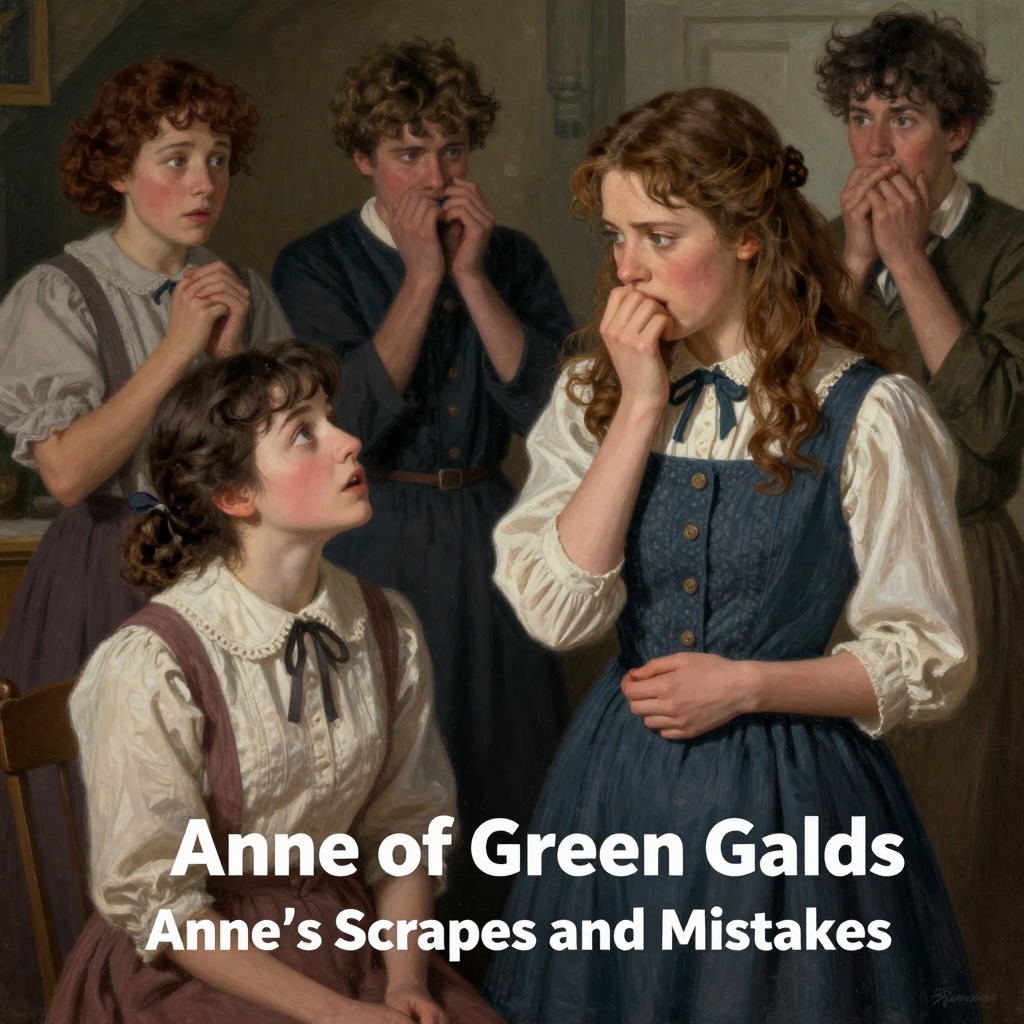
On the Monday evening before the Sunday-school picnic, Marilla came down from her room with a troubled face and asked Anne if she had seen anything of the brooch. Anne admitted that she had seen it that afternoon on the pincushion when Marilla was away at the Aid Society, and that she had taken it up and pinned it on her breast just to see how it would look. She insisted she had put it back on the bureau. Marilla made a thorough search but could not find it anywhere. Convinced that Anne had taken it and lost it, Marilla accused the child of lying. Anne solemnly denied having taken the brooch out of the room, saying she would maintain that truth even if she were led to the block for it. Marilla, however, was only the more firmly convinced of her guilt, and ordered Anne to her room until she was ready to confess.
The False Confession
Wednesday morning dawned bright and fair, made expressly for the picnic. When Marilla brought breakfast up, Anne, pale and resolute, announced she was ready to confess. She told a detailed story: she had taken the brooch, overcome by an irresistible temptation, imagining how thrilling it would be to take it to Idlewild and play she was the Lady Cordelia Fitzgerald. She said that while leaning over the bridge across the Lake of Shining Waters, the brooch had slipped through her fingers and sunk forevermore beneath the water. Marilla felt hot anger surge up, believing the child had taken and lost her treasured heirloom and now sat calmly reciting the details without apparent compunction. She declared that Anne's punishment would be to miss the picnic. Anne, who had confessed precisely in order to be allowed to go, was devastated, flinging herself face downward on the bed in an utter abandonment of disappointment and despair.
Rediscovery and Reconciliation
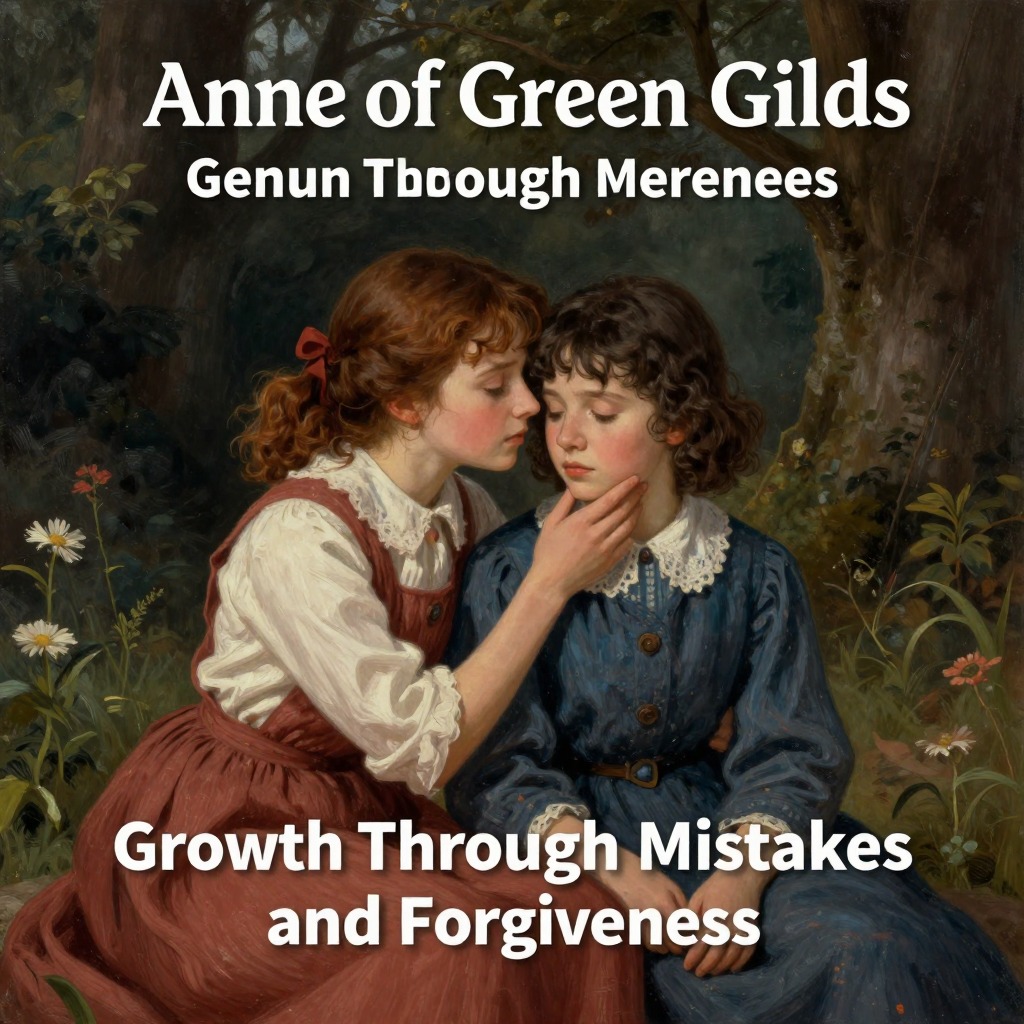
Later that day, while mending her best black lace shawl, Marilla found the amethyst brooch hanging to a thread of the lace by its catch. She remembered that when she had taken off her shawl Monday afternoon she had laid it on the bureau for a minute, and the brooch must have gotten caught in it somehow. She went to the east gable, brooch in hand, and confronted Anne. Anne explained wearily that she had decided to confess because she was bound to get to the picnic, and had thought out a confession the night before, making it as interesting as she could. Marilla had to laugh in spite of herself. She admitted she had been wrong, saying she shouldn't have doubted Anne's word when she'd never known her to tell a story. She told Anne that if she would forgive her, she would forgive Anne and they would start square again. Anne, overjoyed, was allowed to go to the picnic after all. That evening Marilla told Matthew the whole story, concluding that she had learned a lesson and that, while Anne was hard to understand in some respects, she believed the child would turn out all right yet.
Thematic Significance
The amethyst brooch functions as more than a mere plot device; it is a material object that tests and ultimately strengthens the trust between Marilla and Anne. Its loss triggers Marilla's deepest fears about the orphan girl's honesty, while Anne's false confession—a desperate act of imagination designed to secure her freedom—reveals both her resourcefulness and her vulnerability. The brooch's accidental reappearance, caught in the shawl Marilla herself had worn, forces Marilla to confront her own fallibility and the danger of judging without evidence. The incident becomes a turning point in their relationship, teaching Marilla to trust Anne's word and teaching Anne that honesty, even when it seems to fail, is ultimately the safer path. The brooch, a symbol of family continuity and maternal memory, thus becomes the instrument through which a new, chosen family bond is forged.