Avonlea school
Anne of Green GablesAvonlea school is the whitewashed, low-eaved building where the children of Avonlea receive their education, and it becomes the stage for some of Anne Shirley's most formative experiences—her first friendships, her bitterest humiliations, and the academic rivalry that sharpens her ambitions. More than a place of lessons, the school functions as a social arena where the community's values are enforced, where peer hierarchies are established, and where Anne's imagination and temper are tested against the rigid expectations of her teachers and classmates.
Physical Setting and Atmosphere
The Avonlea schoolhouse is a whitewashed building, low in the eaves and wide in the windows, furnished inside with comfortable, substantial old-fashioned desks that open and shut, carved all over their lids with the initials and hieroglyphics of three generations of school children. It is set back from the road, and behind it lies a dusky fir wood and a brook where all the children put their bottles of milk in the morning to keep cool and sweet until dinner hour. The school's location, at the end of the Birch Path and up the spruce hill, makes the daily walk from Green Gables a journey through Anne's beloved, named landscapes—Lover's Lane, Willowmere, Violet Vale—so that even the approach to school is infused with the romance she craves.
Teachers and Discipline
The school is presided over by a succession of teachers, each with a distinct style. Mr. Phillips, the master when Anne first arrives, is a man more interested in courting Prissy Andrews than in teaching; he neglects the younger pupils, keeps scandalous order, and is known for his sarcastic inflection, which Anne particularly hates. It is Mr. Phillips who punishes Anne for breaking her slate over Gilbert Blythe's head by making her stand on the platform before the blackboard with the legend "Ann Shirley has a very bad temper" written above her, and who later compounds the humiliation by forcing her to sit beside Gilbert as a punishment for being late. His successor, Miss Stacy, is a bright, sympathetic young woman with the happy gift of winning and holding the affections of her pupils and bringing out the best that is in them mentally and morally. Under her guidance, the school becomes a place of genuine learning, field afternoons, recitation Fridays, and physical culture exercises. She organizes the Queen's class for advanced students who mean to study for the entrance examination into Queen's Academy, giving them extra lessons after school, and she encourages her pupils to think and explore for themselves, a method that shocks Mrs. Lynde and the school trustees.
Social Dynamics and Peer Hierarchies
The school is a dense social world where friendships are sworn, rivalries are fierce, and reputations are made and broken. Anne's first day is marked by the other girls' curiosity and whispers; she is immediately befriended by Diana Barry, and the two become inseparable. The schoolyard is the site of the "daring" craze, where girls dare each other to walk fence tops and ridgepoles—a fashion that leads directly to Anne's fall from the Barry kitchen roof and her broken ankle. The lunch hour is a time of pooled lunches and shared treats, and the classroom is a place of whispered gossip, passed notes, and the constant, low-level warfare of childhood cliques. Josie Pye is Anne's persistent antagonist, and the rivalry between Anne and Gilbert Blythe for academic supremacy is the school's central drama, watched and wagered upon by the other students. The school porch wall, carved with initials and "take-notice" messages, is a public record of the children's romantic entanglements.
Academic Life and the Path to Queen's
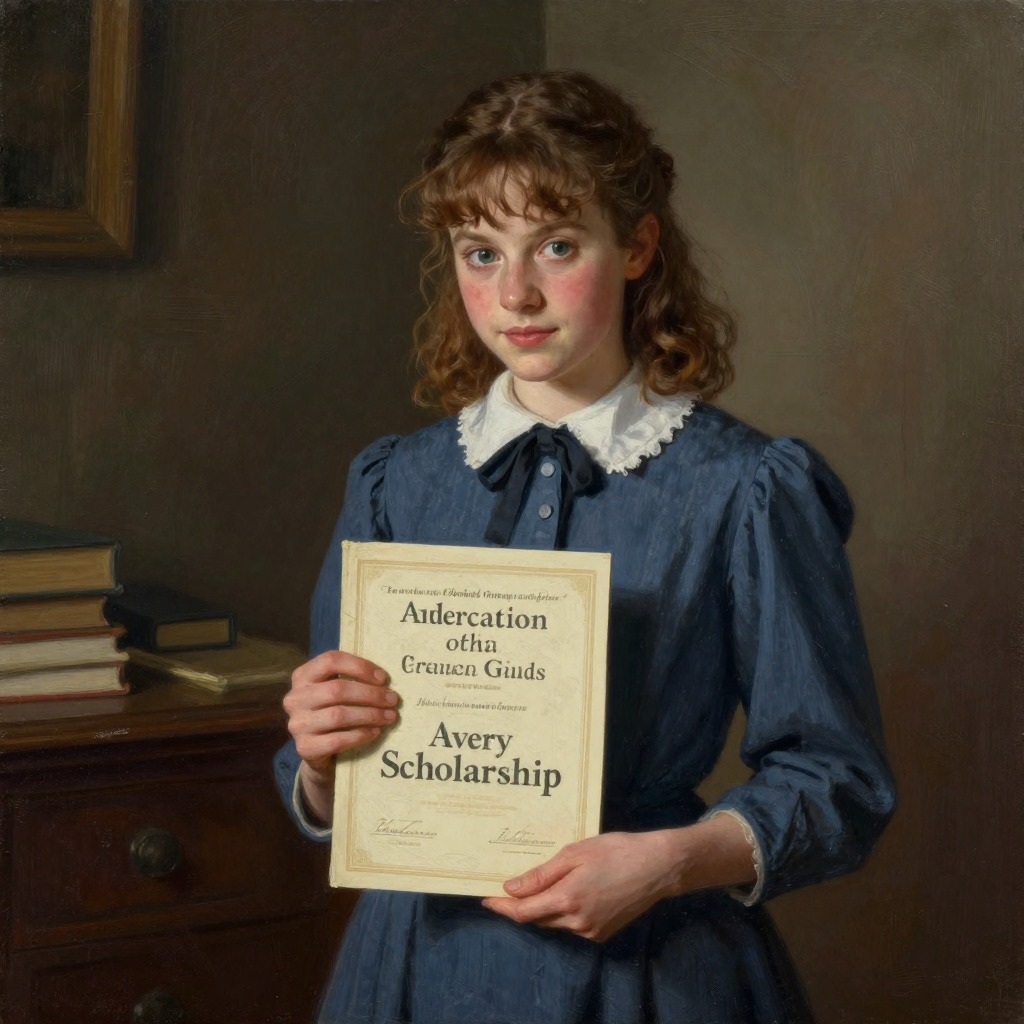
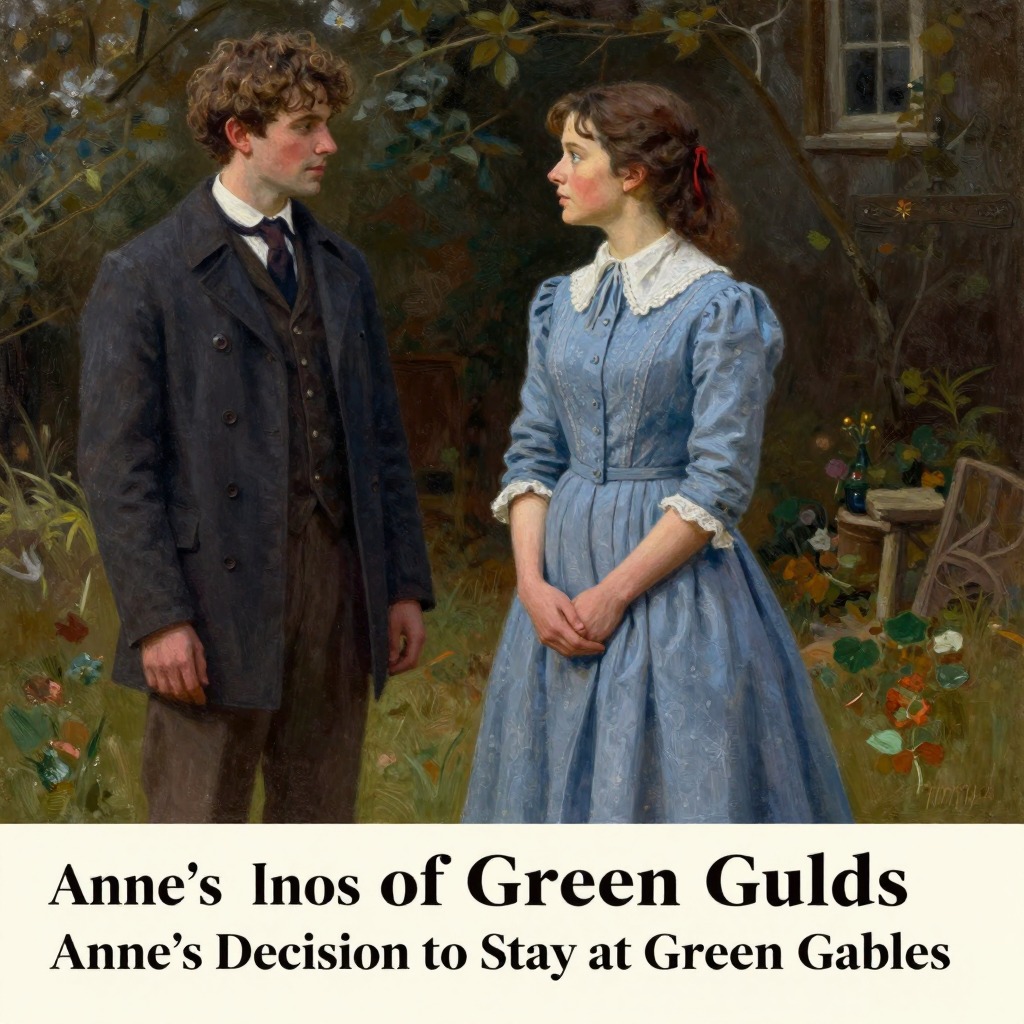
Anne's academic life at Avonlea school is marked by her intense determination to excel, especially in competition with Gilbert. She flings herself into her studies heart and soul, and the rivalry between them is soon apparent; honors fluctuate between them in spelling, arithmetic, and the monthly written examinations. By the end of the term, both are promoted into the fifth class and begin studying Latin, geometry, French, and algebra. Geometry proves to be Anne's Waterloo—"There is no scope for imagination in it at all," she groans—but she persists. Miss Stacy's formation of the Queen's class gives Anne a concrete purpose: to study for the entrance examination and become a teacher. The school thus becomes the launching pad for her ambitions, and when the pass list is published, Anne's name appears at the very top of a list of two hundred, tied with Gilbert's. The school is also where Anne first learns to teach, for when she decides to stay at Green Gables rather than attend Redmond College, she applies for and is given the Avonlea school, Gilbert having withdrawn his application in her favor.
Narrative Significance
Avonlea school is the crucible in which Anne's character is forged. It is where she learns to control her temper, to channel her imagination into productive work, and to measure herself against others. The school's routines—the morning walk, the dinner-hour games, the Friday afternoon recitations—structure the rhythm of her life and provide the backdrop for her most important relationships: her friendship with Diana, her rivalry and eventual reconciliation with Gilbert, and her deep respect for Miss Stacy. The school also represents the community's values and its limitations; it is a place where Anne's oddness is both punished and celebrated, where her red hair is mocked and her intelligence is recognized. Ultimately, the school is the institution that offers Anne a path out of dependence and into a profession, making it central to her journey from orphan to independent young woman.