Birch Path
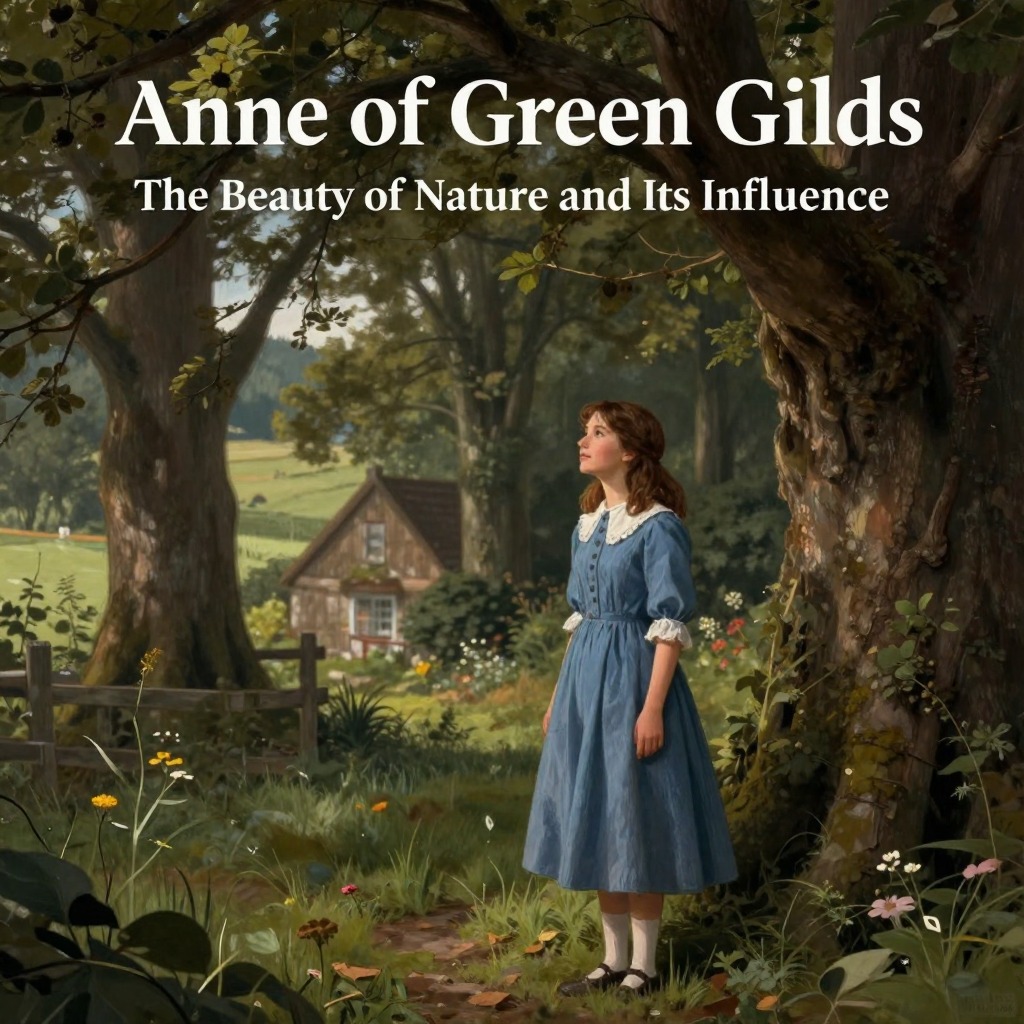
Anne of Green GablesThe Birch Path is a narrow, twisting footpath that winds down over a long hill straight through Mr. Andrew Bell's woods, connecting the main road to the Avonlea school. It was named by Diana Barry, though Anne Shirley, who found the name "plain" and thought she could have invented something "more poetical," nevertheless conceded that the path itself was "one of the prettiest places in the world." For Anne and Diana, the Birch Path was the indispensable link between their homes and their school, and it became the stage for their most private conversations, their shared secrets, and the daily rituals of their friendship.
Geography and Character
The path was fringed in all its length with slim young birches, white-stemmed and lissom-boughed, through which the light came down "sifted through so many emerald screens that it was as flawless as the heart of a diamond." Ferns, starflowers, wild lilies-of-the-valley, and scarlet tufts of pigeonberries grew thickly along it. The air was always filled with a "delightful spiciness" and the music of bird calls and the murmur and laugh of wood winds in the trees overhead. In autumn, the path became "a canopy of yellow," and the ferns turned sear and brown. In winter, when snow was light, Anne and Diana could still use it to go to school nearly every day, keeping their eyes and ears alert for details to use in compositions Miss Stacy had assigned, such as "A Winter's Walk in the Woods."
Daily Use and Emotional Significance
Anne and Diana walked the Birch Path to and from school every day, and it was along this path that they shared the news and gossip of Avonlea school life. It was here that Diana told Anne that Gilbert Blythe would be in school that day, and here that Anne, after the humiliation of being forced to sit with Gilbert as punishment, declared she would never return to school. "I couldn't bear to go by the Birch Path all alone," she told Marilla. "I should weep bitter tears if I did." The path was so intimately bound up with her friendship with Diana that to walk it without her was to feel the full weight of her loss. When Anne was laid up with a broken ankle, she missed the walks desperately, and when she finally returned to school in October, the Birch Path was a canopy of yellow, and it was "jolly to be back again."
Naming and Imagination
Diana named the path, but Anne, with her characteristic need to infuse the world with romance, initially wished she could have found something "more poetical than plain Birch Path." Yet the path itself needed no embellishment; it was, as Anne admitted, one of the prettiest places in the world. The path was part of the constellation of named places—Lover's Lane, Willowmere, Violet Vale, the Dryad's Bubble—that Anne and Diana created to transform the ordinary landscape of Avonlea into a realm of imagination and adventure. Going to school by the main road would have been "so unromantic," but to go by the Birch Path was romantic, "if ever anything was." The path was thus not merely a route but a threshold into a world where the girls could be heroines of their own stories.
Narrative Role and Thematic Significance
The Birch Path functions as a symbol of the idyllic, nature-bound childhood that Anne experiences at Green Gables. It is a place of safety, beauty, and companionship, a counterpoint to the more threatening or disappointing spaces in her life, such as the Haunted Wood or the schoolroom. Its seasonal transformations—from the emerald screens of summer to the yellow canopy of autumn to the snowy quiet of winter—mirror the passage of time and Anne's own growth. The path is also a marker of Anne's integration into Avonlea life; it is the route she takes to school, to friendship, and to the wider community. When she decides to stay at Green Gables and teach, she is choosing to remain within the world that the Birch Path represents: a world of natural beauty, close friendship, and quiet, fulfilling purpose.