Green Gables
Anne of Green GablesGreen Gables is the Cuthbert family homestead in Avonlea, Prince Edward Island, and the emotional and geographical heart of the novel. It is the place where Anne Shirley, a mistrustful orphan, finds a home and a family, and where her imaginative spirit is both nurtured and challenged. The farm's orchards, brook, and surrounding woods become the landscape of Anne's inner life, a realm she names and populates with her own fancies, and the site of her most profound joys and sorrows.
Identity and Setting
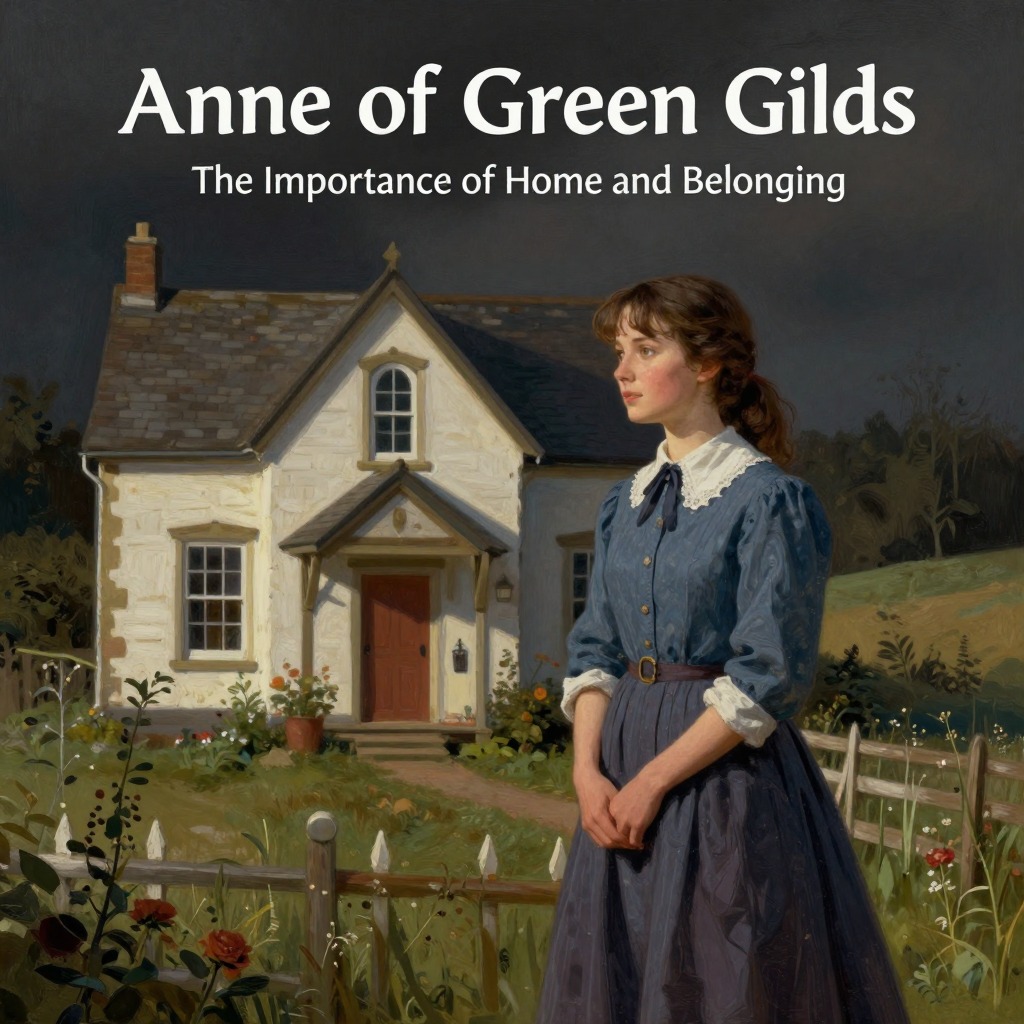
Green Gables is a big, rambling, orchard-embowered house set back from the main road at the far edge of the Cuthberts' cleared land, barely visible from the road along which other Avonlea houses are sociably situated. The long, deep-rutted, grassy lane bordered with wild rose bushes leads to a backyard that is very green and neat and precise, set about with great patriarchal willows and prim Lombardies. The kitchen is a cheerful apartment, though painfully clean, with windows looking east and west; the east window offers a glimpse of bloom-white cherry trees in the left orchard and nodding, slender birches down in the hollow by the brook. The house is surrounded by a big orchard of apple and cherry trees, a garden with lilac-trees, and a green field lush with clover sloping down to a hollow where a brook runs. Beyond the brook is a hill, green and feathery with spruce and fir, and off to the left are the big barns and a sparkling blue glimpse of the sea. The house itself is a place of rigid cleanliness and bareness, with whitewashed walls and a high, old-fashioned bed in the east gable room, a room that Anne initially finds painfully bare and staring.
Anne's Arrival and First Impressions
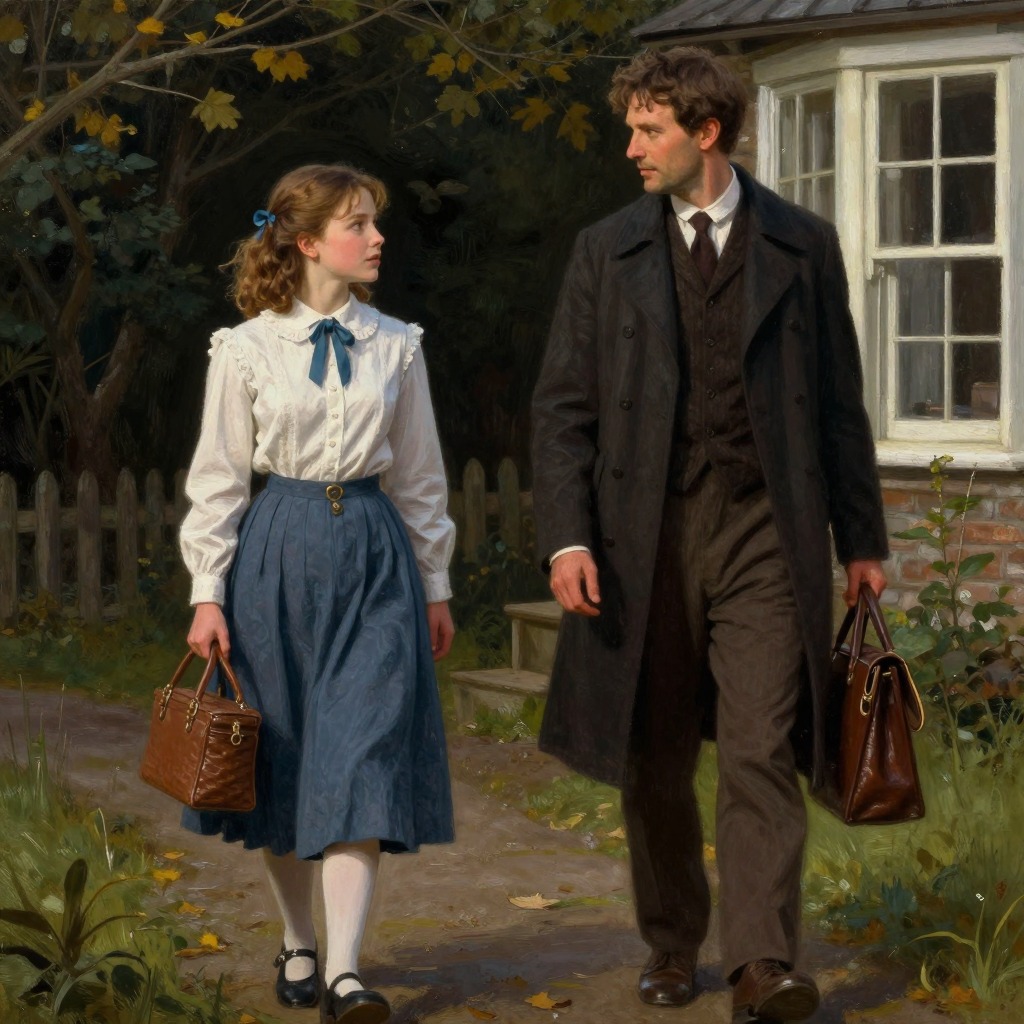
Anne first sees Green Gables from the crest of a hill at sunset, with a great crystal-white star shining over it like a lamp of guidance and promise. She immediately feels it is home, a feeling that persists even after she learns the Cuthberts had wanted a boy. The next morning, she wakes to find a huge cherry-tree in full bloom outside her window, so close that its boughs tap against the house, and she drops on her knees to gaze out into the June morning, her eyes glistening with delight. She declares, "I love Green Gables already, and I never loved any place before. No place ever seemed like home." The brook near Green Gables becomes a source of comfort; she says, "I shall always like to remember that there is a brook at Green Gables even if I never see it again." The house and its surroundings are immediately woven into her imaginative life: she names the cherry tree outside her window "Snow Queen" and the geranium on the windowsill "Bonny."
A Place of Growth and Change
Green Gables is the setting for Anne's growth from a talkative, impulsive child into a thoughtful young woman. It is where she learns to control her temper, apologizes to Mrs. Rachel Lynde, and forms her deep friendship with Diana Barry. The farm's various locations—Lover's Lane, the Dryad's Bubble, the Haunted Wood—become the stages for her adventures and misadventures. The east gable room, initially a bare and inhospitable chamber, is gradually transformed by Anne's presence into a sweet and dainty nest, filled with books, pictures, and the dreams of its occupant. Marilla, who initially saw the house as a place of strict order, comes to find it "fearful lonesome" without Anne. The house itself becomes a symbol of the love and security Anne has found, and her decision to stay and teach rather than go to college is framed as a choice to keep the dear old place.
Thematic Significance
Green Gables is more than a setting; it is a character in its own right, representing the stability, love, and belonging that Anne has always craved. It is the place where her imagination can flourish, where she can name every tree and shrub, and where she feels a deep, abiding connection. The farm's beauty—the apple blossoms, the brook, the Lake of Shining Waters—is a constant source of joy and inspiration for Anne. The threat of losing Green Gables after Matthew's death and the family's financial ruin is the novel's final crisis, and Anne's decision to sacrifice her scholarship to keep the farm is the ultimate expression of her love and commitment. The house becomes the physical embodiment of the family she has found, and her choice to stay is a choice to preserve that family and that home. As Anne says, "Nobody could love it as you and I do—so we must keep it."