Haunted Wood
Anne of Green GablesThe Haunted Wood is a small spruce grove near Green Gables that Anne Shirley and Diana Barry transform through sheer imaginative will into a landscape of romantic terror. More than a mere location, it becomes a test case for the limits of fantasy, a source of genuine fear, and the site of a decisive lesson from Marilla Cuthbert about the dangers of letting imagination run unchecked. Its brief but vivid existence in the story marks a turning point in Anne's understanding of the relationship between her inner world and the demands of everyday life.
Creation and Character
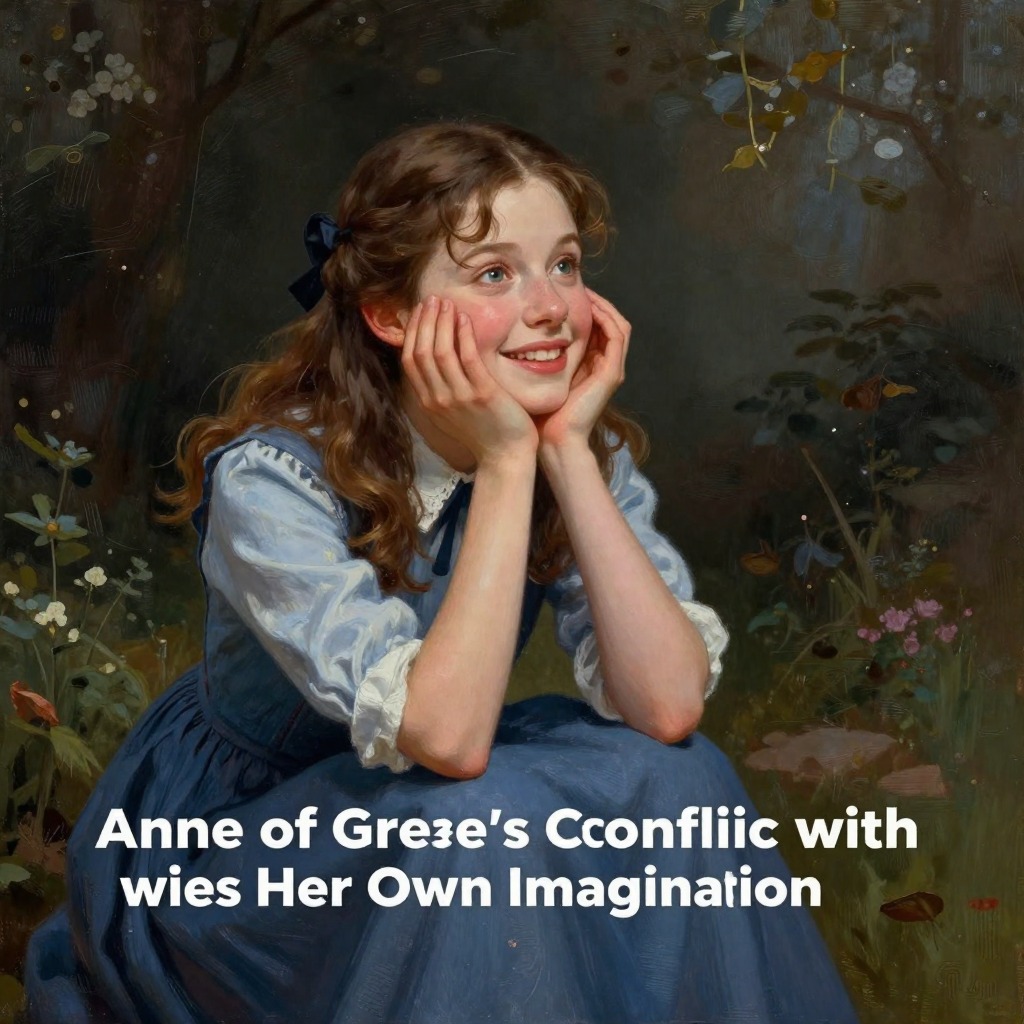
The Haunted Wood was not a pre-existing legend of Avonlea but an invention of Anne and Diana, born from their shared desire for romance in a world they found too "commonplace." They chose the spruce grove over the brook specifically because it was "so gloomy," deliberately crafting a repertoire of horrors to populate it. Anne later confessed to Marilla that they "just imagined the wood was haunted" for their own amusement, beginning the project in April. The grove they selected was a real place—a dark, thick stand of spruce and fir where perpetual twilight reigned—but the ghosts were entirely their own creation. Anne populated it with a white lady who walked along the brook at twilight, wringing her hands and uttering wailing cries as an omen of death in the family; the ghost of a little murdered child that crept up behind unsuspecting passersby and laid cold fingers on their hands; a headless man who stalked up and down the path; and skeletons that glowered between the boughs. The wood became so real to Anne that she could not pass through it after dark, even though she knew intellectually that the horrors were her own invention. "Not believe EXACTLY," she faltered when Marilla confronted her. "At least, I don't believe it in daylight. But after dark, Marilla, it's different. That is when ghosts walk."
The Confrontation and the Lesson
The Haunted Wood's power over Anne was demonstrated dramatically one June evening when Marilla, unaware of the grove's imagined terrors, ordered Anne to go through it to borrow a dress pattern from Mrs. Barry. Anne pleaded desperately, offering to go by the longer road instead, but Marilla was inexorable. "I'll cure you of imagining ghosts into places," she declared, marching the trembling girl to the spring and commanding her to proceed straight over the bridge and into the dusky retreats of the wailing lady and headless specters beyond. Anne's walk through the Haunted Wood that night became one of the most terrifying experiences of her life. The goblins of her fancy lurked in every shadow, reaching out cold, fleshless hands. A white strip of birch bark blowing up from the hollow made her heart stand still; the long-drawn wail of two old boughs rubbing together brought out perspiration in beads on her forehead; the swoop of bats in the darkness felt like the wings of unearthly creatures. She fled across Mr. William Bell's field as if pursued by an army of white things, and made the return journey with her eyes shut, preferring the risk of dashing her brains out among the boughs to that of seeing a white thing. When she finally stumbled over the log bridge, she drew one long shivering breath of relief and promised, "I'll b-b-be contt-tented with c-c-commonplace places after this."
Aftermath and Significance
The Haunted Wood episode had lasting consequences. Diana's mother, Mrs. Barry, discovered the girls' imaginative game and was "decidedly angry," causing Diana to abstain from further imitative flights of imagination. The wood itself lost its terror for Anne after her enforced walk, but the lesson it taught her was profound. She later reflected to Marilla that "the Haunted Wood mistake cured me of letting my imagination run away with me," listing it alongside the amethyst brooch incident, the liniment cake, and the hair dye as one of the key errors that helped shape her character. The wood appears again in the story as a landmark of Avonlea geography—Diana and Jane Andrews rush through it in their frantic search for help after Anne's Elaine incident—but its haunted quality is never revived. Anne's imagination, chastened but not destroyed, found new outlets in the story club and in her studies, but the Haunted Wood remained a monument to the boundary she had learned to respect between creative fantasy and self-deception. It stands as one of the most vivid examples in the novel of Anne's characteristic blend of poetic invention and emotional intensity, and of the necessary discipline that Marilla, however harshly, imposed upon it.