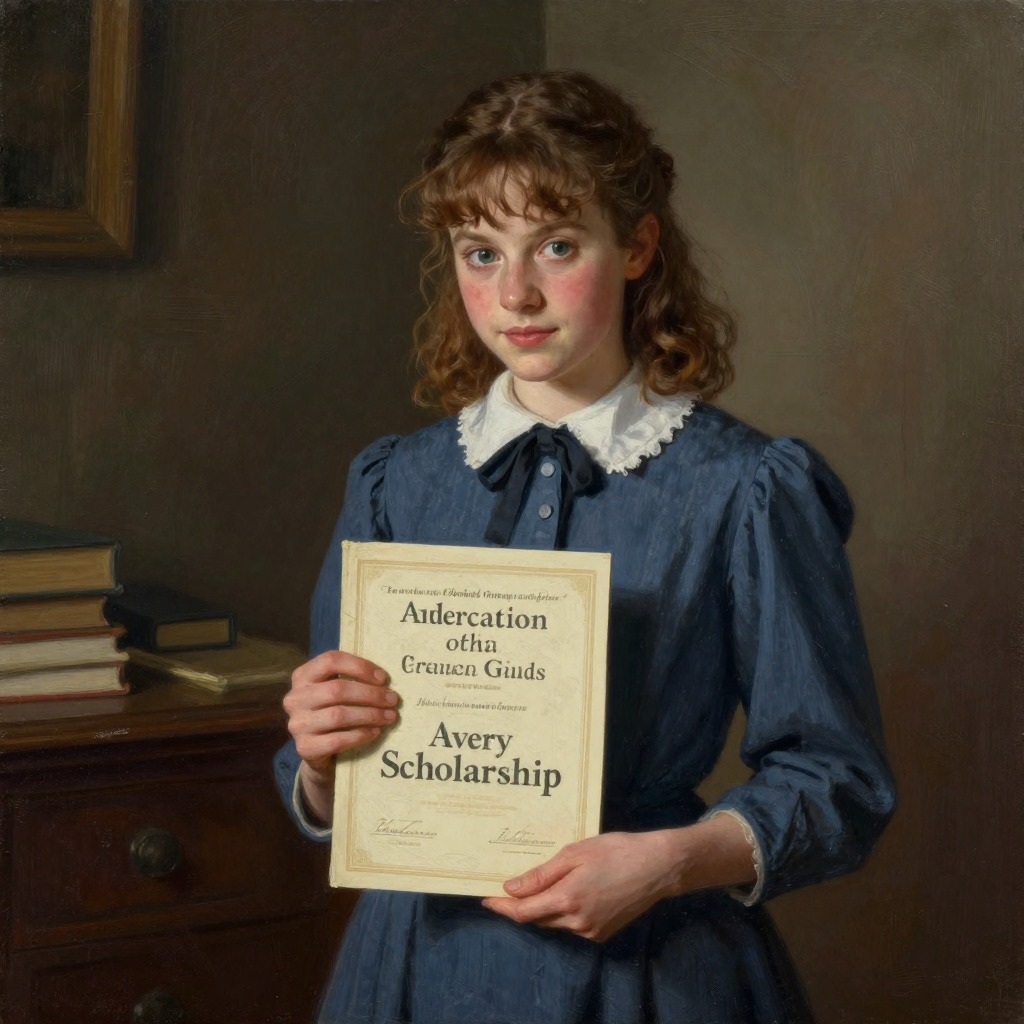
Jane Andrews
Anne of Green GablesJane Andrews is a minor but consistent presence in Anne Shirley's world at Avonlea, a girl defined by her calm, practical, and unimaginative nature. She serves as a foil to Anne's passionate and imaginative temperament, yet her steady friendship and unshakeable composure make her a valued, if less colorful, member of Anne's circle. Jane's role is that of the reliable, sensible friend who grounds the more flighty spirits around her, and her quiet loyalty is a constant throughout Anne's early years.
Identity and Character
Jane Andrews is introduced as a plain, plodding, and conscientious girl, a characterization that holds true throughout the novel. She is notably "so composed" that Anne envies her, especially during the nerve-wracking Entrance examinations, where Anne observes that "nothing rattles her." This unflappable nature is a defining trait; Jane is not given to the dramatic emotional swings that characterize Anne or Ruby Gillis. Her practical bent is further evidenced by her decision to "devote her whole life to teaching, and never, never marry," a resolution born from her observation of her father's miserly behavior, which Mrs. Lynde confirms. Jane's ambitions are modest and grounded: she is content to take the Second Class work at Queen's Academy, untroubled by the "stirrings of ambition" that drive Anne and Gilbert Blythe. Her stories for the Story Club are described as "extremely sensible," and she avoids putting "lovemaking" into them because it makes her "feel so silly." This preference for the sensible over the sentimental is a core aspect of her identity.
Role in Anne's Life and at School
Jane is a member of Anne's close circle of school friends, alongside Diana Barry and Ruby Gillis. She participates in their games, their story club, and their shared experiences, such as the Sunday-school picnic and the concert at the White Sands Hotel. She is present at key moments, including the disastrous tea party where Anne accidentally gives Diana currant wine, and the dramatic Elaine incident on the pond. Jane is also a fellow student in the Queen's class, though she does not share Anne's intense rivalry with Gilbert Blythe. Her practical nature is often highlighted in contrast to Anne's romanticism; for instance, when Anne is preparing to play Elaine, Jane is the one who arranges the scene, instructing Anne to "smile a little" and declaring that she herself "couldn't keep still" if she were to play the part. Jane's role is often that of the pragmatic organizer and the calm voice of reason amidst the more excitable girls.
Academic Life and Achievements
Jane is a diligent student, though not a brilliant one. She is part of the Queen's class and successfully passes the Entrance examinations, securing a position to teach at Newbridge. Her academic strength lies in the domestic science course, where she "carried off the honors." This achievement aligns with her practical and methodical character. During the stressful exam period, Jane loses seven pounds from worrying, yet she remains outwardly composed, a quality Anne both admires and envies. Her steady, unspectacular progress through school contrasts with Anne's dramatic highs and lows, but it is no less effective in achieving her goal of becoming a teacher.
Relationships and Social Standing
Jane's relationships are characterized by loyalty and a lack of conflict. She is a good friend to Anne, offering support and companionship without the intense emotional bond that Anne shares with Diana. She is also part of the wider social network of Avonlea girls, participating in their activities and sharing their gossip. Her social standing is that of a reliable and well-liked, if not particularly prominent, member of the group. She is not a source of drama or conflict, unlike Josie Pye, and her steady presence provides a stable counterpoint to the more turbulent personalities in Anne's life. Her friendship with Anne is genuine, if less passionate than Anne's friendship with Diana, and she is one of the first to congratulate Anne on winning the Avery scholarship.
Thematic Significance
Jane Andrews embodies the virtues of steadiness, practicality, and quiet competence. In a novel that celebrates imagination and romanticism, Jane represents the value of a more grounded and sensible approach to life. She is not a "kindred spirit" in Anne's sense, but she is a true and reliable friend. Her character demonstrates that there is more than one way to navigate the world and that qualities like composure and diligence are as worthy of respect as a vivid imagination. Jane's presence enriches the social landscape of Avonlea, providing a necessary balance to the more extraordinary personalities that populate Anne's world.