Marilla Cuthbert
Anne of Green GablesMarilla Cuthbert is the linchpin of Green Gables, a woman whose severe exterior and rigid conscience initially seem to promise a life of unyielding order, but whose hidden capacity for love and humor is gradually awakened by the very child she never wanted. She is the moral and practical center of the household, the one who enforces discipline, teaches duty, and ultimately learns that the heart has its own reasons which reason cannot always govern. Her journey from a woman who "looked like a woman of narrow experience and rigid conscience" to one who confesses "I love you as dear as if you were my own flesh and blood" is the quiet, powerful counterpoint to Anne's more flamboyant coming-of-age.
Identity and Introduction
Marilla Cuthbert is introduced as a tall, thin woman, "with angles and without curves," her dark hair streaked with gray and twisted into a hard little knot, held by two aggressive wire hairpins. She is a creature of habit and order, presiding over a kitchen so painfully clean it resembles an unused parlor. Her friendship with the gossipy Mrs. Rachel Lynde is based on a long-standing, unspoken understanding, despite their dissimilarity. Marilla is not given to flights of fancy; she sits "always slightly distrustful of sunshine, which seemed to her too dancing and irresponsible a thing for a world which was meant to be taken seriously." Yet there is a saving grace about her mouth, a hint of a sense of humor that has been "rusty from long disuse." This hint is the first crack in her formidable armor, a promise of the warmth that lies beneath.
Arc Through the Plot: From Reluctance to Devotion
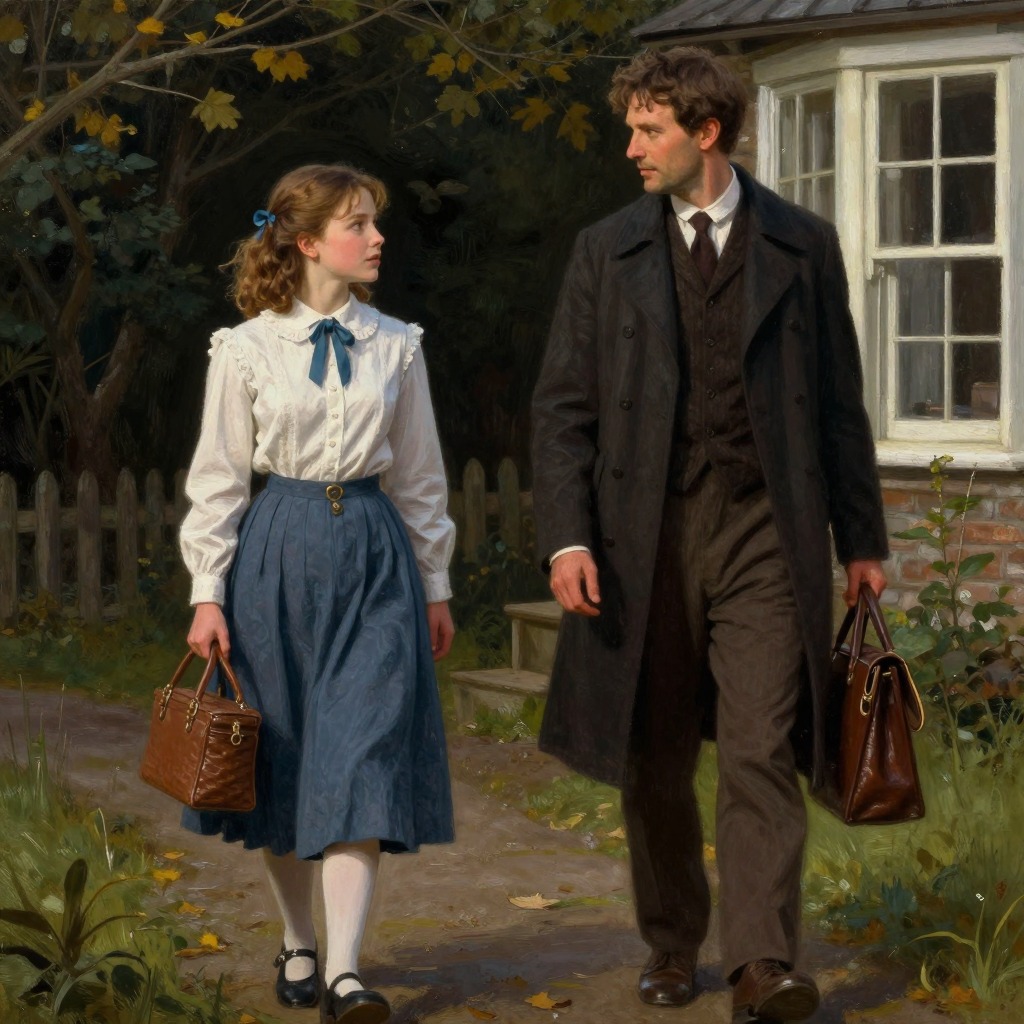
Marilla's initial reaction to Anne is one of stark practicality and dismay. When Matthew brings home a girl instead of the requested boy, she exclaims, "Well, this is a pretty piece of business!" and immediately plans to send her back. She is unmoved by Anne's tears, insisting, "We want a boy to help Matthew on the farm. A girl would be of no use to us." Her decision to keep Anne is not born of sudden affection but of a grudging sense of duty and a refusal to hand the child over to the harsh Mrs. Peter Blewett. She tells Matthew, "I suppose I'm willing—or have to be. I've been thinking over the idea until I've got kind of used to it. It seems a sort of duty." This reluctant acceptance, however, is the seed of a deep and abiding love. As she later admits to herself, "I can't imagine the place without her." The turning point comes when Anne breaks her ankle; Marilla, seeing Mr. Barry carrying the injured girl, feels "a sudden stab of fear" and realizes "that Anne was dearer to her than anything else on earth." This moment of visceral terror strips away her pretense of indifference.
Relationships and Conflict
Marilla's relationship with Anne is the central drama of her life. She is the disciplinarian, constantly correcting Anne's talkativeness, her imagination, and her tendency to court disaster. She scolds, she sets rules, she imposes punishments—sending Anne to her room for refusing to apologize to Mrs. Lynde, and later for the false confession about the amethyst brooch. Yet her punishments are always tempered by a growing, if unacknowledged, tenderness. She is secretly pleased by Anne's impulsive kiss, and when she finds the brooch, she admits her own mistake: "I was wrong—I see that now. I shouldn't have doubted your word." Her relationship with Matthew is one of quiet, unspoken partnership. She manages the household and makes the decisions, but she is ultimately swayed by his silent persistence. She grumbles about his "putting in his oar," but she respects his wishes, as when she finally allows Anne to go to the concert. Her past is revealed in a rare moment of vulnerability when she tells Anne about her youthful romance with John Blythe, Gilbert's father, a quarrel she never mended. This confession humanizes her, showing that her sternness is a shield built from her own regrets.
Change and Ending
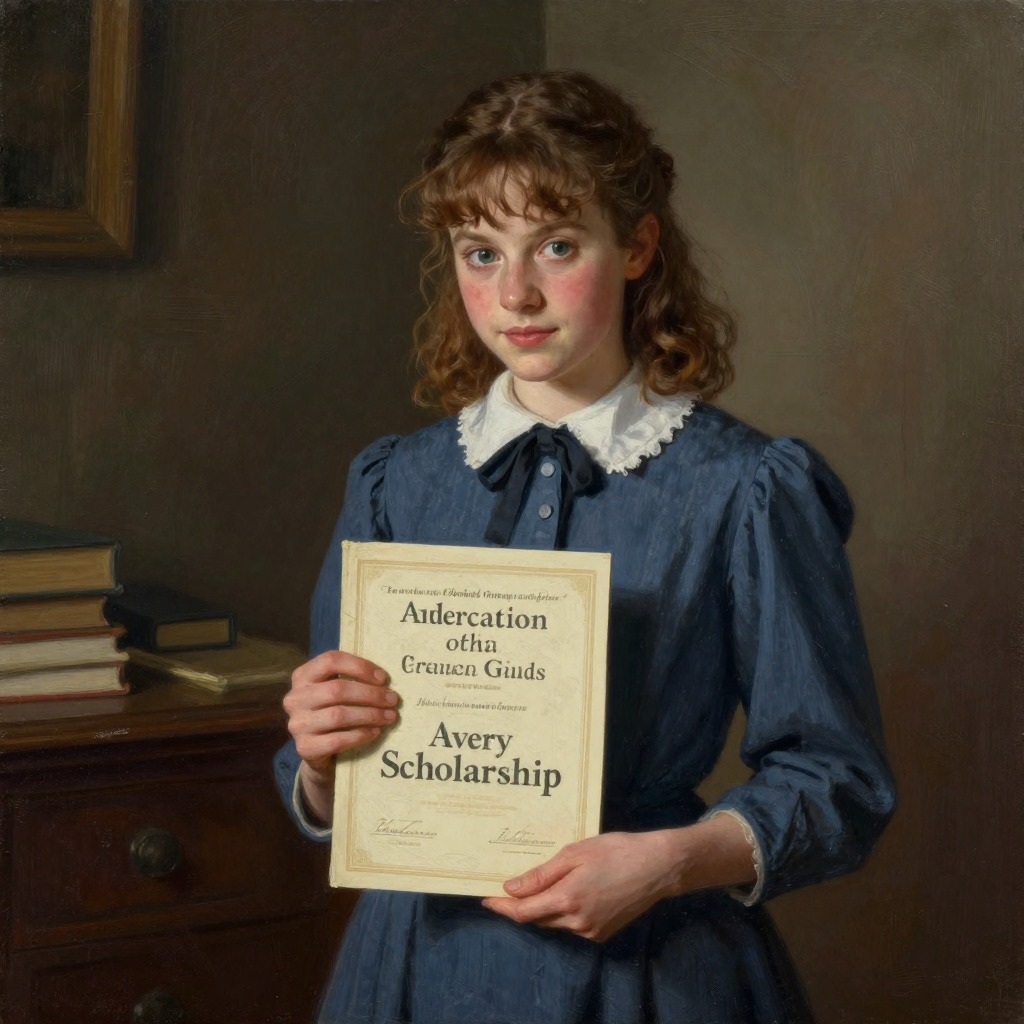
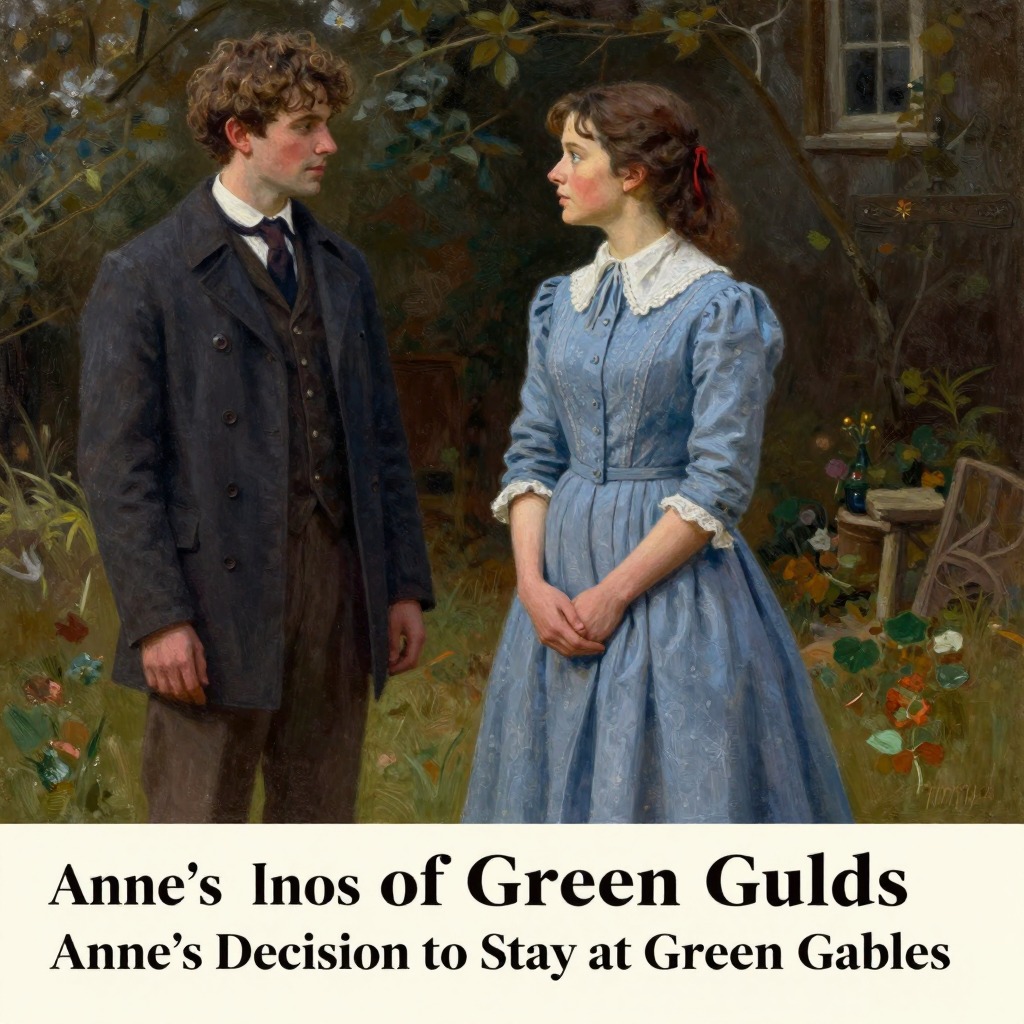
The most significant change in Marilla is the softening of her character. Mrs. Lynde observes, "Marilla Cuthbert has got MELLOW." This mellowing is tested by two devastating blows: Matthew's sudden death from a heart attack, brought on by the news of the Abbey Bank's failure, and the subsequent threat of her own blindness. The financial ruin and the doctor's warning that she must give up reading and sewing or go blind within six months break her spirit. She speaks of selling Green Gables, her home, with a bitterness that reveals her despair: "What am I to live for if I can't read or sew or do anything like that? I might as well be blind—or dead." It is Anne's decision to give up her scholarship to Redmond College and stay to teach that saves Marilla. In her grief, Marilla finally gives voice to her love, telling Anne, "I love you as dear as if you were my own flesh and blood and you've been my joy and comfort ever since you came to Green Gables." This confession, wrung from her by sorrow, is the culmination of her emotional arc.
Thematic Significance
Marilla Cuthbert embodies the theme that love is not always expressed in grand gestures or flowery words, but in steadfast duty, quiet sacrifice, and the slow, painful growth of the heart. She represents the conservative, practical world of Avonlea that Anne's imagination must learn to respect, even as she herself learns to value the imagination she once dismissed. Her journey from a woman who says "I don't believe in imagining things different from what they really are" to one who accepts Anne's world of dreams is a testament to the transformative power of unconditional love. She is the anchor that keeps Anne grounded, and in the end, it is Anne who becomes her anchor, proving that the bond between them is not one of blood, but of a deeper, chosen kinship.