Anne Shirley
Anne of the IslandAnne Shirley’s years away from Avonlea turn her from a young woman who expects life to conform to romantic ideals into one able to distinguish lasting love from its flattering imitations. College, financial uncertainty, the death of Ruby Gillis, and the prospect of losing Gilbert Blythe force her to revise what she values; her eventual answer to Gilbert is not a promise of luxury, but of a life made together through patience, work, and imagination.
Identity and Outlook
At the opening of this period, Anne is still deeply responsive to beauty and to the meanings she finds in places. While picking apples with Diana Barry in the Green Gables orchard, she looks across an autumn landscape and quotes a line about summer’s end. The shorn fields, distant sea, asters, and steady blue of the Lake of Shining Waters make seasonal change palpable. Anne’s attention to these scenes is not merely decorative: the landscape gives form to her awareness that familiar life is passing into something new.
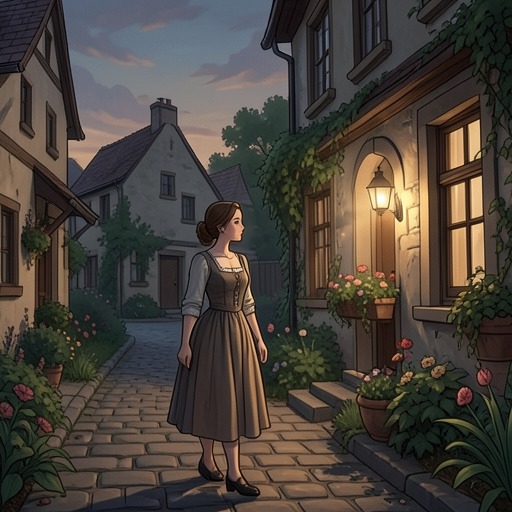
That change becomes personal when she leaves Avonlea for Redmond. Rain, mist, and the gray dawn accompany her last morning at Green Gables. The white porch room, brook, Dryad’s Bubble, Haunted Wood, and Lover’s Lane are not interchangeable childhood scenery to her; each holds memories that make departure feel like a possible farewell to her former life. She knows that returning for holidays cannot restore the daily belonging she is leaving behind. The household shares her sadness: Davy Keith cries over breakfast and cannot eat, while Dora Keith remains placid enough to finish her meal and eat his poached egg as well. The scene sets Anne’s emotional intensity against Dora’s unruffled practicality without diminishing either response.
Anne’s imagination also shapes her expectations of romance. A proposal conveyed through Jane Andrews on behalf of Billy Andrews briefly raises the prospect of a romantic event, only for Anne to learn that Billy had been given the upper farm and would turn to Nettie Blewett if Anne refused him. The episode makes her laugh and then sigh: one maiden dream has lost its bloom. Her disappointment is not simply at the man’s actions, but at the exposure of a supposed romance as a practical arrangement.
Education, Independence, and Home
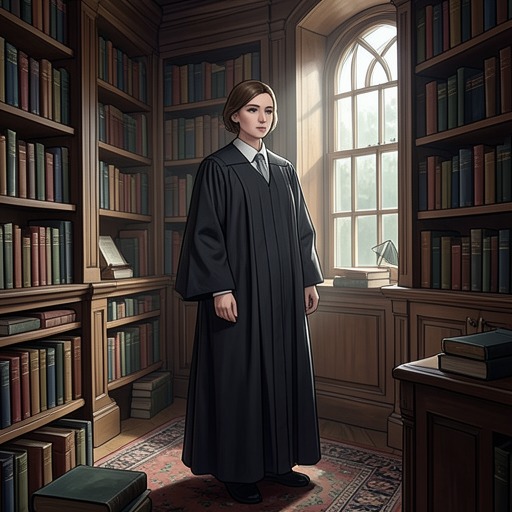
At Redmond, Anne finds genuine pleasure in study and student life. The second term brings class rivalry, new friendships, social occasions, and the widening of her interests. She works toward the Thorburn Scholarship in English because winning it would allow her to return without drawing on Marilla Cuthbert’s small savings. Her wish to continue her education is therefore joined to a firm concern for the person who has supported her: she does not want her ambition to become a burden on Marilla.
The prospect of returning is not secure. During a winter at Green Gables, Anne wonders whether she will be able to afford another year at Redmond. The scholarship available in her sophomore year would be small, and she refuses to take Marilla’s money; summer work may not earn enough. She considers leaving college to teach at a district school until she can pay for the rest of her course, even as she grieves that her old class might graduate and the hope of living at Patty’s Place with her friends might disappear. Her resolve to earn her own way does not remove the loneliness of that possibility, but it gives her a course of action rather than surrender.
Her summer at home supplies another kind of education. Anne returns to classes eagerly, yet also looks forward to Patty’s Place with a warmth usually associated with a home she has already inhabited. The season has renewed old friendships and taught her to work more patiently and live more nobly. She recognizes that lessons are not confined to college: experience among familiar people can deepen her understanding just as surely as formal study.
The emotional value of home changes again when Anne reads letters left by her birth parents. Bertha Shirley’s tender account of her baby gives Anne a living sense of the mother she never knew; its affectionate postscript makes that love especially immediate. Anne tells Phil that the letters have made her parents real to her and that she no longer feels like an orphan in the same way. Her image of finding roses of yesterday between the leaves of a book joins memory to discovery: the past cannot be recovered as lived experience, but the letters give it intimacy and substance.
Friendship, Loss, and Perspective
Anne’s relationship with Gilbert is one of the closest and most difficult strands in her college life. At Redmond, they are frequently together: Gilbert escorts her to college events, visits her residence, and remains a companion she considers exceptionally satisfying. Their names are linked in campus gossip, which irritates Anne, but she cannot bring herself to cast aside an old friend. Gilbert, meanwhile, is careful not to reveal his feelings or to let other young men gain an advantage through his own untimely disclosure. Anne tells herself that he has abandoned his earlier romantic hopes, yet privately wonders why.
That closeness does not make Anne understand what it means. When Gilbert takes her hand and says he must speak, she pleads with him not to. He declares his love and asks her to promise that she will one day marry him; Anne resists the proposal. Later, she becomes absorbed in the romance of Roy Gardner. Roy’s birthday sonnet and box of violets seem to confirm that she is living inside an ideal love story, and she imagines him as the hero she has been waiting for. Yet the contrast with Gilbert keeps intruding: Gilbert can share a joke with her, while Roy once fails to understand the point of a funny story. Anne notices the difference but does not yet let it undo the ideal she has built around Roy.
The death of Ruby Gillis alters Anne’s sense of what love and preparation for life require. After a serious conversation with Ruby about her fear of death, Anne walks home understanding that pleasant, ordinary things cannot be the sole purpose of living. Ruby dies in her sleep the following night, peacefully, with a smile. At the funeral, the flowers Anne has placed around her old playfellow frame a beauty transformed by death. Anne remembers Ruby’s face not as the display of physical beauty it had been in life, but as an image of the person Ruby might have become through love, sorrow, and a fuller life. The loss makes Anne’s reflections on spiritual readiness more than abstract thought: the possibility of death has entered the lives of people she loves.
Anne’s sense of a possible home is also shaped by the people around her. At Patty’s Place, the company and shared life of friends seem valuable in themselves, while her attachment to Green Gables remains undiminished. When she hears Amelia Skinner describe choosing the poor man she loved over a wealthier suitor who did not love her, Anne hears a practical account of the very distinction she struggles to make. Amelia had feared that the sight of the richer man’s handsome house might make her reconsider, but she is now comfortable and happy with Thomas. The story gives Anne a plainspoken counterexample to marriage chosen for material advantage.
Love, Choice, and Disillusionment
Roy’s courtship offers Anne the fulfilment of a romantic pattern she has long desired. She is attracted to his dark eyes, his sonnet, and the admiration he receives from other students. She expects an engagement and believes herself in love, even though Gilbert’s name still provokes a blush she cannot explain. Her feelings for Roy are genuine as an infatuation, but her response to his proposal exposes the gap between its beautiful form and her actual desire.
Roy asks Anne to marry him in the harbor pavilion where they first spoke on a rainy day. The scene seems deliberately suited to romance, and his carefully worded proposal is sincere. Anne expects to feel thrilled and prepares to say yes, but instead becomes cold and then trembles as if recoiling from a precipice. She pulls her hand away and tells him that she cannot marry him. The refusal is a reversal of the future she had anticipated, not because Roy’s affection is false, but because the completeness of his romantic performance cannot make Anne love him as a life partner.
Other examples help clarify what is at stake. Anne hears that Jane Andrews is to marry Mr. Inglis, a wealthy man, and that they will live in a marble mansion in Winnipeg with several servants. Jane’s mother presents these circumstances as evidence of a brilliant match, while noting that Jane’s husband will not let her cook. Against that public measure of success, Amelia Skinner’s decision to choose mutual love over the handsome house and wealth of her other suitor offers a different standard. Anne does not simply reject comfort; she comes to understand that money and romantic appearance cannot substitute for affinity.
Recognition and Ending
The decisive change arrives when Gilbert is gravely ill. During a stormy night, Anne keeps vigil in her thoughts and recognizes that she has always loved him. The knowledge arrives at a moment when she believes it may be too late even to sit beside him. She imagines him dying without knowing that she cares, and the prospect makes the years ahead seem empty. Her earlier attachment to Roy now appears a flattered fancy beside the bond she has failed to name. The crisis does not create her love; it removes the excuses and misreadings that had kept her from seeing it.
When Anne and Gilbert meet again in the old garden, Gilbert speaks of the home he has dreamed of: a hearth, a cat and dog, the footsteps of friends, and Anne. He asks whether she would answer differently if he asked the question he had put to her more than two years before. Anne gives no spoken reply, but meets his eyes with unmistakable love, and he understands. They talk through what each had misunderstood, including Anne’s belief that Gilbert loved Christine Stuart. The reconciliation makes explicit what had remained obscured by their restraint and mistaken assumptions.
Their future is not immediate or materially grand. Gilbert still has three years of medical study ahead, and he warns that there will be no diamond sunbursts or marble halls. Anne says that she wants him, not those ornaments, and that waiting will not matter if they can be happy while working for one another and dreaming. Her answer completes a shift from idealized romance toward chosen companionship: the future matters less as a spectacle than as a shared undertaking. The story returns her to dreams, but not to the illusion that life must imitate a perfect romance. Imagination now has room to coexist with patience, labor, uncertainty, and love.