Averil’s Atonement
Anne of the IslandAveril’s Atonement is Anne Shirley’s carefully imagined romantic story, and its journey from private manuscript to prizewinning advertisement exposes the distance between literary ambition and the need to earn money. Anne’s devotion to her heroine’s imagined world makes the story a personal creation; Diana Barry’s later commercial additions bring it public recognition at the cost, in Anne’s eyes, of its artistic integrity.
Conception and Design
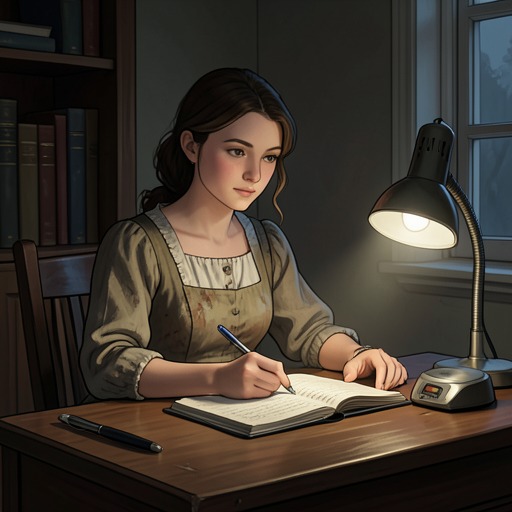
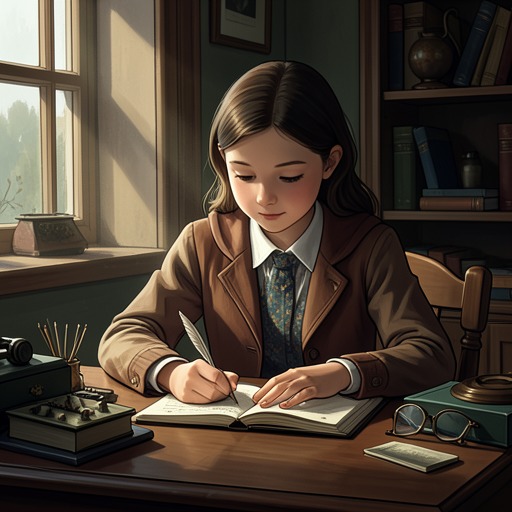
Anne develops the story while talking with Diana in a secluded hollow by a brook. By then she has written only a few pages, but has thought through much of the plot. Finding a suitable one had taken time, in part because she could not separate the heroine from the name Averil. To Anne, Averil felt so real that substituting another name seemed as impossible as changing Diana’s. The act of naming the characters is itself part of the pleasure of composition: Anne has spent hours awake thinking about them, and chosen Perceval Dalrymple for the hero.
The title, Averil’s Atonement, was settled early. Its alliteration pleases Anne, but the story’s conception also includes a deliberate contrast between romantic convention and ordinary action. Diana objects that Averil’s cake-making is not romantic enough for a heroine. Anne answers that the episode supplies humor and is among the best parts of the story. The disagreement captures how differently the friends read the same material: Diana judges the scene against the expected elegance of romance, while Anne values the comic effect of letting her heroine do something commonplace.
Submission and Rejection
Anne sends a long, bulky envelope to what she considers the biggest of the magazines. Diana shares her anticipation, and Anne expects a reply within about a fortnight. The hope is not only that the story will be accepted: Anne imagines eventually reading it to Marilla Cuthbert without disclosing its authorship, winning her praise, and then revealing that she wrote it herself. The manuscript thus carries a private prospect of recognition within her home as well as a public literary ambition.
The first magazine returns it with no explanation, only a printed notice that it is unacceptable. Diana encourages Anne to try the Canadian Woman instead, and Anne agrees, deciding to remove the sunset after Mr. Harrison has criticized that element. The second magazine rejects the story just as promptly. Diana suspects it was not properly read; Anne, more despondent, locks the manuscript in a garret trunk with the old Story Club tales. Before putting it away, however, she gives Diana a copy. That spare copy becomes the means by which the story later re-enters circulation, though Anne believes her attempt at authorship has ended.
Advice and Artistic Standards
When Mr. Harrison asks whether the story has been accepted, Anne says it has not and declares she will never write another. He does not tell her that the rejected story is secretly destined for success. Instead, he offers a different standard for writing: draw on people and places one knows, let characters speak everyday English, describe the sun rising and setting without making too much of it, and give even villains a chance to show some decency. His advice favors observation and human complexity over the conspicuous effects Anne had been trying to achieve.
Anne refuses the encouragement for the moment. She considers the attempt foolish and says she will teach after finishing at Redmond College, insisting that she can teach even if she cannot write stories. Her response makes the rejection feel larger than a single editorial decision: she treats it as a judgment on her capacity. Mr. Harrison’s counsel leaves open a less absolute possibility—that writing can continue without repeated submissions or surrendering its subject matter to a magazine’s approval.
Diana’s Submission and the Prize
Without telling Anne, Diana enters her copy in a competition run by Rollings Reliable. She expects Anne would refuse if asked, because the two magazine rejections have left her with little confidence. Diana reasons that the plan has limited downside: failed entries will not be returned, while a win would surprise Anne. The letter arrives at Green Gables, addressed to Anne in Avonlea, announcing that Averil’s Atonement has won the twenty-five-dollar prize. Rollings Reliable also plans to publish it in several Canadian newspapers and print it as a pamphlet for distribution to its patrons.
Diana’s intervention has changed the manuscript before sending it. She adds the brand of baking powder to the cake-making scene, making the product responsible for the cake’s success, and inserts an endorsement of Rollings Reliable into the story’s final paragraph. There, as Perceval embraces Averil and looks toward their imagined future, the romantic ending is made to promise that they will use no other baking powder. The alteration is small in relation to the story’s overall plot, but decisive in its new purpose: a private romantic resolution becomes advertising copy. The prize money—five times what Diana recalls the Canadian Woman pays for a story—makes the commercial success concrete.
Authorship, Reception, and Significance
Anne’s first response is not uncomplicated delight. She recognizes Diana’s wish to help, but the product reference makes her feel that a story written from her best intentions has been degraded into an advertisement. She worries that readers at Redmond will laugh at her and recalls the literary principle she learned from Professor Hamilton: writing should not be undertaken for a low or unworthy motive. Gilbert Blythe offers a practical counterargument. Since students need to pay board and tuition, he sees earning an honest penny as neither shameful nor ridiculous. His view eases Anne’s fear of ridicule, but it does not remove her sense that the story’s ideals have been violated.
Once published, the work produces a reception very different from Anne’s private humiliation. Mr. William Blair displays a large pile of brightly colored pamphlets on his store counter and gives one to every customer; he also sends Anne a complimentary bundle, which she drops into the kitchen stove. Most of Avonlea’s residents regard the prize as something to admire, and her friends respond with genuine approval. Some neighbors are less generous: Josie Pye claims Anne must have copied the story, the Sloanes dismiss the achievement, and Aunt Atossa objects to fiction-writing and connects it to Anne’s status as an adopted orphan. Rachel Lynde remains doubtful about the propriety of fiction, though the twenty-five-dollar check partly reconciles her to it.
The story’s course therefore separates outward achievement from inward satisfaction. It is rejected when Anne submits it under her own judgment, then wins when Diana submits a copy reshaped to advertise a product; publication brings public admiration as well as gossip, while Anne continues to feel the loss of the work she meant to write. Averil’s Atonement marks neither a straightforward triumph nor the end of Anne’s literary hopes. Mr. Harrison has urged her to keep writing, and the episode leaves the question of how to reconcile authorship with practical needs unresolved.