Davy Keith
Anne of the IslandDavy Keith is one of the children at Green Gables whose lively mischief makes the household noisier and more affectionate. His bond with Anne Shirley gives particular force to her leaving and returning: he wants her near, welcomes her with a bonfire, and continues to write to her while she is away. His comic escapades sit alongside a capacity for tenderness, as when he worries over Dora and asks whether Ruby Gillis will still laugh in heaven.
Identity and Place in the Household
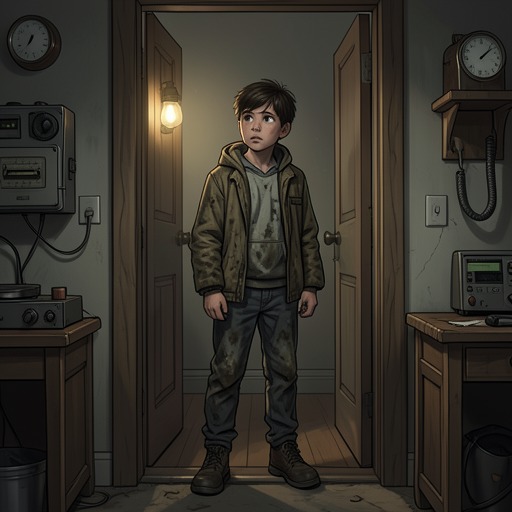
Davy appears as an eight-year-old boy in a scene that turns abruptly from Anne's troubled thoughts about Gilbert Blythe to the everyday distress of Green Gables. He is crying on the sofa because Dora has fallen down the outside cellar steps, gone head over heels, and scraped the skin from her nose. Anne takes him into her arms and tries to console him, recognizing that he is upset for his sister. His tears make his concern for Dora visible even as Anne gently tells him that crying cannot help her.
The household also sees the more disruptive side of his energy. Mrs. Rachel Lynde reports that Davy creeps up behind her and lets out the war-whoop he has learned from Mr. Harrison's hired boy. He has practiced it to welcome Anne, but Mrs. Lynde has found the repeated surprise unnerving. His antics are not confined to noise: he has spent a fortnight gathering branches for a bonfire and pestering Marilla to let him pour kerosene on it. The bonfire is eventually lit, apparently with kerosene, despite Mrs. Lynde's fear that he might blow up himself and everyone nearby.
Anne and the Experience of Separation
Davy is candid about wanting Anne to stay. When she is due to leave, he tells her that saying his prayers is more fun when he can say them with her, and asks why she wants to go away and leave them. Anne answers that she does not exactly want to go but feels she ought to. Davy's practical response is that, once grown up, he will refuse to do anything he does not want to do. The exchange contrasts a child's uncomplicated preference with Anne's sense of obligation, while showing that her departure is not abstract to him: it means losing a familiar companion and ritual.
His welcome when Anne comes home gives that attachment a public, exuberant form. A bonfire glows in the yard, and Davy has prepared his war-whoop as part of the greeting. As Anne gets out of the buggy, he hugs her knees; Dora clings to her hand. Davy immediately wants to show Anne how to poke the fire and points out the sparks. He explains that he made it for her because he was so glad she was coming home. The scene turns his earlier longing into action: the noisy tricks that trouble Mrs. Lynde become, in this instance, a deliberately arranged expression of affection.
Even after a week of Avonlea festivities and late nights, Davy seeks Anne out. Green Gables is dark and quiet when she returns, and she is nearly asleep when her door opens softly and he calls her name in a pleading voice. Anne sits up and asks what is wrong. The scene establishes the persistence of his reliance on her without supplying the rest of their conversation; its quiet approach contrasts sharply with his noisy welcome and public pranks.
Mischief, Conscience, and Curiosity
Davy can defend misbehavior as an adventure whose regret might come later. When Anne warns that he would tire of being bad, he argues that it would be fun while it lasted and that he could feel sorry afterward. Anne answers that remorse would not undo the consequences, reminding him of the Sunday the previous summer when he ran away from Sunday School and then concluded that being bad was not worthwhile. Her correction appeals to his own earlier experience rather than treating regret as a way to escape what follows an action.
His account of the day's activities with Milty shows the unruly range of his interests: they fished, chased the cat, hunted for eggs, and shouted at the echo behind the Boulter barn. Yet the episode ends not in defiance but in a question. Davy asks what an echo is, and Anne answers by imagining a beautiful nymph living in the woods and laughing from among the hills. The exchange places his physical mischief beside an appetite for explanation and fantasy; Anne meets his curiosity in the imaginative language she shares with him.
Letters, Humor, and Growing Up
While Anne is away, she reads Davy's letter aloud before the evening's study. She introduces it as evidence that his spelling has improved considerably over the past year, though his apostrophes remain unreliable, and praises his gift for making a letter interesting. The letter's small domestic reports turn household mishaps into comic storytelling. Davy describes snow as the old woman in the sky shaking her feather beds, then asks whether she is God's wife. He recounts Mrs. Lynde's fall down the cellar stairs: she caught the shelf holding milk pails and stewpans, bringing it down with her in a crash that Marilla first mistook for an earthquake. A dented stewpan had to be thrown away, while Mrs. Lynde strained her ribs; after taking rubbing medicine internally by mistake, she recovered and concluded that doctors did not know much anyhow.
Davy's report of Thanksgiving continues the same blend of appetite and comic misjudgment. He lists mince pie, roast turkey, fruitcake, doughnuts, cheese, jam, and chocolate cake, noting that Marilla predicted he would die from the meal but he did not. Dora, by contrast, had an earache that turned out to be in her stomach. He also notices the difference between the standards imposed on children and the behavior adults permit themselves: the new minister takes three pieces of pie and eats quickly, although Marilla tells Davy not to do either. The letter closes with six kisses from Davy and one from Dora, then returns to questions, asking who the devil's father was. Its misspellings and leaps of attention are part of its form, but so are its careful affection and his habit of treating the unexplained as something worth asking about.
When Davy next sees Anne, he rushes in with a joyful yell and reports that he has grown two inches since the previous fall. Mrs. Lynde measured him with her tape, and he proudly displays a missing front tooth. She had tied it to a string attached to the door and shut the door to pull it out; Davy sold the tooth to Milty for two cents because Milty collects teeth. The episode gives his growth a child-sized measure—height, a gap in his smile, and a small sale—and preserves his delight in narrating each change to Anne.
Grief and Imaginative Consolation
After Ruby Gillis dies, Davy asks whether she will laugh as much in heaven as she did in Avonlea. His question follows Anne's reflection that Ruby was a great laugher, and Anne answers that she thinks Ruby will. Diana Barry is uncomfortable with the question, but Davy's response keeps Ruby's familiar character present in the conversation: he remembers her through laughter and wonders whether death will take that quality away. Across these moments, Davy's emotional directness is consistent. He cries for Dora, longs for Anne, writes affectionately from a distance, and approaches death through a question shaped by the joy he remembers.