Growth and change
Anne of the IslandGrowth and change gives shape to Anne Shirley’s movement from girlhood toward adult life, turning departures, homecomings, friendships, and love into tests of what can change without ceasing to matter. The novel does not present maturity as a simple escape from childhood or a steady advance toward certainty. Instead, Anne repeatedly discovers that cherished places and relationships persist in memory even as their daily forms alter—and that some truths become clear only when time has made their loss seem possible.
The first recognition of change
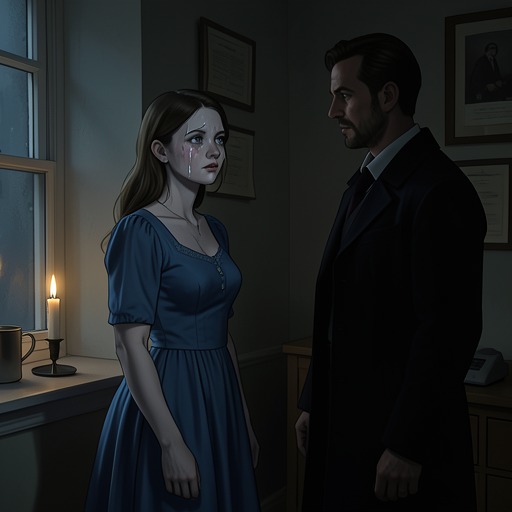
In conversation with Diana Barry, Anne faces the end of a summer that has already brought several departures. Miss Lavendar’s wedding has been followed by the absence of Miss Lavendar and Mr. and Mrs. Allan; the closed shutters of the manse make the change feel almost like death. The image registers how strongly Anne experiences altered surroundings: a familiar home can look bereaved when the people who gave it life have gone. Diana also anticipates a duller Avonlea, with an uncertain succession of ministers and Anne and Gilbert Blythe away. Change is personal, but it is also communal, reshaping the village’s everyday rhythms.
The friends name their transition a parting of the ways and ask whether adulthood is as pleasant as they once imagined. At eighteen, they can already count the years to twenty, a milestone that once seemed impossibly old. Diana’s new ring gives marriage a visible, intimate presence, while her admission that grown-up life can be frightening complicates its promise. Anne tries to meet uncertainty with cheerfulness and humor, imagining a future in which she visits Diana as an old maid and asks only for a little room. Beneath the joke is a real concern: growing up may change the terms of closeness, even when affection remains.
Departure and the changing meaning of home
Anne’s departure from Avonlea for Redmond makes that uncertainty concrete. On the morning she leaves, rain and mist obscure the landscape, matching the sadness of a journey whose destination she cannot yet imagine as home. She is not merely leaving a house; she is leaving the life that made its rooms and surroundings familiar. The little white porch room, the Snow Queen at the window, the brook in the hollow, Dryad’s Bubble, the Haunted Woods, and Lover’s Lane gather the memories of her girlhood into particular places. Anne senses that a holiday return cannot restore residence: coming back will no longer mean living there.
The farewells reveal how differently people carry the same change. Davy Keith cries over breakfast and hides in a clothes closet rather than say goodbye, while Dora Keith keeps her composure and even eats his uneaten egg. Marilla Cuthbert appears brusque and tearless, but her eyes disclose what her words conceal; Rachel Lynde embraces Anne and cautions her to look after her health. These small, distinct reactions make departure a shared family event rather than an inward feeling alone. Anne’s leaving alters the household, while the household’s response confirms the depth of her belonging to it.
Homecoming and the evidence of time
When Anne returns to Avonlea with the Thorburn Scholarship, the village initially seems unchanged. Yet the first Sunday in the Green Gables pew reveals how misleading that impression is. There is a new minister, familiar faces have disappeared from the congregation, and several older villagers now lie in the graveyard behind the church. Time has moved even where the landscape and routines seem continuous. The return is therefore not a reversal of departure: Anne comes back to a place that is recognizably home but can no longer be the untouched setting of her earlier life.
Other changes make the passage of time legible through altered relationships and choices. Billy Andrews is married to Nettie Blewett after Anne had rejected him; Jane Andrews has resigned from the Avonlea school and plans to go West. Anne recalls Jane’s earlier attempt to propose for Billy, now measured against the fact that his life has moved on without the heartbreak Anne might once have imagined. Such details give the homecoming its mixed perspective: the past remains available to memory, but events have proceeded beyond the meanings Anne attached to them at the time.
Friendship, marriage, and the costs of growing up
Diana’s wedding makes a later change in Anne’s closest friendship both joyful and painful. As bridesmaid, Anne participates in a ceremony arranged in the spirit of the girls’ childhood compact; she places Diana’s veil, and the promised marriage has at last arrived. But Diana’s new home will be two miles from Green Gables, and their constant companionship cannot continue in its old form. Anne thinks of Diana’s light as a beacon that has guided her for years and grieves that it will no longer shine through the summer twilights in the same way. The wedding does not end their friendship; it changes its daily shape, making growth feel like a loss even within a happy occasion.
The repeated movement from shared childhood expectations to altered adult circumstances also prepares the way for Anne’s reassessment of love. During Gilbert Blythe’s grave illness, she realizes that she has always loved him and understands that her earlier fascination with Roy Gardner was not the same thing. The recognition comes in terror because she believes it may have come too late: Gilbert might die without knowing her feelings, and she imagines the years ahead as empty without him. Her insight is thus not a leisurely conclusion reached through reflection, but a belated truth forced into view by the possibility of irreversible loss. What seemed like a settled refusal or a mistaken judgment is reinterpreted under the pressure of mortality.
Change as a new beginning
The movement from that night of dread to the later meeting in Hester Gray’s garden gives change a hopeful, but not effortless, ending. Anne and Gilbert can look forward to a shared future, yet Gilbert tells her that he must wait three years to finish his medical course, and that their life will not include diamond sunbursts and marble halls. Anne accepts the delay without requiring wealth or grand display. She values being with him and treats waiting and working for one another as part of the happiness they can already begin to share.
Across these episodes, maturity does not mean that Anne stops mourning what passes. The loss of the old home life, the altered friendship with Diana, and the near-loss of Gilbert all remain emotionally real. What changes is her capacity to recognize that attachment can survive altered circumstances, and that a future need not reproduce an idealized past to be worth choosing. The book’s pattern of departure and return, separation and renewed closeness, makes growth a process of carrying the past forward while accepting that life has moved on. Its final promise is modest and deliberate: not a return to childhood, but a future made meaningful by mutual patience, work, and dreams.