Patty's Place
Anne of the IslandPatty's Place is an old house on Spofford Avenue in Kingsport whose modest scale and settled character distinguish it from the mansions around it. First encountered as an object of admiration, it becomes the home that Anne Shirley and her friends rent for their college year. Its garden, orchard, and carefully preserved name make the house more than a picturesque address: it is a setting where young women make a household together, and where friendship provides shelter as their plans and feelings change.
Setting and Character
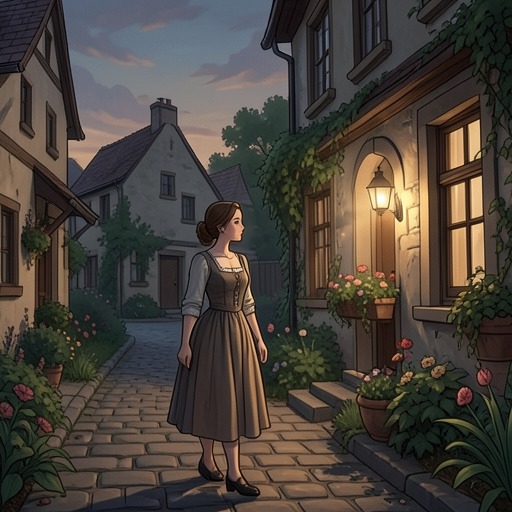
At the crest of a pine-fringed hill, where Spofford Avenue gives way to an ordinary road, Patty's Place stands apart from the street's grand residences. It is a small white frame house, with pines on either side leaning over its low roof. Red and gold vines cover the walls; green-shuttered windows look out over a tiny garden enclosed by a low stone wall. Even in October, old-fashioned flowers and shrubs remain there, including sweet may, southern-wood, lemon verbena, alyssum, petunias, marigolds, and chrysanthemums. A narrow brick path laid in a herringbone pattern runs from the gate to the porch.
An apple orchard occupies the ground behind the house instead of a conventional back yard. The property seems to belong to a country village carried intact into the city: beside it, the lawn and mansion of a wealthy tobacco merchant appear newly made and showy. Its distinction is not grandeur but the impression of having grown into its place. That contrast helps explain why the house attracts Anne and her friends, who value its age and homeliness over the polished scale of the newer residences.
The name, displayed in white letters above the arched gateway, is part of the house's identity. Phil Gordon finds it especially appealing on a street of imposing, conventional house names. Miss Patty Spofford owns the property and lives there with her niece, Miss Maria. The house has belonged to the family for generations, though Phil's playful account of their having lived there for hundreds of years is expressly exaggerated. The orchard and the unassuming garden are not ornamental accessories to a wealthy residence; they are part of the property that the owner has kept intact.
Ownership and the Rental
When the friends first discover that Patty's Place is available, a small sign at the gate announces that it is furnished and can be let. Anne has long felt drawn to the house and is determined to ask about renting it, despite Priscilla Grant's worry that its location on Spofford Avenue will make it unaffordable. Their visit takes them through the garden and into a large living room, where Miss Patty and Miss Maria sit knitting. The room's occupants and its furnishings make the house feel inhabited rather than staged for prospective tenants.
Miss Patty tests whether Anne's professed affection is sincere, having heard young people use the language of love carelessly. Anne explains that she and her college friends want to keep house the following year instead of boarding, and that she has loved the property since seeing it the previous autumn. Miss Patty decides that Anne is different from the previous applicants, whom she disliked, and offers to let the house because she believes Anne will care for it. She and Miss Maria do not depend on the rental income: they could afford to travel to Europe without letting the property. The decision is therefore presented as a matter of trust and attachment, not simply a transaction.
That trust includes the house's name. Miss Patty explains that her brother Aaron left the property to her in his will, and that it has been Patty's Place ever since. Other would-be renters had asked to remove the name while they occupied the house; Miss Patty refused, insisting it stay until she and Miss Maria were gone. She is willing to pass the house into Anne's care without surrendering its history or identity. The friends accept that condition, and their inspection confirms that the house can serve both their practical needs and their imaginative sense of home.
Rooms and Shared Household
The interior offers a large living room, a kitchen, and a small bedroom downstairs, with three rooms above—one large and two small. Anne is particularly taken with one of the smaller upstairs rooms, which looks into the pines. Its pale-blue wallpaper, old-fashioned dressing table, candle sconces, and diamond-paned window with a seat beneath blue muslin frills suggest a private place for studying or daydreaming. The room makes the house's appeal personal: Anne is already picturing how she might inhabit it, not merely admiring it from the road.
Anne and Priscilla secure the rental, and Stella Maynard is also to live there, with her aunt keeping house for them. After the young women return and settle in, three weeks of arranging their belongings and reconciling different opinions leave them confident that the experiment will succeed. The house becomes a shared domestic project. Each brings objects to make it comfortable; Priscilla, Phil, and Stella bring pictures and ornaments, and hang the pictures despite Miss Patty's request that they avoid making holes in recently papered walls. Their promise to fill the holes later shows the affectionate informality of their occupation, as well as the small negotiations involved in making someone else's home their own.
The living room becomes the gathering place for this enlarged household. At twilight, Anne, Priscilla, Phil, Stella, Aunt Jamesina, and the household's cats gather there around the fire. The room's warmth and familiar company lead Phil to consider it even homier than home. The description rests on the accumulated life of the place: people gathered together, cats at ease, and a bowl of chrysanthemums sent to Phil brightening the room. Patty's Place offers not an escape from ordinary domestic routines but a setting in which those routines—settling in, sharing space, and adjusting to one another—become a source of pleasure and belonging.
A Home Through Change
The house remains part of the friends' lives across more than one college term. Aunt Jamesina stays there in summer, partly for the sake of the cats, and Anne's return to college is framed by the contrast between leaving home and resuming their life at Patty's Place. The house also holds ordinary moments of correction and care: when Davy Keith repeats a phrase he has heard from adults, Anne reproves him. The episode places Patty's Place within the practical rhythms of the wider household, not only its most picturesque gatherings.
Its meaning becomes especially clear as the friends prepare to leave. Anne packs quilts for Rachel Lynde and thinks with pleasure about going to Avonlea, but with dread about leaving Patty's Place for good. The two feelings sit side by side: anticipation of homecoming cannot cancel her attachment to the rented house and the life made there. Phil wonders whether the echo of their laughter will remain after Miss Patty Spofford and Miss Maria return from their travels. The owners' eventual return closes the young women's occupation of the property, leaving their shared household as a temporary but consequential chapter.
Before that departure, Patty's Place also shelters Anne at a moment of romantic disappointment. While the household believes that Roy Gardner's proposal will be accepted, Anne refuses him. After the conversation, she slips into the house at dusk and escapes to her room, where Phil is waiting on the window seat. Anne tells her what has happened and, overwhelmed by shame and the fear that she has damaged her friendships, finds comfort in Phil. The house is thus not only the setting for their hopeful plans but a refuge when those plans break apart. Its domestic intimacy gives Anne a place to disclose her decision and receive consolation.
Narrative Significance
Patty's Place joins material details to emotional belonging. The orchard, old-fashioned garden, blue upstairs room, and name above the gate give the friends a tangible setting to value and care for; the living room and bedrooms make their shared life possible. Its contrast with the conspicuous houses on Spofford Avenue also marks a preference for inherited character and lived-in intimacy over wealth and display. Miss Patty Spofford's insistence on keeping the name underscores that the house has a history of its own, even as she entrusts it to a new generation of occupants.
For Anne, the house is first a cherished possibility, then a home shaped by friendship, and finally something she must leave. The arc gives Patty's Place a significance that exceeds its role as a rental: it gathers people into a household, provides a setting for their daily adjustments and celebrations, and holds them through uncertainty and parting. Its welcome is temporary, but the attachments formed within it are not made trivial by that limit.