Paul Irving
Anne of the IslandPaul Irving is Anne Shirley’s young friend and former pupil, a boy whose vivid imagination makes the shore seem inhabited by fairy folk and whose growing up is marked by the gradual loss of that enchanted world. His story is also one of durable affection: as childhood fantasies recede, he remains close to Anne, and his love for Miss Lavendar gives their newly formed family its own name and shape.
Identity and Early Portrait
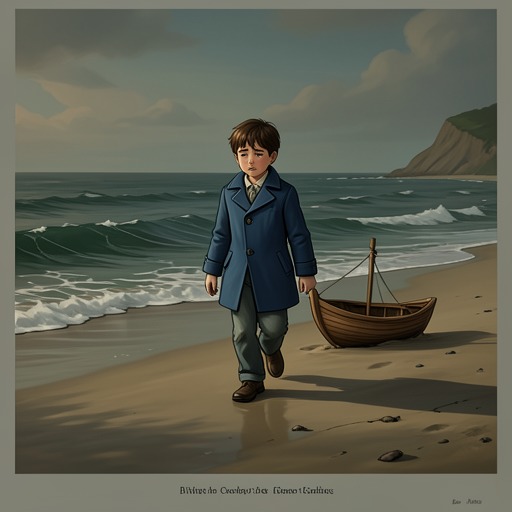
Paul is the son of Mr. Irving and spends part of his summers in Avonlea with his grandmother. At thirteen, he is tall for his age, with chestnut curls and beautiful eyes. Anne sees his imagination as something like a prism, turning what reaches it into rainbows; their shared delight in wandering through woods, fields, and along the shore makes them kindred spirits. His fancifulness is not simply a private game: it is a way of attending to the world that Anne recognizes and shares.
His family life has changed since his father married Miss Lavendar. The Irvings settle in a new home, while Echo Lodge, Miss Lavendar’s former home, is closed after the wedding. Paul’s affection for his stepmother is warm but carefully expressed. He calls her Mother Lavendar, explaining to Anne that the name mother by itself belongs to his own little mother. He loves Miss Lavendar next to his father, and even admits that he loves her a little more than Anne. Anne accepts this ordering as right: the exchange shows Paul’s capacity to welcome a new attachment without pretending that it replaces an earlier one.
Anne, Miss Lavendar, and Echo Lodge
Paul and Anne’s closeness rests on a mutual respect for imagination. Their companionship continues through rambles in natural settings, where conversation and shared fancy are part of their friendship. Anne is not merely an adult observing a child’s make-believe; the narrative presents them as kindred spirits, able to meet in a way that outlasts their difference in age and role as former pupil and teacher.
Echo Lodge gathers these relationships into a place. After Miss Lavendar’s wedding, the house is shut; during a winter visit, Anne and Diana return by the beech woods, carry a lunch basket, open the rooms to air and sunlight, and light a fire. Miss Lavendar’s rose-bowl perfume remains, and the empty rooms seem to hold the expectation of her return, along with the remembered presence of Charlotta the Fourth and Paul’s fairy fancies. Anne finds the old horn behind the kitchen door, and the girls call to the echoes over the white river. Paul is not described as joining this visit, but his imaginative presence belongs to the lodge’s remembered life. The scene makes a closed house feel briefly inhabited again, while keeping clear that the people and time associated with it have moved on.
When the Irvings return to Avonlea for July and August, Echo Lodge again becomes a setting for laughter and summer activity. Miss Lavendar is still herself, now settled in her new life, and Paul adores her. Their companionship is described as beautiful to see. The return gives the old place a changed function: no longer Miss Lavendar’s home before marriage, it is again a gathering place for the family and their friends.
The Shore and the End of Fairyland
During the first fortnight of one visit, Paul stays with his grandmother Irving in Avonlea. Anne meets him when he arrives and finds him impatient to reach the shore. He expects Nora and the Golden Lady, along with the Twin Sailors, to be there; supper can wait, because he imagines Nora watching for him around the point. The certainty and urgency of his expectation make the shore a meeting place between ordinary geography and the fairy world he has built around it.
But Paul returns at twilight sober and disappointed. The Twin Sailors and the Golden Lady have not appeared, and although Nora was there, he feels she has changed. Anne answers that Paul himself has changed: he has grown too old for the Rock People, who play only with children. She tells him the pearly, enchanted boat and its moonshine sail, the Golden Lady’s harp, and even Nora will not remain available to him as before. Growing up, in Anne’s account, means leaving fairyland behind. The explanation turns his disappointment into a recognition of change rather than a failure of the imagined beings to keep faith.
Paul’s grandmother mildly reproves Anne and Paul for their talk, but Anne insists that they are becoming wise—and, with that, less interesting. The moment preserves the affection and humor between the two friends even as it acknowledges a real transition. Paul’s loss is not treated as foolishness to be corrected; it is a stage in growing older, and Anne gives it language that respects both the child he has been and the person he is becoming.
Growing Up and an Enduring Bond
By sixteen, Paul’s chestnut curls have given way to close-cropped brown hair, and football interests him more than fairies. The change is concrete, visible in both his appearance and his pursuits, and recalls the earlier visit when he discovered that the Rock People no longer seemed to meet him as before. Yet the narrative does not equate maturity with the disappearance of his deepest qualities. His bond with Anne still holds, and the book’s assertion that kindred spirits do not change with changing years makes their continuing friendship the counterweight to his lost childhood enchantments.
The Irvings’ later summer return brings Anne to Echo Lodge for three happy weeks in July. Charlotta the Fourth, now a grown young woman, still adores Anne; Paul, nearly grown himself, remains connected to the same circle of affection. On a bleak, stormy evening, Anne returns to Green Gables after her visit. Marilla asks whether Paul brought her home and worries about the violent weather. Anne believes he will reach Echo Lodge before the rain becomes too heavy, adding that he wanted to go back that night. The exchange places their closeness amid ordinary concern for one another, while keeping the danger of the storm a possibility rather than a reported outcome.
Narrative Significance
Paul’s arc links imagination to time without treating one as the enemy of the other. The Rock People’s disappearance from his life is a child’s recognition that the world he once inhabited cannot remain unchanged; his shift toward football and young adulthood gives that recognition a later, outward form. At the same time, Anne’s friendship with him persists, and his love for Miss Lavendar shows that growing into a new family does not require him to erase an earlier attachment. Paul’s story thus holds two truths together: childhood’s fairyland passes, while affection and imaginative kinship can survive the passage into another stage of life.