Roses of yesterday
Anne of the Island“Roses of yesterday” names the way Anne Shirley experiences her parents’ old letters: as fragile pages carrying the tenderness of a life and love she never knew, yet can recover through reading. The image turns the past from an absence into something intimate and present, and marks a change in Anne’s sense of herself: she no longer feels like an orphan without any personal connection to her parents.
The Letters as Preserved Memory
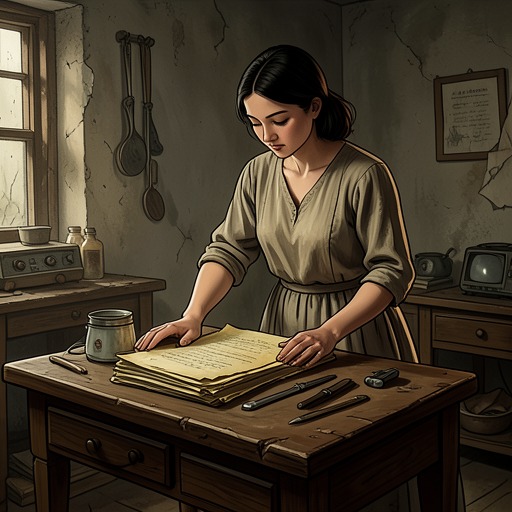
After receiving the letters, Anne Shirley first makes a solitary visit to the green corner of the old Bolingbroke Cemetery, where her parents are buried, and leaves the white flowers she has brought on their grave. She then returns to Mount Holly and reads the letters alone in her room. There are only a dozen, yellowed, faded, and blurred by time; her parents, Walter and Bertha Shirley, had rarely been separated during their courtship. Their significance lies not in grand instruction but in the love and trust the pages have kept intact.
The letters also preserve Bertha Shirley’s personality. Their words and thoughts retain the writer’s charm long after her death, making the papers feel like more than historical records. They are intimate traces of two people’s affection, carried forward in a form Anne Shirley can hold and read.
A Mother’s Postscript
The letter Anne Shirley treasures most was written after her birth, when Bertha Shirley was briefly away from her husband. It recounts the baby’s cleverness, brightness, and many sweetnesses, bringing a young mother’s pride into the present. Its postscript reads, “I love her best when she is asleep and better still when she is awake.” The narrative suggests this was probably the last sentence Bertha Shirley ever wrote; her death was near.
That detail gives the letters a double weight. They preserve a mother’s delight in her infant daughter, but also come from a life soon to end. The pages join ordinary parental affection to the knowledge of loss without diminishing either: Anne Shirley encounters both the love that welcomed her and the brevity of the lives that gave it.
The Image and Its Meaning
That night, Anne Shirley tells Phil that she has found her father and mother: the letters have made them real to her, and she no longer feels like an orphan. She describes the experience as opening a book and finding “roses of yesterday, sweet and beloved, between its leaves.” The image binds the material object—the old book and its pages—to the emotional discovery contained within them. The roses are not the white flowers she left at the grave, but a figure for affection preserved in writing, still capable of being encountered after time has passed.
The expression therefore captures more than nostalgia. Its force comes from a change in Anne Shirley’s relationship to her own past: the letters cannot restore her parents, but they give her a personal inheritance of their words and love. What had been an unknown family history becomes something she can read, feel, and claim as part of herself.