The Sarah-cat
Anne of the IslandThe Sarah-cat is Aunt Jamesina’s sleek gray-and-white cat, an experienced mouser whose dignity and calm authority distinguish her from the more combative Rusty and Joseph. Though she comes from an ordinary, plebeian background, she carries herself without any apparent awareness of it. Her single forceful response to Rusty’s attack settles their relationship, while her later place at Aunt Jamesina’s bedside gives her a quieter role as company during anxious nights.
Identity and Background
Aunt Jamesina brings The Sarah-cat with her when she joins the household. The cat had been given to her by her washerwoman, a humble origin that does nothing to diminish the animal’s imposing bearing. Aunt Jamesina explains that the cat was originally called Sarah; her husband therefore referred to her as the Sarah-cat. Eight years old, she is a remarkable mouser, and Aunt Jamesina assures Stella that she never fights.
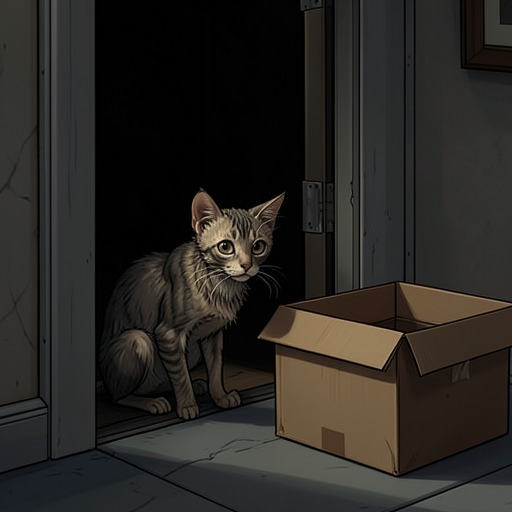
Her appearance reinforces the contrast between her unassuming origins and her manner. She is large and sleek, with gray-and-white fur, and sits with an air of great dignity. On arrival, she settles gravely before the fire and begins washing her face. The description makes grooming, rather than display or aggression, her characteristic occupation: she does not need to announce her importance for the other cats to discover it.
Arrival and Authority Among the Cats
The Sarah-cat and Joseph arrive by express in separate boxes. Once released and fed, Joseph chooses a cushion and corner that suit him, while The Sarah-cat takes her place before the fire. Their quiet settling-in is interrupted when Rusty bounds into the room, sees the newcomers, and launches himself at her. His reaction is all visible alarm and defiance: his tail swells, the fur on his back rises, and he shrieks before attacking.
The Sarah-cat meets the charge with one contemptuous sweep of her paw. Rusty rolls across the rug and gets up dazed, faced with a kind of opposition he did not expect. She then turns her back on him and resumes washing. That deliberate return to her toilette makes the encounter decisive: she neither pursues him nor prolongs the fight, and Rusty never attacks her again. From then on, she rules the roost without repeated contests. Her authority rests not on constant aggression but on the force of a single, well-judged boundary.
Contrast with Rusty and Joseph
The Sarah-cat’s conduct also clarifies the difference between her and the other cats. Aunt Jamesina says she never fights, while Joseph rarely does; Rusty, by contrast, is quick to challenge the newcomers. After his defeat by The Sarah-cat, he directs his anger toward Joseph, apparently trying to avenge his humiliation. Joseph is pacific by nature but can fight well when pressed, and the two male cats engage in daily battles whenever they meet. The Sarah-cat remains outside their recurring conflict, having already made Rusty understand that she is not another opponent to test.
The contrast is practical as well as comic. Aunt Jamesina takes the cats’ clashes lightly, reasoning that Joseph needs exercise and Rusty needs to learn that he is not the only cat in the world. The Sarah-cat’s settled position among them gives that lesson a visible shape: she has established a place that Rusty respects, while his disputes with Joseph continue. Anne takes Rusty’s side and dislikes Joseph, and Stella is distressed by the fighting; Aunt Jamesina, however, laughs at the cats’ rivalry. The Sarah-cat’s calm presence stands apart from these reactions and from the ongoing contest between the two males.
Company and Significance
Aunt Jamesina’s later letter reveals another dimension of The Sarah-cat’s place in the household. During cold weather, Aunt Jamesina lets the cats sleep inside: Rusty and Joseph on the living-room sofa, and The Sarah-cat at the foot of her bed. She values the sound of the cat purring when she wakes at night. In those hours she thinks of her daughter, who is in India, and worries about the snakes there. The purring offers her company, though it cannot entirely quiet that fear; she says that even her faith does not overcome her anxiety about snakes.
The Sarah-cat therefore serves two distinct purposes in the story. In the room with Rusty, her measured force ends a confrontation and establishes a lasting boundary. At night beside Aunt Jamesina, she offers steady, ordinary companionship during thoughts of danger far away. Neither role requires her to become an active combatant or a conspicuous source of comfort: she asserts herself once, then resumes her composed routines. Her dignity, dependable mousing, and quiet presence make her a small but memorable part of the household’s changing life.