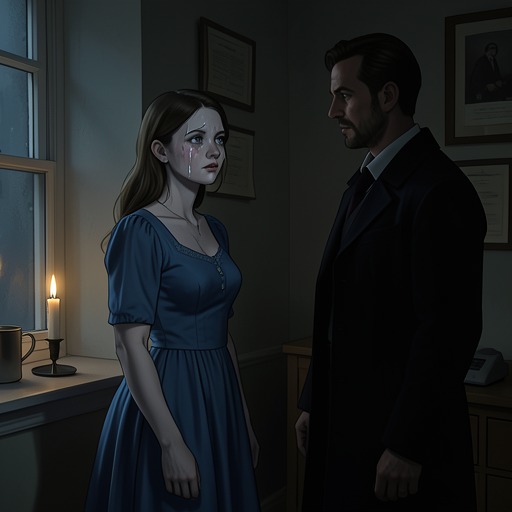
The glory and the dream
Anne of the IslandThe glory and the dream is Anne’s phrase for a youthful sense of promise that seems to recede as she grows up. Asked amid change and uncertainty, it expresses not simply regret for childhood but the tension between an idealized past and the harder, still unfinished work of building a life.
The Phrase and Its Moment
The phrase appears when Anne is leaving Avonlea for Valley Road, where she will teach through July and August while Esther Haythorne is unwell. She has begun to feel like a stranger in Avonlea: children who once occupied the places she and her companions had filled have grown into young adults, and the visible passage of time makes her feel old. Anne longs for the earlier days, when life seemed covered by a rosy mist of hope and illusion, and asks where the glory and the dream have gone. The question gives a name to a change she can feel but cannot reverse.
Gilbert Blythe answers practically, while Anne wonders whether his thoughts are with Christine. That contrast keeps the phrase intimate rather than abstract: Anne is measuring the loss of an earlier outlook even as the present brings new relationships and a different sense of home. Her further thought that Avonlea will feel lonely with Diana gone ties the change to a particular separation, not just the passage of years.
From Displacement to Belonging
The feeling of lost promise has an earlier counterpart in Anne’s arrival at Redmond. Waiting to register, she feels so insignificant that she imagines herself invisible and fears that the Sophomores might step on her. Priscilla Grant describes the opposite discomfort: she feels too large and conspicuous among the students. Their different anxieties reveal how unfamiliar the college feels to both of them.
Anne connects that unease to the loss of the close-knit world they had known at Queen’s. At Queen’s, she says, everyone knew one another and had a place; at Redmond, she and Priscilla had expected to resume life where they had left off, only to feel that the ground had slipped away. After three weeks, however, college life comes into focus. The Freshmen become a class with shared interests and ambitions, and their victory over the Sophomores in the Arts Rush—won through Gilbert’s strategic leadership—brings respect from other classes and a confidence-giving sense of collective identity. The early image of lost ground therefore marks a transition, not a permanent inability to belong.
Hope Under Material Pressure
Anne’s hopes are also constrained by money. During her first year, she resolves to win the Thorburn Scholarship in English so she can return to Redmond without using Marilla Cuthbert’s small savings. Later, in the wintry twilight at Green Gables, she fears that she may have to leave college: the Sophomore scholarship is small, she will not take Marilla’s money, and she sees little prospect of earning enough during the summer. She considers teaching at a district school until she can afford to finish, then steadies herself with the knowledge that she can earn her way if necessary.
These circumstances complicate the phrase’s wistfulness. Anne does miss the unshadowed hopes of earlier years, but her future is not only a dream to be mourned: it depends on study, paid work, and choices about financial independence. In the second term she studies hard for the scholarship, while also enjoying classes, societies, social life, and friendships. The widening of her interests offers a practical form of hope, even as the cost of continuing her education remains real.
Achievement and the Changed Dream
By Convocation, exams have ended and Anne has taken High Honors in English; Priscilla has earned Honors in Classics, Phil Gordon in Mathematics, and Stella Maynard has achieved a strong all-round result. The moment is an epoch for Anne, but her attention turns to the flowers before her. She had expected to carry Roy Gardner’s violets, yet sets them aside for the lilies-of-the-valley sent by Gilbert, beside his card. Their freshness recalls the flowers in the Green Gables yard, and with them come memories of Avonlea, old dreams, and old friendships.
The choice does not erase the earlier loss or settle every uncertainty. Instead, it shows how the meaning of a dream can change: Anne has reached an important academic milestone, while familiar memories and relationships remain active within her new life. Read against her initial sense of displacement and her later fear of leaving college, the phrase holds both sides of growing up—the ache of recognizing that an earlier vision has passed, and the possibility of finding purpose and attachment in what comes next.