Time, change, and growing up
Anne of the IslandTime, change, and growing up are registered not as a single milestone but as a succession of encounters with altered landscapes, changed relationships, and memories that no longer fit the present. Anne returns to Green Gables to find the familiar Snow Queen tree blown down and Diana absent from her welcome; later, Diana’s first child makes the passage from schooldays to adulthood newly visible. Against these losses and dislocations, Anne’s enduring connection with Paul suggests that growing older changes people without necessarily dissolving their deepest bonds.
The Changed Landscape
The fallen Snow Queen makes time tangible. When Anne comes home, she asks what has happened to the tree beside the porch gable. Marilla Cuthbert explains that it had stood there since her own girlhood, but the March gale brought it down; rotten at its core, it could no longer withstand the storm. Its long presence had made it part of the house’s familiar surroundings, so its absence changes more than the view. Anne feels that the porch gable is no longer the same room and expects to look from its window with a sense of loss. The tree’s history spans two generations, but age has not protected it from decay: what once seemed permanent was already weakened within.
That loss gives physical form to a broader experience of return. Green Gables remains home, yet Anne cannot come back to precisely the place she left. The familiar window now frames an absence, and the homecoming is marked by what is missing as much as by what remains. The tree’s fall is neither a chosen change nor a sign that the house has ceased to matter. Instead, attachment makes the change more painful: because the tree belonged so deeply to Anne’s sense of home, its disappearance alters how she experiences a place that is otherwise still hers.
Childhood and the Present
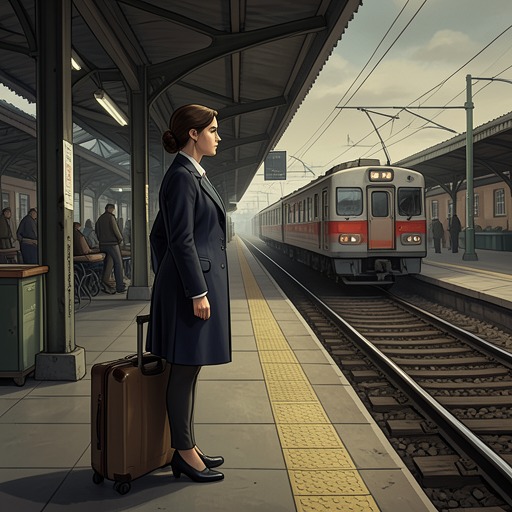
The change in Diana’s life intensifies Anne’s awareness of time. On returning to Avonlea, Anne finds Diana in the first radiance of motherhood, with her newborn beside her. Looking at the pale young mother, Anne struggles to reconcile the woman before her with the black-curled, rosy-cheeked girl from their schooldays. The difference is not merely that Diana has grown older; she has entered a life stage that Anne has not shared. Anne feels strangely desolate, as though she belongs only to the vanished years of their childhood and has no place in the present.
Her response is complicated by affection rather than resentment. Anne is glad when her friends are happy, but being surrounded by happiness that is not her own can leave her lonely. Diana proudly presents her son as beautiful. Anne privately finds him more like Fred than beautiful, but sincerely recognizes him as sweet and delightful. The moment holds both distance and intimacy: Anne cannot experience Diana’s new life as her own, yet she can welcome the child and share in her friend’s joy. Their friendship persists, but its setting has changed from shared schooldays to distinct adult circumstances.
The Road Through Familiar Places
A walk by the Birch Path and Willowmere turns change into a measure of elapsed time. Anne has not taken that route for many moons, and the birches that were once fairy saplings have grown into large trees. The path is recognizably the same, but its growth records years that cannot be recovered. Anne’s perception that everything has changed gathers the altered trees, her changed friendships, and her own sense of displacement into a single encounter with the landscape.
The summer night does not console her. Blossom fragrance weighs heavily on the air, and Anne feels lonelier as she walks home. She thinks that she may be glad when summer ends and she is away at work again, imagining that life might then feel less empty. This wish does not erase her attachments to Avonlea; it shows that familiar places can sharpen loneliness when the life once associated with them has passed. The route preserves the form of childhood memory while its grown trees make that memory impossible to inhabit unchanged.
What Changes, and What Holds
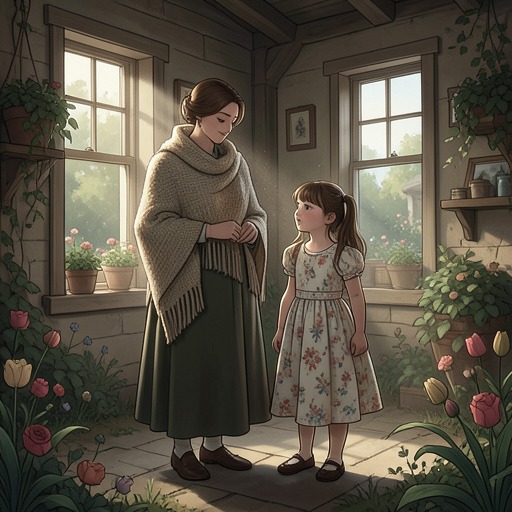
At Echo Lodge, Paul provides a counterpoint to the losses surrounding Anne’s return. He is sixteen, his chestnut curls have given way to close-cropped brown hair, and football now interests him more than fairies. These particulars make his passage out of childhood unmistakable: both his appearance and his enthusiasms have changed. Yet the bond between him and his former teacher remains. Their connection is not preserved by keeping Paul a child; it survives precisely while he becomes someone different.
Together, these episodes distinguish growing up from simple disappearance. The Snow Queen cannot be restored, the trees on the path cannot become saplings again, and Anne cannot return to a world in which Diana is only her schoolmate. But change does not make every old connection false or useless. Paul’s continuing closeness to Anne shows that affection can outlast the childhood forms in which it began. The narrative’s contrast is therefore not between change and permanence as absolute opposites: time alters the visible world and rearranges people’s lives, while particular bonds may endure within those altered circumstances.