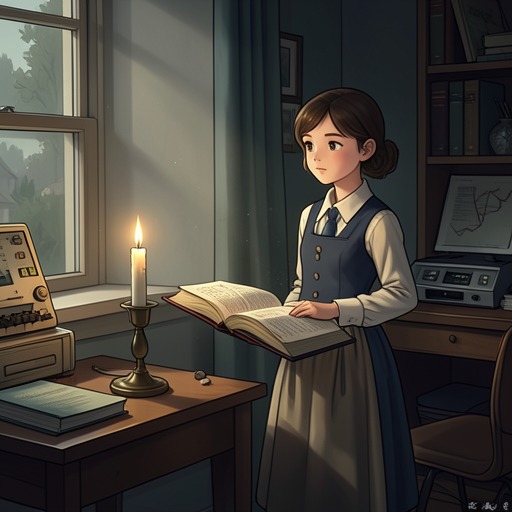
Weeping may endure for a night, but joy cometh in the morning
Anne of the IslandWeeping may endure for a night, but joy cometh in the morning names the passage from anguish to relief in Anne Shirley’s experience. The expression turns a change in feeling into an image of time: sorrow lasts through darkness, while joy arrives with morning.
Form and Meaning
The sentence contrasts endurance with arrival. Weeping may persist for a night, but joy comes in the morning; the shift in tense and expectation makes consolation feel both hard-won and newly present. The narration introduces it as a sentence from a very old and true Book, giving Anne’s private relief the cadence of inherited wisdom.
The Expression in the Scene
After Pacifique Buote resumes his walk and whistle, Anne watches him with joy displacing the anguish of the night. She knows she will remember his kindness, and stands beneath the willows long after his whistle fades, taking in the morning around her. The expression comes to her lips at this point, when the dread has lifted but its emotional weight remains.
Narrative Significance
The saying gathers the scene’s reversal into a compact image: night has held fear, while morning brings relief. Its force depends on the concrete change surrounding it, not on a claim that sorrow has vanished. Anne experiences the sweetness of life precisely because a great dread has been removed; the expression gives that renewed hope a form she can recognize and remember.