
The Weight of Water
Another Day of LifeThis flow follows water from a scarce everyday necessity to the infrastructure on which the capital's survival depends.
increasing Bearing strength in each event
 decreasing
Bearing strength in each eventdecreasingA Thirsty Correspondent
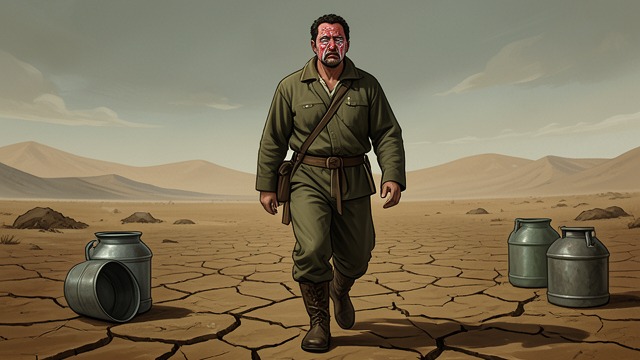
A Thirsty Correspondent
Heat and shortage
As water supplies fail, Rysiek walks through the heat until thirst brings on fever and orange spots before his eyes. The shortage turns an ordinary bodily need into a measure of the city's decline.
An intimate scale of crisis
The scene places the war inside the body rather than in a map or communique. A person cannot outthink thirst, and the city's political fate is experienced through its residents' immediate physical limits.
A Mug from the Kitchen
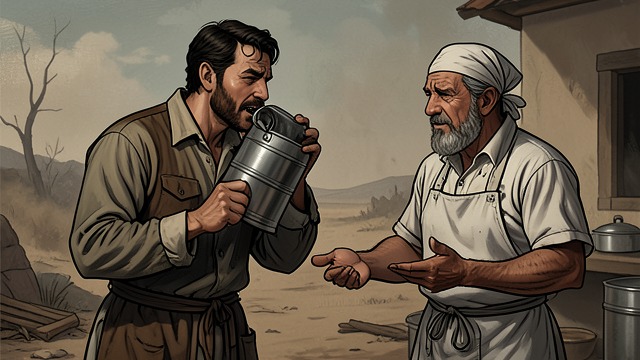
A Mug from the Kitchen
Rescue in a small gesture
After learning that the hotel's last wells are running dry, Rysiek finds water in a tin barrel and asks the cook for a mug. He feels himself returning to life as he drinks.
A surviving fragment
The telephone still works too, even though many other systems have failed. The contrast suggests that total collapse is never quite complete; a single working connection can sustain a person for another hour.
Water as a Military Target
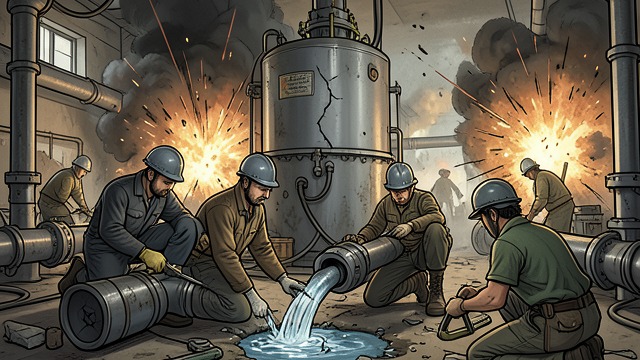
Water as a Military Target
The pumps under attack
The enemy repeatedly shells the pumping station, knowing that Luanda cannot endure a prolonged loss of water. Alberto Ribeiro's repairs keep the city's residents and defenders supplied intermittently.
Survival depends on maintenance
The pumping station turns engineering into a matter of military survival. Water is not background scenery; its flow determines how long the city can remain inhabited and resist siege.
Early October 1975
18 October 1975
November 1975
