
Ordinary Life as Resistance
Another Day of LifeThis flow follows small routines and acts of care that preserve a human scale inside a city increasingly governed by war.
increasing Bearing strength in each event
 decreasing
Bearing strength in each eventdecreasingThe Last Open Shops
The Last Open Shops
Practical priorities
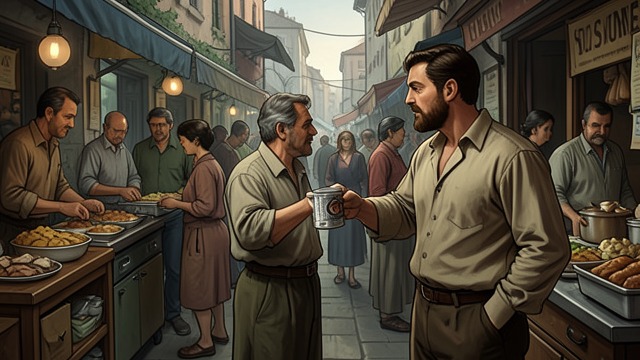
As people prepare to leave, food, medicine, watches, and small portable goods sell while books remain untouched. Paper is heavy, and survival choices make the old hierarchy of cultural value look suddenly different.
Ordinary work disappears
Shops, cafes, and businesses close as workers flee. Their absence exposes how much ordinary life depends on people whose labor is easy to overlook until it is gone.
The Bare Essentials
The Bare Essentials
Food and water
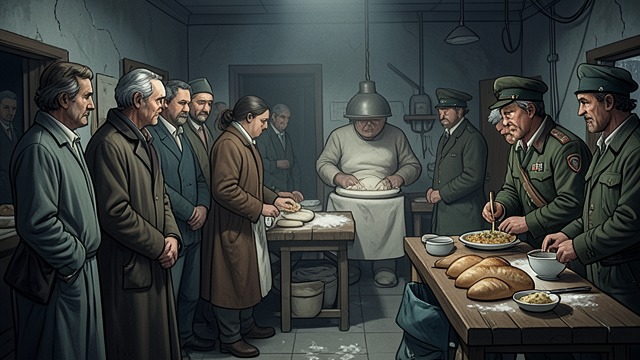
The city struggles with shortages as residents queue for bread and water. The cook gives Rysiek a mug when he is desperately thirsty, while the baker in Pereira d’Eça keeps making bread for the soldiers.
Care without grand claims
These acts do not change the military balance, but they sustain particular lives. Their importance lies in continuing to feed someone when institutions and markets have broken down.
Another Day of Life

Another Day of Life
Dawn after the fighting
After traveling through gunfire at night, Rysiek and his companions find the road clear at dawn. Nelson calls it another day of life and begins exercising, drawing the others into a simple shared routine.
Survival as a modest victory
The moment offers no assurance about tomorrow and no claim that the war has been won. It makes continued life, for one more day, a sufficient and hard-earned outcome.
October 1975
October 1975
Early November 1975
