Balombo
Another Day of LifeBalombo is a small, forest-bound town repeatedly taken and lost in the Angolan fighting. Its dense surroundings make control precarious: fighters can approach under cover to point-blank range, and a visit during an MPLA occupation ends with a counterattack, the town’s loss, and Carlotta’s death. What first appears as a hard-won stop at the front becomes, almost at once, the place the narrator and his companions associate with an irreversible departure and their failure to bring her back.
Setting and contested control
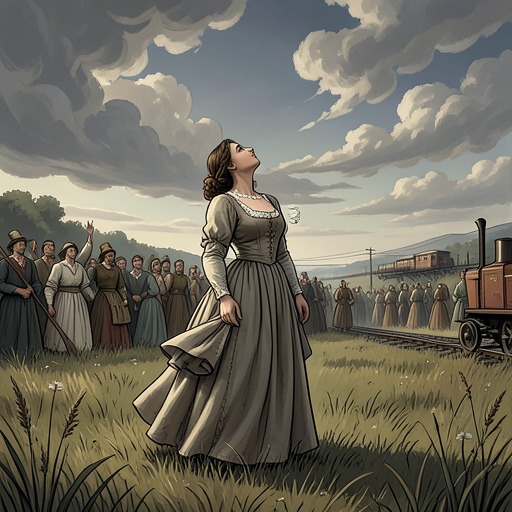
The journey to Balombo runs 160 kilometres east along a winding road whose switchbacks the drivers take at dangerous speed. The approach bears the marks of earlier violence: the travelers pass a burned village, an empty town, abandoned pineapple and tobacco plantations, and then forest. Soldiers’ corpses lie on the asphalt; the group pours gasoline over them, covers them with branches and roadside bushes, and starts fires by firing into the road. The flames mark their route toward the front, where the smell of the dead makes the approach to combat unmistakable.
Balombo itself is described as a little town in the forest that keeps changing hands. The forest is not merely its surroundings but a military advantage for an attacker, allowing the enemy to get close unseen and strike suddenly. When the travelers arrive, an MPLA detachment of about one hundred has taken the devastated town that morning. Fighting continues in the woods nearby, and the enemy has withdrawn only a short distance. No civilians remain; the town’s inhabitants in this account are soldiers, and the apparent pause in combat offers no assurance of safety.
A brief occupation
Water is available, and the detachment’s teenage fighters move through the town in a moment of release after the attack. Some ride a captured tractor around the main street, taking turns at the wheel; others circle on captured bicycles. The soldiers are sixteen to eighteen years old. Against the surrounding destruction, their improvised rides and the girls’ freshly washed hair give the occupation an almost ordinary, youthful surface, but it is fragile: the nearby enemy could return at any time.
Carlotta, who has come with the visitors as an armed escort, does not share in the detachment’s euphoria. She admonishes the girls for preparing as if for an evening out rather than remaining ready to fight. They answer that they had to attack in the first wave because the boys were unwilling to advance; the boys protest that this is a lie. As the film crew works among burned-out houses and exuberant adenias, Carlotta stays beside the visitors with her automatic ready, attentive and taciturn. Her vigilance makes the difference between a picturesque record of victory and the continuing danger around it.
Departure, counterattack, and memory
At twilight the visitors return to their cars, satisfied to have reached the front, taken pictures, and come through alive. Carlotta has ridden in the front beside the driver on the way to Balombo; as they prepare to leave, she gets out and says she will stay. Alberto Ribeiro urges her to come with them, offering supper and a trip to Lisbon the next day. She laughs, waves goodbye, and signals the driver to start. The group drives away at speed without hearing the shooting begin behind them.
Late that night in Benguela, while the travelers wait for food at an open-air restaurant, a dirt-smeared soldier arrives with news: Balombo has been attacked and abandoned, and Carlotta has died in the attack. The report abruptly overturns the relief of their escape. The companions walk separately through the deserted street, with Alberto Ribeiro hunched in front and the others dispersed behind him; there is nothing they can say to one another. The narrator wonders whether they would have turned back if they had heard the shots, and whether Carlotta might have died protecting them as they drove away.
Balombo therefore persists in the narrative not as a securely held position but as the site of a choice whose consequences become clear only after departure. The narrator calls himself and Alberto Ribeiro especially culpable because they had wanted to go to the front and were given Carlotta as their escort; the group had agreed to let her remain when they could have ordered her back. The town’s recurring reversals make the danger legible, but they cannot undo this particular loss. In the narrator’s final reckoning, Balombo is inseparable from the unanswered question of whether the journey could be run backward.