Battle for Caxito
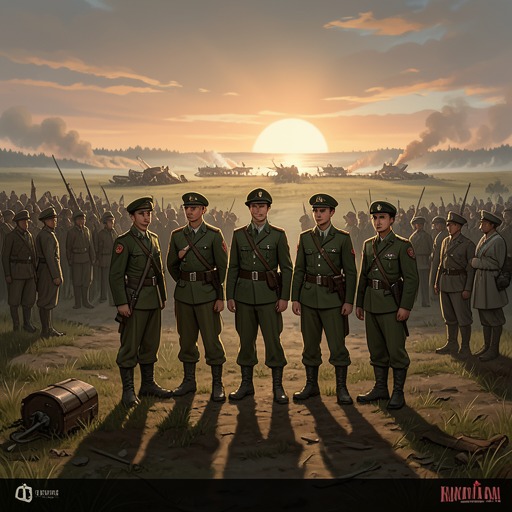
Another Day of LifeThe Battle for Caxito was an MPLA seizure of a town north of Luanda from the FNLA, led by Comandante Ndozi’s unit. Its immediate result was the capture of 120 FNLA soldiers, but the account gives equal weight to the consequences that a battlefield communiqué could not contain: an overstretched force, prisoners whose paths into the war varied sharply, and an evening when football briefly displaced the battle as the subject of argument.
Setting and Background
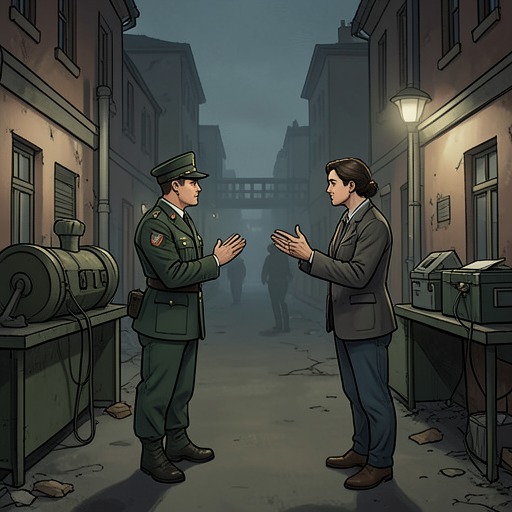
The battle took place in Caxito, more than sixty kilometres north of Luanda. Rysiek was there when Comandante Ju-Ju telephoned in the morning to report that fighting had taken place at dawn and Ndozi’s unit had seized the town. Ju-Ju, the MPLA general staff’s political commissar, also read the nightly radio communiqué on the war. The report made it possible for Rysiek to travel to the town, where the change of control could be seen not just in a military announcement but in the prisoners and guards left together in its aftermath.
The surrounding war was fought amid uncertainty about what was happening at the front. Ju-Ju’s broadcasts reflected that uncertainty in their form: reports were brief and calm when matters were going well, but grew longer and more emphatic when events turned against the MPLA. The difference was audible to Rysiek even at a distance. Caxito’s capture, by contrast, was conveyed first in a straightforward telephone report: the town had been taken, and the reporter could go there.
The victory was also constrained by the unit’s practical circumstances. Ndozi’s soldiers were inexperienced, and the unit itself had existed for only a month. In his account of early fighting, he described how green soldiers might fire without aiming, using up ammunition partly to master their fear and partly to create enough noise to make an opposing force retreat. In one operation he recalled, his men expended a great quantity of cartridges, then found themselves unable to attack because their clips were empty. Such episodes explain why taking a town did not mean that the victors had the supplies to hold it securely.
Capture and Immediate Costs
After the seizure of Caxito, Ndozi ordered soldiers to bury the dead, without separating friend from foe. Meanwhile, wounded men waited in a truck for transport to Luanda. The vehicle had not left because its driver was waiting for gasoline, and there was no doctor on that part of the front. Ndozi feared that without fuel some of the wounded would die. Gunfire nearby presented another uncertainty: he sent an orderly to determine whether it signalled a skirmish with a withdrawing enemy or celebratory shots from his own men. Ammunition was already running short, and he expected the enemy to strike again the next day. In his view, the unit might have to give up the town if it had nothing with which to defend it.
These immediate problems complicate the apparent simplicity of a victory report. The town had been taken, but evacuation depended on fuel, care depended on medical staff who were not there, and future defence depended on an ammunition supply that was dwindling. The captured ground was therefore both a success and a precarious responsibility.
The Prisoners’ Accounts
During the conquest, Ndozi’s unit captured 120 FNLA soldiers. Ju-Ju questioned them individually beneath a large chestnut tree, sitting on an ammunition crate that held French-made grenades captured from the enemy. His manner was shy and polite. Rather than treating each prisoner only as a source of military information, he tried to draw out an account of how he had come to fight, and to persuade him that he had chosen the wrong side.
One prisoner, an unemployed Angolan Bakongo, said that round-ups in Kinshasa, in Zaïre, had forced Angolan Bakongos into the FNLA. Mobutu’s troops conducted the round-ups; men with money could pay to avoid recruitment, but he had none. The FNLA had at least provided food, and sometimes beer, though he said he had not fought in a battle for which soldiers received payment. He had seen no opportunity to take property, had never met Holden Roberto, could not read or write, and said he had killed no one. His account replaced the political label of enemy combatant with a more specific chain of poverty, forced recruitment and limited choices.
Another prisoner could not say where the remaining FNLA troops were. In the confusion of the battle, he had followed a mercenary’s direction and run into the MPLA, while the mercenary escaped. He had been sent from Ambriz toward Caxito with four others. The journey had left the group without adequate food or water; three men died of exhaustion and another disappeared at night. Left alone, he reached Caxito the previous evening. He expected nearby FNLA soldiers might surrender once thirst made it impossible to remain where they were. The account showed how distance, scarcity and disordered movement could shape who arrived at the front and who survived the approach.
A third prisoner said he was sixteen and had joined after being promised that he could return to school. He wanted to become a painter, described making sculptures he had left in Carmona, and hoped to study. He had been told that education would follow service at the front. He said he had not killed anyone. His account made the cost of closing schools to build an army particularly plain: a young person’s hoped-for education and artistic work had been made conditional on participation in war.
A Barrier Crossed by Football
By evening, Caxito appeared deserted: houses stood empty, shops were broken into, and the town square was dark. At one end, however, voices and laughter came from the yard where the prisoners had been gathered. The 120 men captured that morning stood inside a concrete balustrade, with MPLA sentries posted outside it. Instead of maintaining silence across the boundary, prisoners and guards were talking about the previous day’s football match in Luanda.
Benfica had beaten Ferroviário 2–1. Ferroviário had gone two years without losing, and its supporters blamed the defeat in part on the departure of its leading scorer, Chico Gordo, who had moved to Sporting de Braga in Portugal. The argument divided the boys into opposing groups of fans, but not into prisoners on one side and guards on the other. Both teams had supporters among both groups. For a while, the shared language of the match displaced the identities imposed by the battle.
The reprieve did not erase what had happened. Rysiek reflects that both sides had lost men in the battle, and that the prisoners’ accounts included forced recruitment and lives redirected toward fighting. Yet the discussion made a small space in which participants could forget the immediate conflict. The scene does not resolve the antagonism between the armies; it shows, instead, how ordinary affiliations could cross the barrier that separated captives from their guards.
Significance
The battle’s narrative moves from a report of territorial capture to an examination of what victory leaves behind. The MPLA had taken Caxito, but Ndozi’s concerns about fuel, wounded men, ammunition and the likelihood of another attack reveal how conditional that success was. Ju-Ju’s interrogation brought individual histories into view: conscription under pressure, hunger, disrupted schooling and ambitions unrelated to the war. The football debate then placed captors and captives in a temporary shared social scene without pretending that their losses or positions were the same.
Caxito is therefore presented not as a conclusive turning point, but as a local victory whose human and material consequences remain unsettled. The town changes hands; the frontline remains vulnerable; and, behind the balustrade, the argument over a 2–1 score briefly makes another kind of common ground possible.