Caxito
Another Day of LifeCaxito is a town more than sixty kilometres north of Luanda whose capture marks a local MPLA victory without bringing security or certainty. Taken from the FNLA at dawn by Comandante Ndozi’s unit, it becomes both a military objective and a place where the costs of the war surface in shortages, uncertain loyalties, and the hopes of young prisoners.
Position and capture
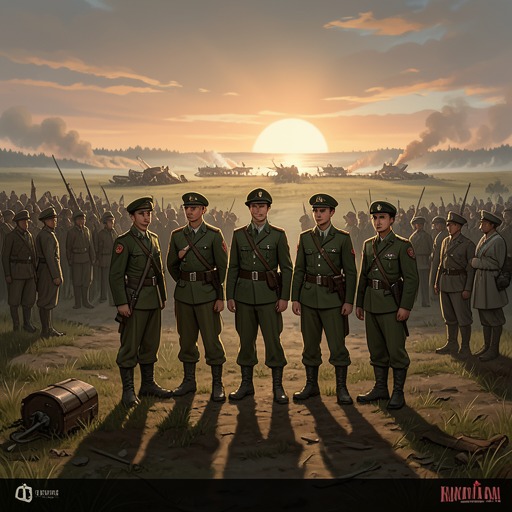
Comandante Ju-Ju, political commissar of the MPLA general staff, telephoned to report that the battle for Caxito had taken place at dawn and that Comandante Ndozi’s unit had seized the town from the FNLA. The narrator was already in Caxito and was told that it would soon be possible to go to the scene. The town’s position north of Luanda made it a consequential point in the fighting, but the report of its capture describes a change of control, not an end to the danger.
Ju-Ju also read a communiqué on the war situation over the radio at eight each evening. His broadcasts could turn recent fighting into accounts of heroism and victory; elsewhere, the narrator observes that their length and tone changed when events went badly. The contrast between public accounts and uncertain conditions at the front gives Caxito’s capture a provisional quality: the town has been taken, but the war remains difficult to measure from either the capital or the battlefield.
A victory constrained by supplies
The scenes associated with Comandante Ndozi’s front show how little a captured town settles. His troops were inexperienced, and ammunition was scarce. In one account, soldiers used large quantities of cartridges while taking a town; quartermasters later questioned the expenditure, while Ndozi defended the outcome by pointing to the objective achieved. The inexperienced fighters often fired noisily and without a clear aim. That display could make an equally inexperienced opponent retreat, but it also risked leaving the attackers without ammunition for what came next. On one occasion, Ndozi’s men entered their objective after the enemy had fled and found themselves with no cartridges in their clips.
The front’s other shortages made even the wounded dependent on supply delays. In a scene with Ndozi, wounded soldiers lay in a truck awaiting a shipment of gasoline before they could be taken to Luanda; there was no doctor there, and the commander feared that some would die if the fuel did not arrive. These details do not establish that every incident occurred within Caxito itself. They describe the precarious military conditions surrounding Ndozi’s fighting, in which holding a town could depend on ammunition, transport, and fuel as much as on the assault.
Prisoners and competing hopes
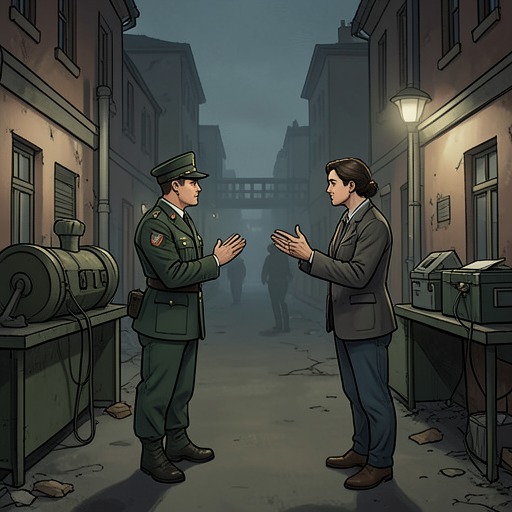
During the conquest, Ndozi’s unit took 120 FNLA prisoners, whom Ju-Ju questioned one by one beneath a large chestnut tree. He sat on an ammunition crate containing French-made grenades captured from the enemy. Shy by nature, he spoke politely, even deferentially, and tried to persuade each prisoner to recognize the political meaning of his service. His questioning brought the conflict’s competing allegiances into the open: the prisoners were being asked to see their participation in the FNLA as service to imperialism, while their individual circumstances complicated that accusation.
One prisoner, sent with four others from Ambriz, could not clearly distinguish who had been captured and who had escaped. He described a journey without food or water in which three of the group died and another disappeared. Alone in Caxito, he expected that FNLA fighters nearby might surrender because they had no water apart from the town’s supply. The account makes the town’s value practical as well as strategic: access to water could determine how long a force could hold out.
Another prisoner said he was sixteen and had gone to the front after being promised that he could return to school. He wanted to finish his education and become an artist, and spoke of painting and sculpting; some of his work had been left in Carmona. He said he had not killed anyone. His aspirations make the capture more than a count of prisoners: the town’s battlefield has gathered young people whose futures have been redirected by promises of schooling and the demands of war.
The town after dark
By the time the narrator walked into the square, Caxito appeared emptied out: houses stood dark, windows were broken, shops had been smashed, and dogs gathered near a well. A cow grazed in the grass. Beyond the square, the front was imagined as a dark wall of bush, where FNLA soldiers might still be waiting and might surrender for lack of water. The scene sets the visible aftermath of occupation against an enemy presence that cannot be seen or confidently counted.
Caxito therefore remains a fragile prize. The MPLA has taken the town and holds its water, but the surrounding fighting, the scarcity of supplies, and the uncertain whereabouts of the opposing force keep victory from becoming security. Its empty square gives the capture a quiet, unresolved ending: control has changed, while the danger has not disappeared.