Comandante Ju-Ju
Another Day of LifeComandante Ju-Ju is the MPLA general staff’s political commissar, a radio spokesman whose communiqués report the war and try to sustain confidence in it. The narrator presents him both as a distinctive white Angolan within the movement and as a political educator: he reads the nightly situation report, interprets reversals through rhetoric, and questions FNLA prisoners after the MPLA capture of Caxito.
Identity and position
Ju-Ju is a white Angolan: his family comes from Portugal, but he was born in Angola, which he regards as his homeland. The account places him among hundreds of white Angolans serving the MPLA at the front, on the general staff, or in administration. In this setting, a beard functions as a visible sign of belonging. Bearded white Angolans are recognized as Angolans rather than stopped for documents or interrogation, and black comrades address them respectfully as camaradas. Ju-Ju’s beard, which reaches his chest, is especially striking against his small, thin, stooped frame and thick glasses; the narrator compares his appearance to that of a classical-languages lecturer at an old European university.
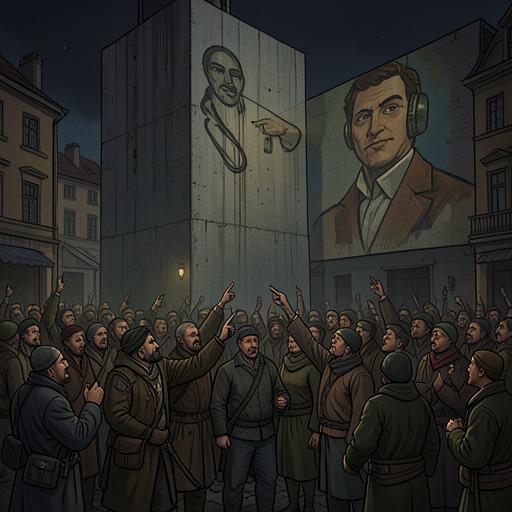
His formal role is political as well as military. At eight each evening he reads a communiqué on the war over the radio, speaking for the MPLA general staff to listeners far from the immediate fighting. The reports make him a recurring intermediary between the shifting front and the public understanding of it.
Radio communiqués and the framing of the war
The communiqués change in style with the military situation. When events are going well, Ju-Ju’s reports are brief and calm; the narrator observes that favorable facts need little embellishment. When matters turn against the MPLA, the broadcasts grow longer and more strained, accumulating adjectives, praise of the movement, and contemptuous descriptions of its enemies. The contrast makes the reports’ form itself a signal: in Luanda, the narrator cannot always make out the words through open windows, but the length of Ju-Ju’s speech suggests whether the front is holding or something has gone wrong.
The examples range from mourning to triumph. One communiqué commemorates Comandante Cowboy, said to have died in the assault on Ngavi; another celebrates a victory at Folgares. A further report describes the garrison at Luso as surrounded yet resolved not to yield ground. In each case, Ju-Ju presents military events as tests of courage and collective resolve, not merely as changes in territory or strength.
That confident public language becomes especially discordant when the military picture is poor. Later, the narrator describes Ju-Ju’s daily communiqué as very optimistic even though half the country is in enemy hands. The mismatch is consequential: assurances that the MPLA is near victory sit beside calls to defend the city, making it harder for listeners to judge the danger or feel the urgency to act. The account therefore presents propaganda not simply as a claim about events but as a force that can steady people or blunt their response to a crisis.
Caxito and the captured prisoners
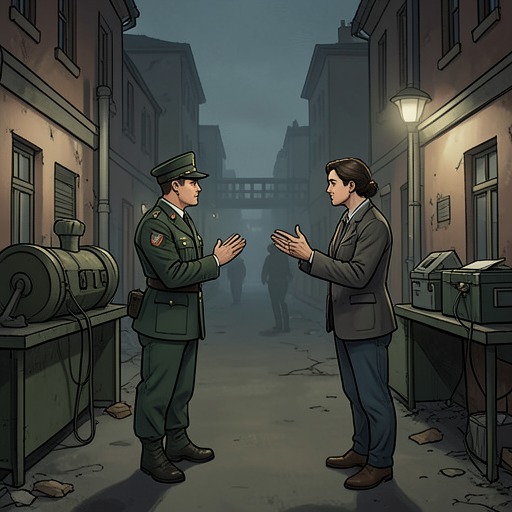
After Comandante Ndozi’s unit takes Caxito from the FNLA, Ju-Ju interrogates the 120 prisoners captured in the conquest. He summons them individually beneath a large chestnut tree and sits on an ammunition crate containing French-made grenades captured from the enemy. The setting joins political instruction to the material facts of battle: the prisoners are questioned in the aftermath of a town’s capture, with ammunition from the fighting beside the interrogator.
Though Ju-Ju is described as shy by nature, he speaks to each prisoner politely, even deferentially. He ends each conversation with a lesson intended to set the prisoner on what he considers the right path. His method begins by trying to provoke shame and guilt about serving the FNLA. In one exchange, he asks a captured Bakongo soldier whether he is ashamed to fight as an agent of imperialism. The prisoner does not answer, leaving Ju-Ju’s attempt at political persuasion without an expressed response in the scene.
Character and narrative role
Ju-Ju’s two principal appearances—as broadcaster and interrogator—show the same effort to give military conflict a political meaning. On the radio, he frames battles, losses, and threatened garrisons as evidence of courage, sacrifice, or victory. At Caxito, he addresses individual captives directly and tries to turn the fact of their service to the FNLA into a moral and political lesson. His manner is not presented as harsh: the narrator stresses his shyness and courtesy even as he challenges the prisoners’ choices.
The contrast between his composed manner and his increasingly strained broadcasts gives the character particular narrative significance. Ju-Ju is both a person within the MPLA’s mixed Angolan membership and a voice through which the movement explains the war to others. The changing length and tone of his reports expose the pressure beneath that public account, while the interrogation scene shows its political logic applied face to face.