Cuban Army
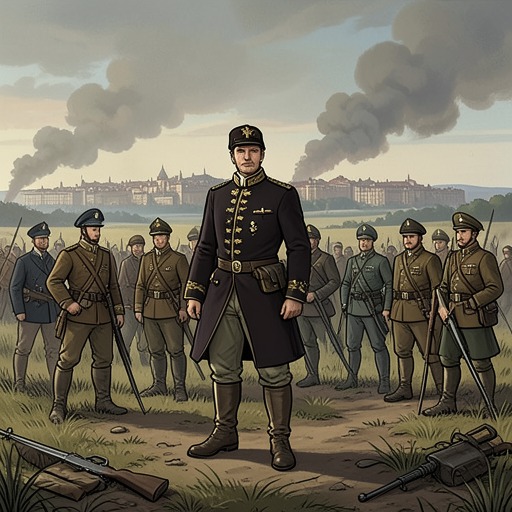
Another Day of LifeThe Cuban Army entered the war in Angola at a moment when the MPLA’s hold on the country was contested and its forces faced acute shortages of transport, ammunition, and reliable communications. Its first unit arrived in Luanda on 19 October 1975. In the months that followed, Cuban units supported the MPLA’s counteroffensive against the FNLA and UNITA. The book presents that intervention both as a material contribution to the fighting and as a force whose reputation could influence events even where its soldiers were not present.
Arrival and military setting
The Cuban Army’s first unit arrived in Luanda on 19 October 1975. Its deployment took place amid a widening conflict, with opposing forces contesting territory and the MPLA’s military position under pressure. The arrival marked the beginning of a more direct Cuban military presence in Angola, rather than simply the prospect of outside assistance.
The fronts described in the book were difficult to supply and reinforce. On the southern front, Comandante Farrusco’s unit numbered 120 and was the only MPLA unit across an immense region, with a single road connecting it to Lubango. Elsewhere, isolated garrisons depended on supplies reaching them by air. These conditions help explain why the presence of additional forces mattered: military strength was not only a question of numbers, but also of getting troops and supplies to contested positions.
At the Cuvo River front, the bridges had been destroyed, preventing the South African units from crossing. They waited for pontoon bridges while both sides exchanged intermittent fire but lacked the strength to attack. A ship was expected to bring two Cuban companies and a company from Guinea-Bissau the following day, while two MPLA units were also moving overland. The account records this as an anticipated reinforcement, not as confirmation that those particular companies reached the front.
Uniforms, reputation, and perceived strength
Cuban uniforms became part of the MPLA’s military presentation. The account notes that the Cubans had brought uniforms with which many MPLA units were clothed. The effect was not merely visual: the FNLA and UNITA troops feared the Cubans especially, and some retreated at the sight of units in Cuban uniforms even when no Cuban soldiers were among them. Clothing could therefore make an MPLA formation appear to include the force its opponents most feared, shaping their response before its actual composition was known.
That visual uncertainty was reinforced by the mixed racial composition of both MPLA and Cuban units. Skin colour could not reliably distinguish one force from the other. The combination of shared uniforms and multiracial units helped generate a story that a hundred thousand Cubans were fighting in Angola. The book explicitly contrasts that claim with its account of the forces defending the republic: their total number did not exceed 30,000, and about two-thirds were Angolans. The Cuban Army’s actual strength is not separately specified in these figures; the distinction is between the scale of the army as a whole and the inflated estimate of Cuban participation.
Front-line presence and the work of supply
The Cuban Army appears not only in accounts of deployment but also in the practical movement of troops and wounded soldiers. An old MPLA aircraft piloted by Ruiz carried ammunition between Luanda and besieged positions, delivering supplies and returning serious casualties. On one return flight, several wounded soldiers, both local and Cuban, lay aboard. This episode places Cuban personnel within the same precarious transport system on which the surrounding forces depended, rather than depicting their intervention as detached from the everyday constraints of the front.
At the river front, the destruction of the bridges shaped what either side could do. The South African units could not cross and waited for pontoon bridges; the forces on both sides were described as too weak to attack. Reinforcements were due by sea, while MPLA units approached overland. The account thus shows the Cuban Army’s presence in a conflict where movement and timing were constrained by damaged infrastructure and limited means of transport.
These difficulties also frame the later shift from defensive pressure to a broader counteroffensive. In November 1975, the MPLA army began its counteroffensive with the support of Cuban Army units. The book reports that during December and January the armies of the FNLA and UNITA were destroyed. It presents Cuban support as part of this military reversal, while identifying the MPLA army—not the Cuban Army alone—as the force conducting the counteroffensive.
Counteroffensive, withdrawal, and continuing war
The November counteroffensive was a decisive change in the course of the fighting described in the book. Cuban Army units supported the MPLA as it moved from defending contested positions to advancing against its rivals. The reported destruction of the FNLA and UNITA armies in December and January marks the scale of the immediate outcome, though the account does not treat that success as the end of war in Angola.
The Cuban presence was eventually withdrawn. Looking back on the conflict’s longer course, the narrator notes that the Cubans and the South Africans had departed, but the Angolans remained in a country divided and devastated by civil war. The war continued from 1976 to 2000, sustained in part by the rival sides’ revenues from oil and diamonds. The Cuban Army’s intervention therefore belongs to a crucial phase of the conflict without constituting a lasting settlement: its soldiers left, while the political and military divisions within Angola persisted.