Fear as the Soldier’s Inner Enemy
Another Day of LifeFear as the Soldier’s Inner Enemy is the inward struggle that can overtake the outward battle. In the book’s account of the opening months of war, inexperienced soldiers may be unable to identify the enemy or make tactical decisions because terror has become the immediate opponent. The idea extends beyond combat: uncertainty, exposure, and unreliable information make fear a force shaping the lives of soldiers, travelers, and civilians alike.
Fear and the Green Soldier
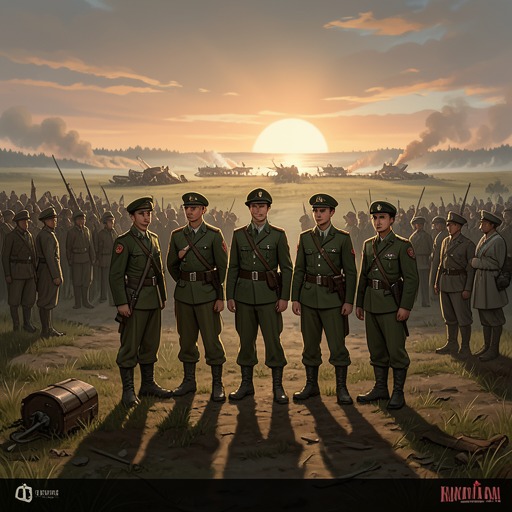
Comandante Ndozi, an experienced guerrilla, contrasts his years of fighting with the inexperience of the troops under his command. Many are young and new to the front. Transported into battle, a green soldier may imagine death arriving from every direction, mistake every shot for a threat to himself, and fire without knowing the range or direction of the enemy. The shooting is not necessarily an attempt to hit a target. It can be an effort to drown out terror and regain enough composure to endure the attack.
Ndozi recalls a soldier firing a bazooka straight into the air. He urged him to aim toward the palms, where the enemy was, but the instruction could not reach the boy: finding the enemy had ceased to be his priority. The decisive struggle was taking place within him. His face had gone grey, and he was firing to stun himself against fear. The episode gives the concept its clearest form: the enemy outside is real, but terror can prevent a soldier from responding to it.
The young soldiers’ circumstances make this fear more than an individual failing. Schools have closed to supply recruits, and boys taken from the streets are sent to fight before they have had the chance to grow up and learn. Ndozi regards their transformation into soldiers as a painful waste; they should have been able to read, build towns, and help people become healthy. Instead, they must learn to kill. His account connects fear to a larger cost of war: inexperienced people are required to master both combat and their own terror under fire.
Noise, Ammunition, and the Front
Fear also shapes how the inexperienced unit fights. Ndozi describes soldiers firing heavily before dawn because they think making a great noise is the main task. Their gunfire can function as a warning to the opponent and as an attempt to make the enemy more frightened than they are. In these early skirmishes, both sides are unfamiliar with war; a sudden volley can prompt the opposing force to withdraw. The tactic can work without the soldiers accurately engaging an enemy, but it is not without cost.
The same dependence on noise can leave a unit unable to continue. Ndozi recalls his men firing off all their ammunition at the beginning of an attack. Scouts later reported that the town they were supposed to take was empty, and the unit entered it with no cartridges left in its clips. The episode shows how a response to fear can produce an immediate effect while exhausting the means needed for the next action. The noise temporarily gives the soldiers a way to act; the spent ammunition leaves them unable to attack again.
Material scarcity compounds the danger. After a battle, Ndozi must arrange for the dead to be buried and asks whether a truck has taken the wounded to Luanda. It has not: the driver is waiting for gasoline, and there is no doctor on the front. The wounded remain in the truck, and delay may prove fatal. Ammunition is also running short, while Ndozi expects the enemy to strike again and fears the town cannot be defended. Fear here is bound to practical limits. Courage cannot supply fuel, medical care, or cartridges.
Fear Beyond the Battlefield
The book also presents fear as a condition of movement through a front whose boundaries are difficult to locate. At checkpoints, travelers may not know whether the sentries belong to the MPLA, FNLA, or UNITA. They approach barriers made from such things as gasoline drums, stones, or tree trunks, then wait while concealed sentries observe them. Sudden braking, haste, nervousness, or an exaggerated show of casualness can all be misread. To pass safely, travelers must control their behavior while unable to know who is watching or how their actions will be interpreted. The experience is not identical to a green soldier’s terror under fire, but it shares the same pressure: uncertainty narrows what a person can safely do.
On the southern front, Diogenes explains that a small convoy is attempting to reach a unit near Pereira d’Eça. The enemy holds the countryside and the road, and earlier trucks have been lost in ambushes. The route offers little sense of safety: the travelers have to use the road, yet an ambush may be waiting there; leaving it can mean dying of thirst. They pass burned-out trucks and charred remains before armed people appear in the road. In that landscape, alertness becomes a sustained, helpless condition. Fear is not a brief reaction to a single attack but a consequence of having no reliable route out of danger.
Isolation, Information, and Inner Defense
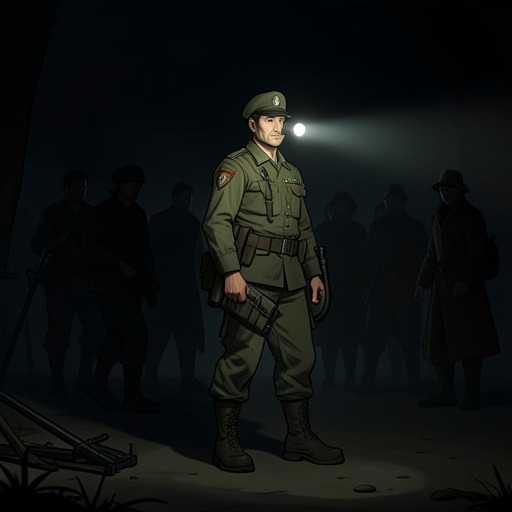
The threat in Luanda is also intensified by rumor and propaganda. In September, leaflets dropped by an unmarked black plane announce that Holden Roberto’s army is outside the capital and urge the population to kill Eastern Europeans said to be directing the MPLA. PIDE gangs prowl the city, and the narrator, the only person from Eastern Europe in Angola, fears that each knock at his door may be fatal. He tries not to dwell on the danger. At night, despite deciding to stay awake, he eventually falls asleep fully dressed and shod. His vigil echoes the soldiers’ struggle to manage fear, though his immediate danger is political violence rather than combat.
Information from the front does not reliably relieve that anxiety. Comandante Ju-Ju’s radio communiqués are brief when the situation is going well, but grow longer and more self-congratulatory when events turn bad. The narrator hears their changing duration as an indirect sign that something may have gone wrong. Later, while half the country is in enemy hands, Ju-Ju’s communiqué remains optimistic. The principle of disregarding reality is presented as a way to prevent panic, but its contradictions can instead undermine trust and blunt the instinct to act. Fear is managed through public language, yet concealment of danger can leave people less prepared to respond.
Across these scenes, the inner enemy is not a metaphor detached from material conditions. It emerges where inexperienced fighters, civilians, or travelers confront threats they cannot clearly locate and choices with no safe outcome. Gunfire may quiet a soldier’s terror but waste ammunition; calm behavior may help at a checkpoint but cannot reveal who the sentries are; optimistic reports may soothe listeners while obscuring the seriousness of the situation. The motif makes fear both personal and structural: an inward battle shaped by the disorder, shortages, and uncertainty of the war itself.