Luanda water pumping station
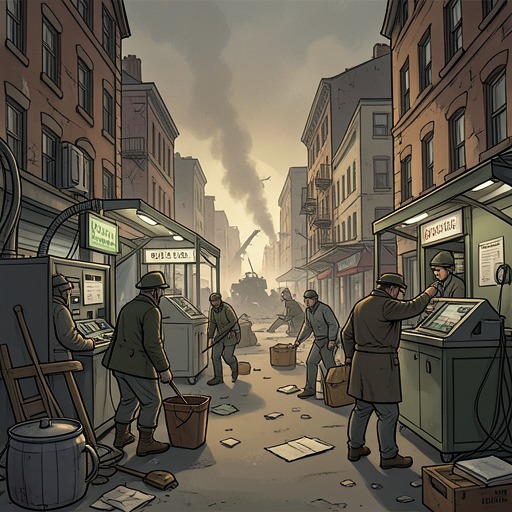
Another Day of LifeThe Luanda water pumping station was a frontline utility on which Luanda’s survival depended: bombardment could stop its pumps, and only Alberto Ribeiro was able to repair them. Its importance emerges through the book’s repeated reversals between the city’s everyday needs and the war’s military geography. A pump station might appear to be ordinary infrastructure; here it is both a target and a fragile point of support for a besieged city.
Location and Function
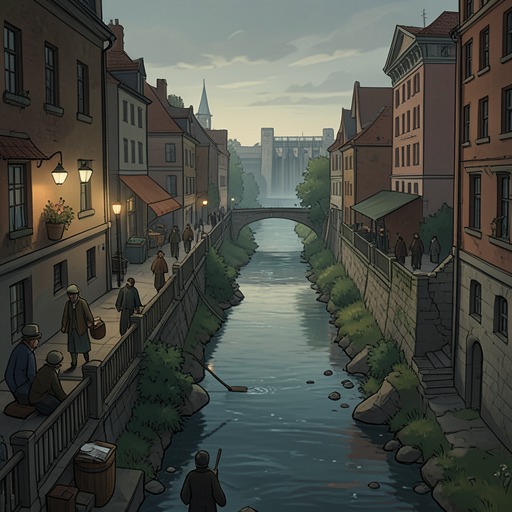
The station stood on the banks of the Bengo River, along the northern front near Luanda. It supplied water to the city, making its operation a direct condition of urban life rather than a matter of convenience. The enemy understood that dependence and repeatedly shelled the site. When a strike damaged the pumps, they stopped working, and the city’s supply was interrupted.
The station also occupied a visible place in the battlefield landscape. From the first line of trenches, the countryside appeared as a river in a shallow valley, an asphalt road, a blown bridge, the shot-up pumping station, and a palm grove, with enemy fortifications on a distant hill. The station was thus not hidden behind the front: it lay among the physical markers of an active military position, exposed beside the river and within view of the opposing lines.
Repair and Dependence
The station’s vulnerability was compounded by the concentration of repair work in one person. Alberto Ribeiro, a thirty-year-old engineer, was the only person able to repair its pumps. When they were damaged, the city’s water could return through his work; without him, there was no comparable capacity to restore the supply. His importance was practical and immediate: the operation of a city-wide system depended on the safety and labour of a single engineer.
That dependence had consequences beyond discomfort. Luanda could endure no more than five days without water. In the tropical conditions described in the book, thirst quickly became intolerable, while epidemics posed an additional danger. The account makes Ribeiro’s exposure consequential at the scale of the whole city: if he were killed on the journey to the station or by a shell, Luanda would have to surrender within a few days. The station’s pumps, the engineer who repaired them, and the city’s capacity to resist were bound together in one precarious chain.
Shelling and Urban Consequences
The disruption was not merely a projected danger. During a holiday period, FNLA gunners shelled the Quinpandongo pumping station again, leaving Luanda without water for two days. The brief report links a military attack to a city-wide deprivation: the station’s interruption could be registered in the daily life of residents far from the front, even while the fighting remained concentrated around the infrastructure itself.
Elsewhere, the account describes water growing scarce because pumping stations stood on the front lines and were destroyed again after repairs. The resulting shortage was part of a wider unravelling of urban services. In a hotel, a dry tap and the report that the city had already gone three days without water made the infrastructure crisis immediate to the narrator. The city’s last wells were also running dry. These details establish the stakes without making every shortage a direct consequence of a single attack: the station belonged to a vulnerable supply system whose repeated damage made daily access uncertain.
Narrative Significance
The station reverses the usual distinction between a civilian service and a military objective. Its function was to deliver water, but its position on the front made it a target; its restoration depended on skilled civilian engineering, while the consequences of failure extended to the defence of Luanda. In this account, the city’s prospects are measured not only by troop movements but by whether the pumps work and whether the person capable of repairing them can reach the site.
The station’s recurring appearance also gives the war a material scale. From the trench line it is a damaged object in a landscape of river, road, bridge, and opposing fortifications; in the city, its failure becomes thirst and the prospect of surrender. The distance between battlefield and household collapses into the movement of water. The pumping station therefore stands as a precise measure of Luanda’s fragility: a single exposed system, repeatedly struck and repaired, held together the possibility of urban life and continued resistance.