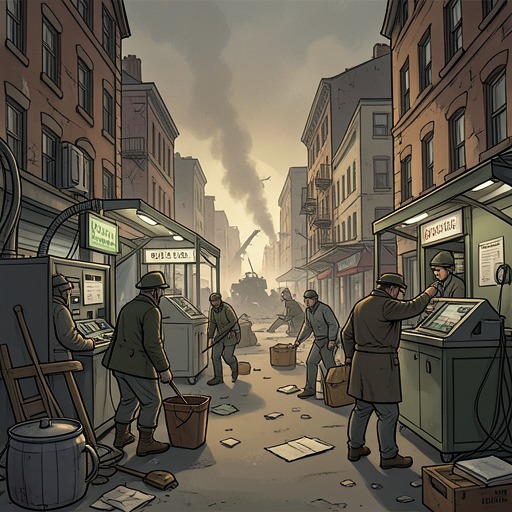
Quinpandongo pumping station
Another Day of LifeQuinpandongo pumping station was a vital water source for Luanda and a vulnerable point where military conflict could immediately become a civilian crisis. Shelling disrupted its pumps, while the city’s reliance on repair and resupply left its survival closely tied to the station’s continued operation.
Setting and Function
The station stood on the Bengo River, along the northern front near Luanda. Its pumps supplied the city with water, making this facility part of the material foundation of urban life rather than merely a military objective. When the pumps stopped, Luanda’s access to water was at risk.
The station’s importance was sharpened by the limits of the system it served. The city could endure at most five days without water; in tropical conditions, prolonged thirst and the prospect of epidemics made a breakdown dangerous well before that limit was reached.
Shelling and Repair
The station was repeatedly bombarded. Shells sometimes struck the pumps and stopped them, and repairs did not ensure lasting security: elsewhere in the account, water shortages are linked to pumping stations situated on front lines and to equipment being destroyed again after repair. The infrastructure remained exposed to the fighting even when work restored it temporarily.
Alberto Ribeiro, an engineer, was identified as the only person able to repair the pumps. The city’s water supply therefore depended not only on the machinery surviving attack but also on the availability of a particular repair worker. If Ribeiro were killed on the way to the station or struck by a shell, Luanda might have to surrender within days.
Interruptions to Luanda’s Water Supply
A report from Luanda states that FNLA gunners shelled Quinpandongo and left the city without water for two days. The duration makes the consequence concrete: an attack on a single water facility could deprive the capital of an essential service for an extended period.
Other episodes describe water growing scarce as repairs to frontline pumping stations were undone by continued fighting. At a hotel in the city, a tap yielded no water, and a receptionist reported that the supply had been absent for three days and that the last wells were running dry. He regarded the loss of the remaining water as a point at which the city would have to give up. These accounts show how a failure at the pumps could register across ordinary urban spaces, from the hotel’s rooms to the city’s remaining wells.
Strategic and Narrative Significance
Quinpandongo makes visible the dependence that wartime accounts can leave in the background: the city’s capacity to continue was bound to machinery, repairs, and access to water. Its vulnerability connected the front line to Luanda’s civilian population, while the presence of a single indispensable engineer exposed how narrow the margin for keeping the system operating had become.
The station’s importance is measured not by territory gained or lost but by what its interruption threatened. Shelling could stop the pumps; a failed repair could exhaust the city’s water; and a prolonged outage could turn a military siege into a crisis of survival. In this way, Quinpandongo stands as both infrastructure and strategic pressure point, revealing how the war’s course depended on systems that sustained everyday life.