Return motif
Another Day of LifeThe Return motif in Another Day of Life is voiced as a promise at departure, given poetic form in Agostinho Neto’s verse, and revisited years later through the narrator’s uncertain memories of the people he knew. Return remains both an act of hope and an unresolved question: the book offers the words of coming back, but not a settled account of who will be there, or whether the promise can be kept.
A promise made at departure
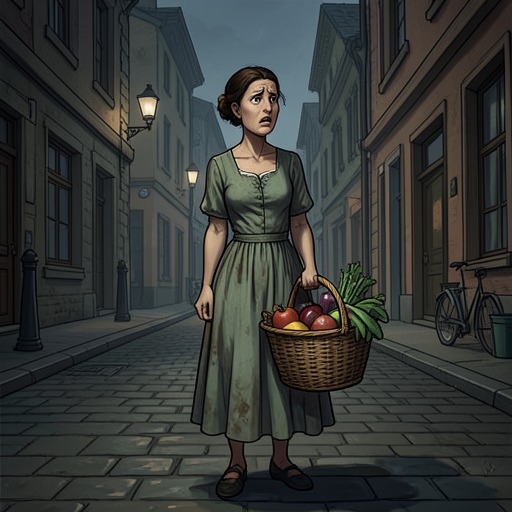
As Rysiek prepares to leave, gifts make the farewell tangible: Pablo gives him a box of cigars for the road, and Comandante Ju-Ju gives him Davidson’s book on Angola. The departure becomes more intimate at Dona Cartagina’s home. She breaks down crying; they have lived through the worst together, and Rysiek’s eyes grow wet as he looks at her. He tells her, “I’ll be back,” while acknowledging that he does not know whether the words are true. The promise is therefore neither a confident prediction nor a completed return. It is spoken to someone with whom he has shared danger, at the moment their companionship is ending, and its uncertainty is part of its meaning.
The scene gives the motif a personal scale. Return is not presented as an abstract journey home, but as a hoped-for renewal of particular relationships. The words try to keep open a future between Rysiek and Dona Cartagina, yet the farewell supplies no guarantee that such a future will arrive. The emotion of the exchange makes the promise consequential; the narrator’s doubt prevents it from becoming reassurance.
A poem of collective return
Rysiek also visits Agostinho Neto to say goodbye. Neto lives in a villa outside town, on a slope above a small cove grown with palms. They talk about poetry, and Rysiek is carrying Neto’s latest book of verse, Sagrada Esperança, published in Lisbon that year. The poem’s landscape is made of lands red as coffee berries, white as cotton, and green as fields of grain; its refrain is “we will return.” Rysiek knows the poem by heart.
That refrain widens the motif beyond the private farewell. The return promised in the poem belongs to a collective voice and is bound to the land: colored soil and crops give the declaration its concrete objects. Against Dona Cartagina’s tearful parting, the poem offers a larger, more assured-sounding language of return. Yet the surrounding scene keeps that assurance in tension with the conditions of war. Neto complains that he has had no time to write poetry lately and gestures toward a wall map marked with little green and yellow flags indicating FNLA and UNITA positions. Rysiek knows matters are going badly and wants details, but does not feel able to ask questions that would hurt. Silence follows before he says goodbye and leaves. The poem’s refrain persists, but the farewell scene does not turn it into a promise that events will fulfill.
Return in the form of memory
The motif returns in the book’s later look back, which asks what became of the people Rysiek met. The question is not answered by a journey back to them; it opens a series of uncertain possibilities. If Diogenes is no longer alive, perhaps his sons are fighting. Farrusco had said that a son had just been born. Rysiek imagines meeting a young officer on the Angolan front, hearing that he is named Farrusco, and telling him that years earlier he rode in a jeep with someone of the same surname. In this imagined exchange, the young officer would identify the man as his father.
This scene gives return an indirect, generational shape. Rysiek does not claim to have met Farrusco’s son or to know what became of the child. Instead, memory constructs a possible encounter in which a name links a present-day officer to a father remembered from the war. The imagined recognition offers a fragile continuity across years of conflict, but it remains explicitly hypothetical. Return here means not only going back to a place, but the possibility of encountering the past through someone who carries it forward.
An unresolved promise
The later account places these memories against a war that has continued from 1976 to 2000. The Cubans and South Africans have departed, but the Angolans remain in a country divided and ruined by civil war. Oil and diamond revenues sustain the opposing sides’ capacity to keep fighting, while the list of victims continues to grow. This longer perspective changes the weight of the earlier words: neither the personal promise to come back nor the poem’s collective refrain can be read as evidence that peace, reunion, or restoration followed.
Other remembered lives sharpen that uncertainty. Comandante Ndozi, Monti, and Batalha were blown up by mines; Rysiek does not know what happened to Gilberto or Felix, and can only hope that Oscar survived and reached a peaceful old age. People, the narrative observes, can disappear first from the world and then from memory. Against that erasure, recalling Dona Cartagina, Neto’s poem, and the possible son of Farrusco is itself a form of return: Rysiek brings earlier encounters back into the present of his account. The motif therefore ends without a confirmed homecoming. It survives as a spoken promise, a remembered refrain, and an act of looking back whose hope is inseparable from doubt.