Warsaw
Another Day of LifeWarsaw is the far-off destination of the correspondent’s nightly telexes from Luanda, important less as a visited place than as a dependable point of contact. Its signal turns a lonely, uncertain routine into an exchange with the outside world, while the dispatches carry the changing war from the front to a distant newsroom.
A nightly connection
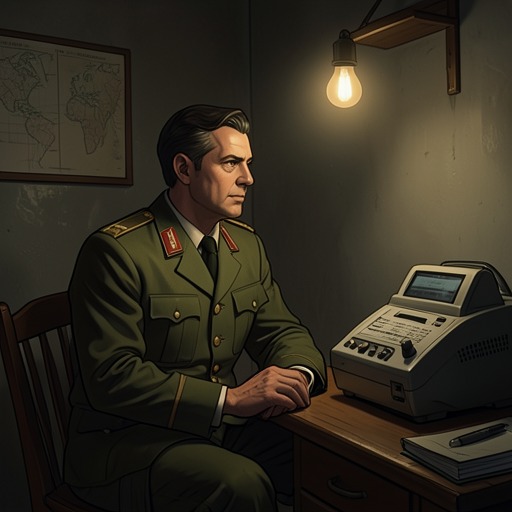
Each evening at nine, the telex machine at the hotel reception desk lit up and its printer began typing a signal from Warsaw. The exchange had its own brief protocol: the correspondent answered, then played a tape containing the text of the dispatch. Warsaw’s reply eventually brought the session to a close, setting a time for contact the following day.
The routine mattered because the days around it offered little security. Throughout September, the correspondent went to bed unsure what the night or next day would bring. He recognized men who lingered nearby, but they never spoke; he tried to stay awake lest they catch him sleeping, only to give in to exhaustion in his clothes and shoes. The MPLA could not protect him in the European quarter, and the front, though more familiar and at times safer, was difficult to reach. Against this unsettled existence, the scheduled call from Warsaw gave the day a fixed point.
The dispatch as lifeline
Nine o’clock was described as the day’s high point, a recurring event rather than a mere work appointment. The correspondent wrote daily, even when he could manage only the briefest dispatch, because the effort overcame inertia and depression and maintained contact with Warsaw. That connection, in turn, relieved his loneliness and sense of abandonment.
When time allowed, he settled at the telex before the signal arrived. Once the exchange began, he tried to prolong it: he supplied details of battles, asked about the weather at home, and complained that he had nothing to eat. These details show how the dispatch served two purposes at once. It transmitted reports from a war zone, but the conversation also reached across the distance separating the correspondent from ordinary life elsewhere.
Wartime news and interruption
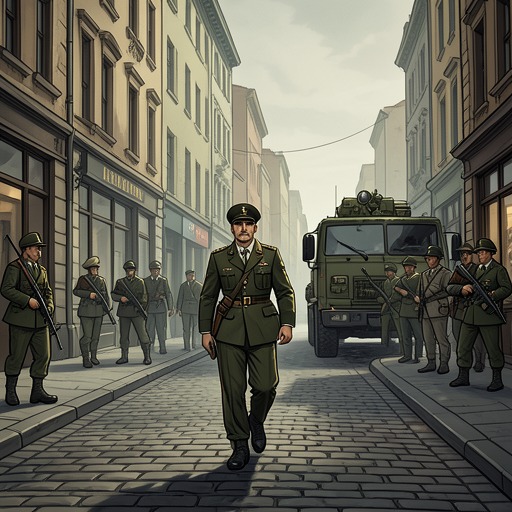
The telex routine continued as the military situation around Luanda worsened. After learning from a newspaper editor that FNLA forces, battalions from Zaïre, and additional mercenaries were attacking, the correspondent returned to the hotel to wait for Warsaw. People afraid to spend the night at home filled the reception area; barrages were drawing closer, and trucks moved along the street without lights. In this setting, the machine’s sudden illumination marked the beginning of another connection with the distant city.
On another evening, the exchange was interrupted by an announcement over the radio: the MPLA chief of staff declared a general mobilization. The correspondent sent a signal meaning just a moment, listened to the announcement, and immediately began typing a last-minute dispatch about Luanda’s critical situation. The episode makes the telex a point where events in the city could interrupt the ordinary reporting schedule and redirect the message toward urgent news.
The front translated for Warsaw
The correspondence also carried information from beyond Luanda. After returning by plane from the southern front, where South Africans had tried to force a river crossing, the correspondent reported to Warsaw that he had come back from the front and that the border now ran along the Cuvo River. The plane had carried badly wounded local and Cuban soldiers; rain fell below, and mortars had arrived in Antonov aircraft. The dispatch reduced a difficult journey and its immediate circumstances to a compact update, linking the scene of the fighting to its distant recipient.
Warsaw therefore occupies a distinctive place in the narrative without becoming a setting of direct action. It is present through signals, deadlines, replies, and reports: a distant audience made tangible by lights and printed characters at a hotel desk. The repeated exchange does not remove the danger or isolation of Luanda, but it gives the correspondent a reason to write through them and a continuing thread back to the world beyond the front.