Weekend ceasefire custom on the Angolan battlefield
Another Day of LifeThe Weekend ceasefire custom on the Angolan battlefield was a recurring Saturday-and-Sunday suspension of combat and ordinary public activity, observed by all sides in the war. Its significance lies in the breadth of the pause: weapons fell silent, offices and transport stopped, and even bitter enemies accepted a common interval of rest, without any suggestion that the conflict itself had been settled.
Recognition of the Weekend Pause
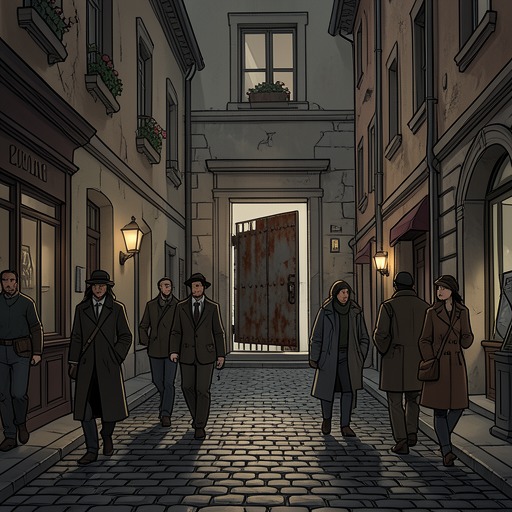
On 18 October 1975, the narrator tried to pass news from the southern front to people in Luanda but could not reach anyone by telephone. The date on the calendar supplied the explanation: it was Saturday. The silence was not simply a failure of one communication line. The book describes a regular weekend pattern in which guns fell silent, people put down their weapons, sentries left their posts, and observers put away their binoculars. Headquarters and offices closed; markets emptied; radio stations went off the air; buses stopped running.
The account presents the pause as a countrywide rhythm rather than a local arrangement. Saturday and Sunday had their own rules, and the change took hold at midnight. The narrator describes the result as a sudden stillness across a country otherwise marked by war, destruction, aggression, and poverty. No formal agreement, enforcement mechanism, or practical negotiation is identified; the custom is shown through its repeated effects and the shared recognition that the weekend was set apart.
A Truce Across Enemy Lines
The custom crossed military divisions. All the warring sides respected the weekend rest, and even the most bitter enemies acknowledged the other side’s right to two days of relaxation. For that interval, the usual distinctions between opponents did not determine whether fighting continued: the pause was common to them all.
This temporary accommodation did not amount to reconciliation or a lasting change in the conflict. The account describes combat as suspended, not concluded. The contrast is precisely what makes the custom striking: people who remained enemies could nevertheless observe the same limit on war, while the surrounding conditions of aggression and deprivation remained in place.
The Disappearance of Ordinary Life
The ceasefire extended beyond the guns into the social landscape. Streets and roads emptied, public services stopped, and the people the narrator expected to find seemed to vanish. Friends were not at home or in the streets, yet, as far as the narrator could establish, they had not left the city. The account offers no explanation for where they went. It records the gap between the apparent completeness of the shutdown and the narrator’s inability to account for the absent people.
The stillness is described as more than a military pause. Even nature seems to join it: the wind dies down, the palms stand motionless, and animals disappear from view. This language makes the weekend feel like a change in the tempo of the whole country, not merely a break in exchanges of fire. The city’s wider deterioration sharpens the contrast. Portuguese refugees had crowded around Luanda’s airport, while the departure of police and garbage collectors left visible holes in urban life. Against that ongoing unravelling, the weekend pause was a pattern that opposing forces continued to recognize.
Limits and Narrative Significance
The custom’s reach should not be confused with the restoration of order. On Tuesday, 4 November, armed men entered the narrator’s hotel, threatened its occupants, and tried to organize a search and transfer for interrogation; the expected transport failed to arrive, and an MPLA press official eventually ordered the group released. The episode does not describe a weekend, but it shows how precarious daily life remained outside the pause: armed intimidation and administrative disarray persisted.
The weekend custom therefore appears as a bounded, recurring suspension rather than a solution to the war or to the collapse of public services. Its effect is both practical and unsettling. At a predictable point in the week, combatants and civilians alike entered a silence whose social rules were widely observed, but whose cause and full workings the narrator could not explain. The pause made a shared rhythm visible within a conflict otherwise experienced as fragmentation and uncertainty.