“How’s tricks”
Anxious People“How’s tricks?” is both the Real estate agent’s greeting and the verbal centerpiece of the House Tricks Real Estate Agency’s branding. The phrase joins the agency’s name to its promise that an agent knows the tricks of buying an apartment; when repeated during a police interview, that sales pitch becomes a refrain that competes with the officers’ attempt to establish what happened at the apartment viewing.
Name and Wordplay
The Real estate agent explains the name directly: “It’s called House Tricks! Get it? Because when you buy an apartment, you want to buy from someone who knows all the tricks, don’t you? So when I answer the phone, I say: Hello, you’ve reached the House Tricks Real Estate Agency! HOW’S TRICKS?” The greeting is not a separate slogan accidentally attached to the business. It completes the same pun: “tricks” evokes the professional know-how the agency claims to offer, while the question makes that promise sound like a casual greeting.
The joke depends on hearing the agency name and greeting together. “How’s tricks?” echoes House Tricks closely enough to make the greeting function as a verbal signature, and the agent explicitly presents it as what callers hear when she answers the phone. Her explanation also makes the branding unusually self-conscious: she does not simply use the phrase but walks her listener through why it is supposed to be clever. That explanation is central to the expression’s comic force, since the wordplay is clear while the agent’s insistence on explaining it keeps the exchange from moving on.
The First Police Interview
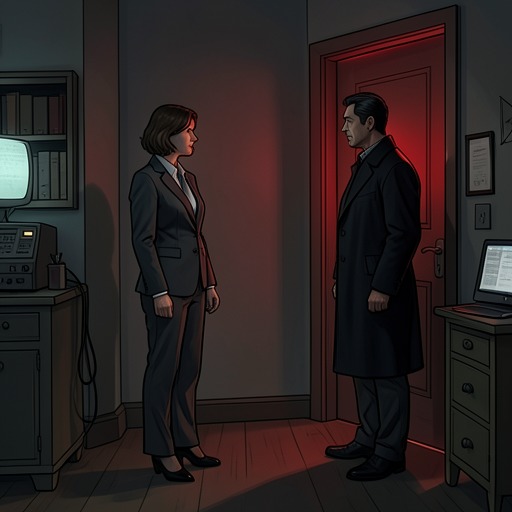
The phrase enters the book during questioning after the Real estate agent has been threatened with a pistol and held hostage. A policeman is trying to ask about the apartment and the perpetrator, but she insists that he has asked for the name of her agency. She drums her fingers on the tabletop and redirects him toward the House Tricks explanation. The officer recognizes that she has just endured a traumatic experience and tries to be patient, yet the interview’s practical purpose and her promotional detour repeatedly pull in opposite directions.
The question about the viewing being held the day before New Year’s Eve offers another opening for the same branding. Asked whether it is an odd day for a showing, the Real estate agent shakes her head and grins: “There are no bad days for the HOUSE TRICKS Real Estate Agency!” In this exchange, the slogan answers a question about timing with a claim about the agency’s attitude. The phrase’s upbeat confidence sits beside the circumstances of the interview: the viewing has become the site of a hostage incident, and the police are trying to reconstruct it.
Repetition and Escalation
The phrase returns when officers ask who should be questioned. Once the Real estate agent is identified, she immediately gets up, thrusts out her hand, and introduces herself: “I’m the real estate agent! From the HOUSE TRICKS Real Estate Agency!” She pauses, visibly pleased with herself, takes a breath, and asks, “So, HOW’S TRICKS?” The recurring question is therefore not limited to an account of her phone greeting; she performs it again in person, turning an interview into another opportunity to present the agency’s name.
The younger officer reacts with weary frustration, saying that she has been carrying on like this the whole time and pressing his thumbs against his eyebrows. The older officer, by contrast, squints at her, hears the explanation, and gives her an appreciative smile. The same refrain thus produces two responses within the police team: exasperation at its interference with questioning, and recognition of the joke. The Real estate agent then supplies the explanation once more, as though the first performance has not been heard. The younger officer points her back toward her chair and tells her to sit.
Function in the Narrative
The exchange makes “How’s tricks?” a small but persistent contest over the direction of conversation. The officers’ questions seek information about the hostage incident; the Real estate agent’s repeated introduction redirects attention to her professional identity and its slogan. The wording is light, but its recurrence has a practical effect: it delays the interview and makes the officers respond to the performance before they can return to their questions.
The greeting also gives the Real estate agent a consistent way to occupy the scene. She uses it when describing the agency, when answering a question about the date of a viewing, and again when formally introducing herself to the officers. Each recurrence preserves the same basic pun while changing its conversational setting. The result is more than a one-line joke: the phrase becomes a recognizable refrain whose cheerful sales language keeps surfacing inside a serious inquiry. Its humor comes from that mismatch, as well as from the contrast between the agent’s evident delight in the wordplay and the younger officer’s increasingly strained attempts to conduct the interview.