Failed robbery of the cashless bank
Anxious PeopleThe Failed robbery of the cashless bank is the desperate, aborted opening move in the Bank robber’s attempt to secure housing money. Its failure turns on a blunt mismatch: a parent in urgent need of cash chooses a bank that has none, and London’s refusal to treat the threat with the expected fear sends the robber running rather than completing the attempt.
Causes and stakes
The attempt takes place on the day before New Year’s Eve, during a winter spell when the sky over central Scandinavia seems as dull as wet newspaper. The narrator treats the weather as one more reason an apartment viewing would be poorly attended, and jokes that it is also a bad day for a bank robbery. But the decisive problem is not the weather: the chosen institution is a Cashless bank, so the intended target contains no money to take.
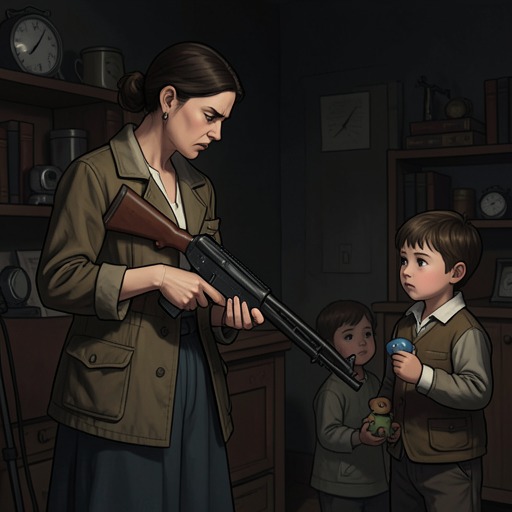
The request for 6,500 kronor acquires its force from the Bank robber’s circumstances. After a separation, the Bank robber has neither a job nor savings and has left the apartment where the children live with their other parent. Buying a home is out of reach because the bank will not lend to someone without money; renting requires a deposit of four months’ rent. A small sublet near the children’s home costs 6,500 kronor for a month. The Bank robber empties a bank account and sells possessions to cover that month, then cannot find the money for the next one. The amount demanded in the robbery is therefore not an arbitrary sum: it matches the monthly rent that briefly seemed to offer a way to keep a home and remain near the children.
The attempt at the Cashless bank
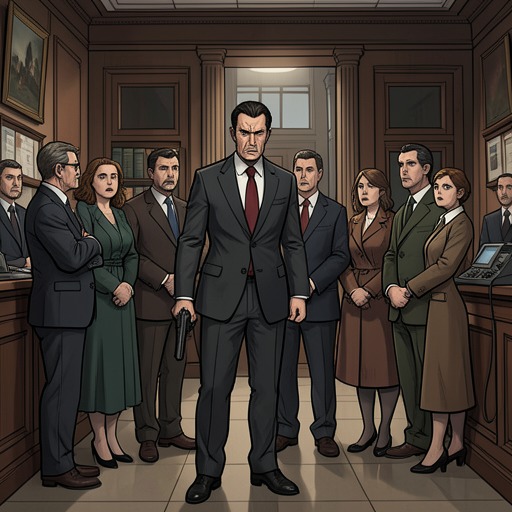
The Bank robber enters intending to rob the bank and uses the pistol to make that purpose clear. A written demand asks for 6,500 kronor. The scene’s central irony is that the demand is aimed at an institution whose defining feature is that it holds no cash. The narrator teases the language of a society in which even a bank may be cashless, but the joke does not erase the material predicament behind the choice.
Behind the counter is London, a twenty-year-old employee absorbed in social media. She responds to the masked, armed visitor with incredulity rather than alarm, first questioning whether the situation is a joke and then challenging the requested amount and the feasibility of robbing a Cashless bank. She also asks whether the pistol is real, invoking a television program about armed robbery. Her bluntness is not presented simply as foolishness: London is described as miserable and isolated, without real friends, and preoccupied with whether two celebrities will divorce. Their unhappiness offers her a brief distraction from her own anxieties.
The exchange unsettles the Bank robber. The robber is thirty-nine and begins to feel old in the face of London’s manner, which makes her seem younger still. More importantly, the attempt is already collapsing. The Bank robber regrets the plan and is on the point of explaining that robbing the bank was a terrible idea, apologizing, and leaving. London announces that she will call the police before that explanation can happen.
Flight and immediate aftermath
The Bank robber panics and runs out of the Cashless bank. No money is obtained; the intended robbery ends in flight. The abruptness matters: the immediate trigger is not a successful intervention or a negotiated surrender, but London’s threat to call the police, delivered while the robber is already doubting the plan.
The failed attempt is followed by the Bank robber’s flight into the apartment hostage crisis. By the time the police are considering how to make contact, the robber is holed up in an apartment, and Jack is trying to find a way to approach without sending Jim into a stairwell while the possibility of a bomb remains unresolved. The bank attempt and the hostage episode are distinct stages, but the first leaves the robber in motion and leads directly into the larger crisis.
Financial risk and the story’s framing
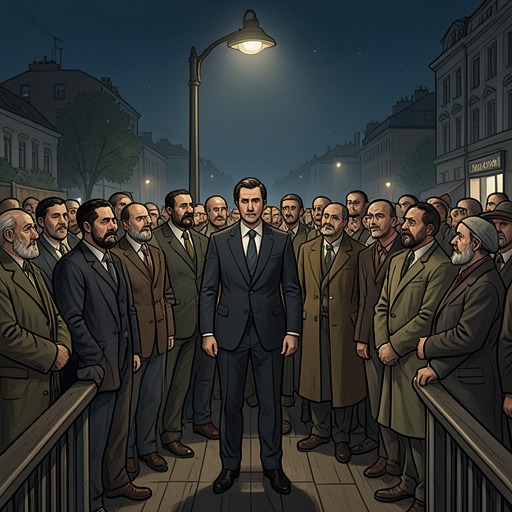
The narrative sets the Bank robber’s need for rent against a broader account of financial risk. It explicitly distinguishes the robber from the man who later jumped from the bridge: they never met and are not connected. Their parallel is moral hazard, a term the book uses to describe how the party protected from the consequences of its own actions can shift the loss onto someone else. The man trusted a bank’s supposedly secure investments, borrowed against them, and then found his savings replaced by debt after the financial crisis. The banks remained in place while individuals bore the damage.
That contrast gives the attempted robbery a social frame without making the two stories equivalent. The Bank robber’s choice remains a desperate and mistaken act, and the Cashless bank is plainly the wrong target for someone seeking cash. Yet the route to the act is shaped by barriers that make housing unavailable to a person without income or savings: no mortgage, a steep rental deposit, and a precarious sublet paid month by month. The episode’s dark comedy—an armed demand at a bank with no money—rests on the gap between the word bank and what the institution can provide, while the Bank robber’s immediate need is for an actual place to live.