For the children’s sake, don’t make a scene
Anxious PeopleFor the children’s sake, don’t make a scene is a rule of parental restraint whose protective intent turns against the parent who follows it. After the Bank robber’s marriage and employment collapse together, she avoids confrontation in the name of sparing her daughters; the resulting losses leave her increasingly desperate to keep a home and remain their parent. The rule thus connects domestic silence to the chain of financial and personal crises that leads to her attempted bank robbery.
Meaning and Immediate Context
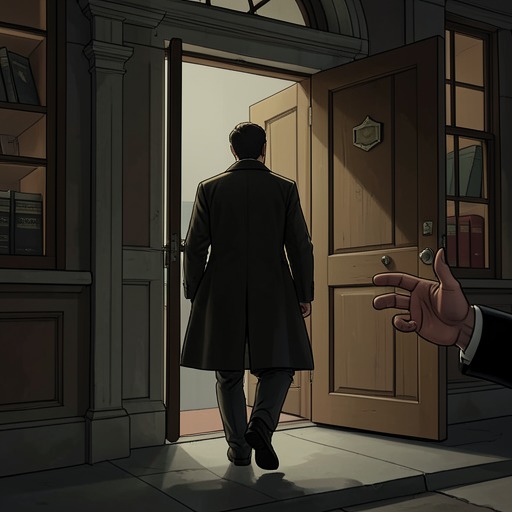
The rule is presented as advice to avoid making trouble for the children, but the narrative shows how little protection that silence provides. After the Bank robber’s partner is revealed to have been having an affair with her boss, the consequences reach beyond the marriage: by the Monday after the breakup, she has lost both her job and her home. Rather than protest, pursue a legal remedy, or make a public dispute of what has happened, she moves out and leaves her work with her eyes closed and jaw clenched. The account frames this withdrawal as an effort not to become the kind of parent who causes chaos for the children.
The arrangement that follows makes the cost concrete. The daughters and their other parent remain in the apartment, which is in that parent’s name; the former boss also lives there. The Bank robber has neither savings nor employment, and finding somewhere else to live is difficult. She has not joined a public-housing list because, while married and raising a family, she did not expect to lose her home. The rule asks her to contain conflict, but it does not supply the security that conflict might have helped her claim.
How Restraint Becomes Precarity
The pressure intensifies through a sequence of barriers. Buying an apartment is out of reach, and the bank will not lend to someone without money. Renting requires a deposit equal to four months’ rent, also beyond her means. A lawyer then writes that the other parent intends to seek sole custody because the Bank robber has neither a home nor a job. A separate message tells her to collect her belongings; with nowhere to take them and the weather turning cold, she ends up staying in a basement storeroom.
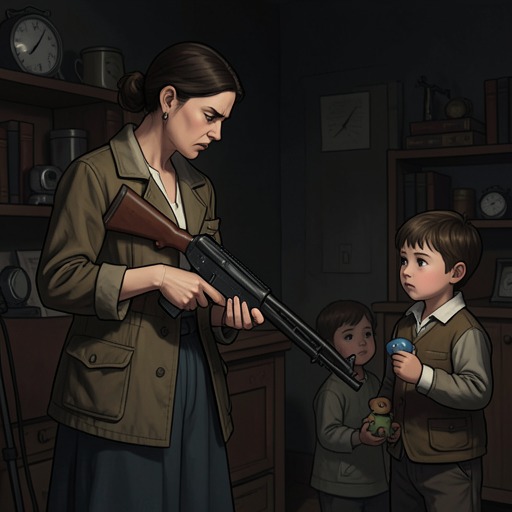
The details of that stay make the rule’s consequences more than abstract. In another storeroom, she finds blankets and a toy pistol beneath them. She sleeps with the toy in hand, imagining it might frighten off a burglar, then recognizes that she has become the person breaking in. In the morning she returns the blankets but keeps the pistol because she does not know where she will sleep next. The makeshift refuge lasts a week. The narrative presents this not as a single sudden fall but as mounting instability: shame, homelessness, fear of losing her daughters, and the absence of a safe place to turn.
Her attempts to recover financially do not resolve the crisis. She finds a job, but it is not enough to live comfortably on, and her first month’s wages will be withheld until she has worked for two months. The bank refuses a loan because the job is not permanent; without money, she cannot bridge the period in which she is working but unpaid. Meanwhile, another threatening letter arrives from the lawyer. She continues trying not to start a fight, even as her daughters can see her distress and want to help. The rule protects them from open conflict only imperfectly, while leaving the practical threats to their family life in place.
The Rule and the Attempted Robbery
The decisive crisis arrives just before New Year’s Eve. The Bank robber has a letter from the lawyer about the custody application and a letter from her landlord warning of eviction if she does not pay the rent that day. She is alone in her despair and expects to have the girls with her on New Year’s Day. Against this background, the account describes one desperate idea: to take 6,500 kronor from the same bank that refused to lend to her, so she can pay a month’s rent and buy time to find work.
She takes the toy pistol, which looks real, cuts holes in a black woolly hat, and enters the bank. Her plan is limited in her own mind to the amount of the rent and to returning the money once she is paid, though she has no credible way to do so. The rule against making a scene has not prevented a crisis; rather, her effort to avoid conflict and preserve her daughters’ lives as she knows them has narrowed the options she can imagine. The account then reveals that the pistol was real, not a toy. That discovery and the later image of a child’s drawing in the stairwell and a blood-soaked rug establish the gravity of what the desperate plan has set in motion, without making the rule itself a sufficient explanation for every consequence.
Family Patterns and Contrasts
The story places the Bank robber’s effort to protect her daughters alongside other forms of family silence and protective hope. Jim and Jack both send money to Jack’s older sister when she claims she needs help getting home, although she does not come. Jim calls her ill, while Jack recognizes her heroin addiction; Jack once spent the savings meant for an apartment on her treatment, and she left the clinic after two weeks. Their differing responses echo the tension between naming a painful reality and softening it for the sake of family bonds. They do not share the Bank robber’s precise situation, but their story shows how care can persist through repeated disappointment and how silence can coexist with knowledge.
Jim and Jack also carry different memories of a man who jumped from a bridge during the hostage crisis. Jack dreams of having saved him; Jim dreams that Jack was the one who jumped. Work gives them a way to speak when other words are difficult, and the same effort to protect one another that shapes family life can leave important feelings unspoken. These parallels broaden the rule’s significance without equating the families: restraint may be an expression of love, but it can also conceal fear, postpone difficult speech, and leave people carrying burdens separately.
Significance
The rule is not presented as simple foolishness. The Bank robber’s wish to avoid making her daughters live through a war between their parents is understandable, and the narrative takes seriously the shame and fear that constrain her. But the phrase for the children’s sake cannot itself secure housing, income, legal standing, or safety. In this story, keeping the peace becomes perilous when one parent absorbs the entire cost of preserving it and has no reliable support when that effort fails.
The attempted robbery is therefore connected to both an immediate rent shortfall and a longer series of losses: betrayal, dismissal, homelessness, withheld wages, rejected credit, and the threat of losing custody. The rule names a loving intention, yet its consequences expose the difference between shielding children from conflict and creating conditions in which a family can remain secure. Its force lies in that contrast: a parent may refuse to make a scene for the children, while the unaddressed crisis grows until it becomes impossible to contain.